Free Website Page Counter
Find out how many pages a website has by discovering its XML sitemaps. Enter any domain to see the total page count and a breakdown by individual sitemap.
QuickSEO shows clicks, impressions, keywords and pages for every website you manage, compared with the period before.
- Unlimited websites on the free plan
- No credit card needed
Why Knowing Your Page Count Matters
Understanding the total number of pages on your website is fundamental to SEO strategy. Your page count directly impacts crawl budget, indexation efficiency, and how search engines prioritize your content. Large sites with thousands of pages need different SEO approaches than smaller sites with a few dozen.
Tracking your page count over time also helps you identify unexpected growth (such as auto-generated duplicate pages), content pruning opportunities, and whether your content production matches your SEO goals.
What This Tool Checks
The Website Page Counter discovers sitemaps through multiple methods:
- /sitemap.xml — The standard default sitemap location
- /sitemap_index.xml — Common alternative for sitemap index files
- robots.txt — Parses
Sitemap:directives for custom sitemap locations - Sitemap indexes — Recursively follows sitemap index files to discover all child sitemaps
How to Use This Tool
- Enter a website URL — Type any domain like
example.comorhttps://example.com - Click "Count Pages" — The tool will discover all sitemaps and count every URL
- Review the results — See the total page count and how pages are distributed across different sitemaps
Understanding Your Results
The breakdown by sitemap reveals how a website organizes its content. Most sites split sitemaps by content type — you might see separate sitemaps for blog posts, product pages, category pages, and static pages. This structure tells you a lot about a site's content strategy.
- Single sitemap: Typical for smaller sites under 50,000 URLs
- Sitemap index with multiple sitemaps: Used by larger sites to stay under the 50,000 URL limit per sitemap file
- Content-type sitemaps: Sites that separate posts, pages, products, and media for better crawl management
Common Use Cases
- Competitive analysis: Compare the content scale of competing websites to identify content gaps
- Site audit baseline: Establish a page count baseline before a migration or redesign to ensure no pages are lost
- Content strategy: Track how your page count grows over time relative to competitors
- Crawl budget planning: Large page counts may require sitemap optimization and crawl budget management
- Duplicate detection: An unexpectedly high page count can indicate auto-generated or duplicate content issues
Frequently Asked Questions
How does the Website Page Counter work?
The tool discovers XML sitemaps by checking /sitemap.xml, /sitemap_index.xml, and the robots.txt file. It then parses each sitemap, follows sitemap indexes to find sub-sitemaps, and counts all unique URLs listed across every sitemap.
Is the page count the same as the number of indexed pages?
Not necessarily. The page count is based on URLs listed in sitemaps, which represent pages the site owner wants indexed. Actual indexed pages may differ — Google may index additional pages found through crawling or exclude some sitemap URLs due to quality or crawl issues.
What if my website does not have a sitemap?
If no sitemap is found, the tool cannot count pages. XML sitemaps are a best practice for SEO — they help search engines discover and index your content. Most CMS platforms like WordPress, Shopify, and Wix generate sitemaps automatically.
Why might the count differ from Google Search Console?
Google Search Console shows pages Google has actually crawled and indexed, which can include pages not in your sitemap and exclude sitemap URLs that Google chose not to index. This tool counts what's declared in your sitemaps, giving you the site owner's intended scope.
Can I use this to count pages on a competitor website?
Yes! Since XML sitemaps are publicly accessible, you can use this tool to see how many pages any website has in their sitemaps. This is useful for competitive analysis and understanding the content scale of competing sites.
QuickSEO shows clicks, impressions, keywords and pages for every website you manage, compared with the period before.
- Unlimited websites on the free plan
- No credit card needed
From the blog
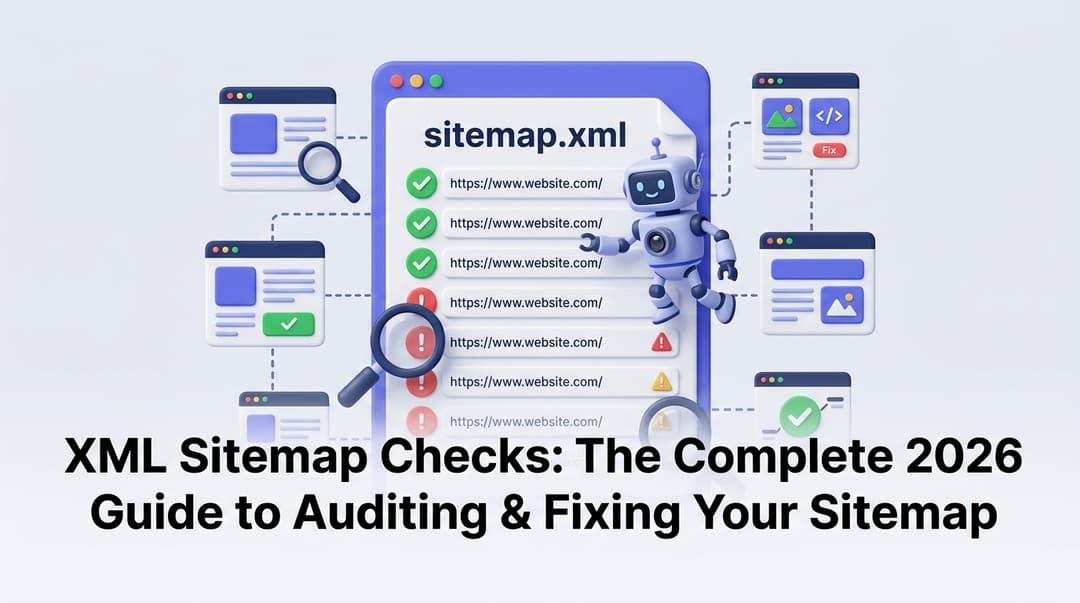
XML Sitemap Checks: The Complete 2026 Guide to Auditing & Fixing Your Sitemap
Learn how to run thorough XML sitemap checks in 2026. Discover common errors, how to fix them, and best practices to improve crawling and indexing.
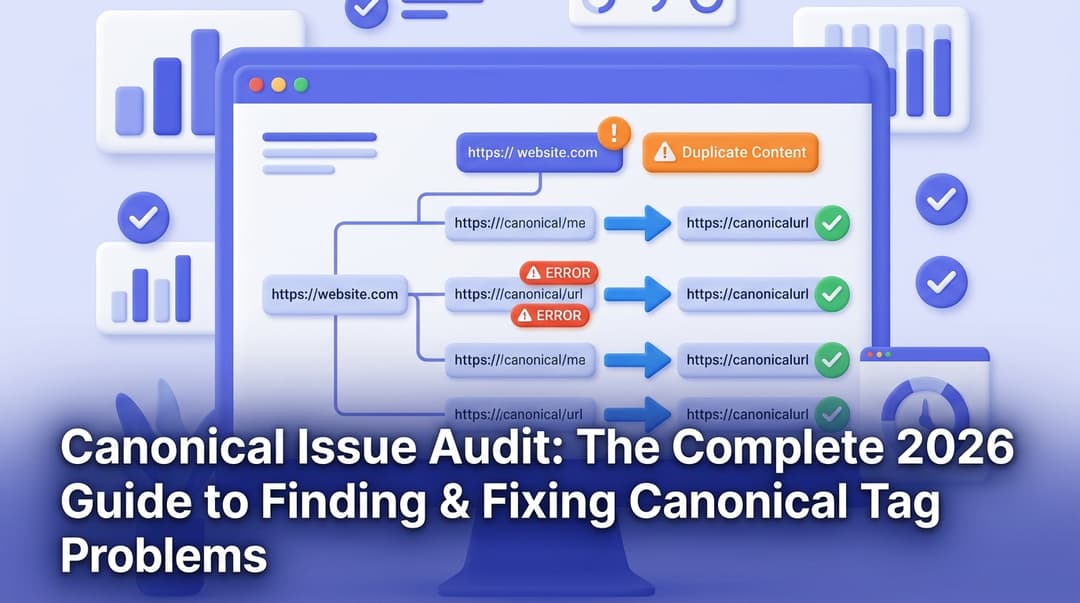
Canonical Issue Audit: The Complete 2026 Guide to Finding & Fixing Canonical Tag Problems
Learn how to run a full canonical issue audit in 2026. Discover the most common canonical tag errors, step-by-step fixes, and tools to protect your SEO rankings.