Free robots.txt Validator
Ensure your robots.txt file is correctly configured to control how search engines crawl your website. Enter your website URL below to validate your robots.txt file.
Validate Your robots.txt File
Enter your website to track its AI visibility across ChatGPT, Gemini, Claude, and Perplexity — and turn chatbot mentions into traffic.
- Set up in minutes
- Cancel anytime
What is a robots.txt File?
A robots.txt file is a text file that website owners create to instruct web robots (typically search engine crawlers) how to crawl pages on their website. The robots.txt file is part of the Robots Exclusion Protocol (REP), a group of web standards that regulate how robots crawl the web, access and index content, and serve that content up to users.
Why is robots.txt Important?
A properly configured robots.txt file helps you:
- Control which parts of your site search engines can crawl
- Prevent search engines from crawling private or duplicate content
- Manage your crawl budget more efficiently
- Specify the location of your XML sitemaps
- Block specific web crawlers that might overload your server
Common robots.txt Directives
| Directive | Description | Example |
|---|---|---|
| User-agent: | Specifies which robot the rules apply to | User-agent: Googlebot |
| Disallow: | Tells the robot not to visit specified pages | Disallow: /private/ |
| Allow: | Tells the robot it can access a page or subfolder even if its parent directory is disallowed | Allow: /private/public.html |
| Sitemap: | Tells search engines where to find your sitemap | Sitemap: https://example.com/sitemap.xml |
| Crawl-delay: | Specifies a delay between crawler requests (not supported by all crawlers) | Crawl-delay: 10 |
Common robots.txt Errors
Even small errors in your robots.txt file can lead to unexpected crawling behavior. Our validator checks for these common issues:
- Syntax errors: Incorrect formatting or typos in directives
- Missing User-agent: Each rule set must have at least one User-agent line
- Invalid directives: Using directives that aren't recognized by major search engines
- Conflicting rules: Rules that contradict each other
- Blocking important resources: Accidentally blocking CSS, JavaScript, or other important files
- Incorrect sitemap URLs: Sitemap URLs that are invalid or inaccessible
- Blocking all robots: Using
User-agent: * Disallow: /which blocks all search engines from your entire site
How to Create a robots.txt File
- Create a text file named exactly "robots.txt"
- Add your directives using the proper syntax:
User-agent: * Disallow: /private/ Allow: /private/public.html Sitemap: https://example.com/sitemap.xml - Upload the file to your website's root directory (e.g., https://example.com/robots.txt)
- Test your file using our robots.txt validator to ensure it's correctly formatted
Best Practices for robots.txt
- Be specific with User-agents: Target specific crawlers when possible instead of using the wildcard
* - Use absolute URLs for sitemaps: Always use full URLs including the protocol (https://) for sitemap directives
- Don't use robots.txt for privacy: It's not a security measure; sensitive content should be protected with proper authentication
- Be careful with wildcards: Using patterns like
Disallow: /*.pdfcan have unintended consequences - Include your sitemap: Always reference your XML sitemap in your robots.txt file
- Test after changes: Always validate your robots.txt file after making changes
Frequently Asked Questions
Do I need a robots.txt file?
While not mandatory, a robots.txt file is highly recommended for most websites. Without one, search engines will attempt to crawl your entire site, which might not be optimal for your SEO strategy or server resources.
Can I use robots.txt to hide my website from search engines?
While you can use robots.txt to request search engines not to crawl your site, it doesn't guarantee your site won't be indexed. For complete exclusion from search results, use the noindex meta tag or HTTP header.
How often do search engines check robots.txt?
Major search engines like Google typically check a site's robots.txt file each time they crawl the site, which can be daily for active sites. However, changes might not be recognized immediately.
What happens if my robots.txt file is inaccessible?
If a search engine can't access your robots.txt file (e.g., it returns a 5xx error), most search engines will assume they shouldn't crawl your site at all. If it returns a 4xx error, they'll typically proceed to crawl your site without restrictions.
Enter your website to track its AI visibility across ChatGPT, Gemini, Claude, and Perplexity — and turn chatbot mentions into traffic.
- Set up in minutes
- Cancel anytime
From the blog
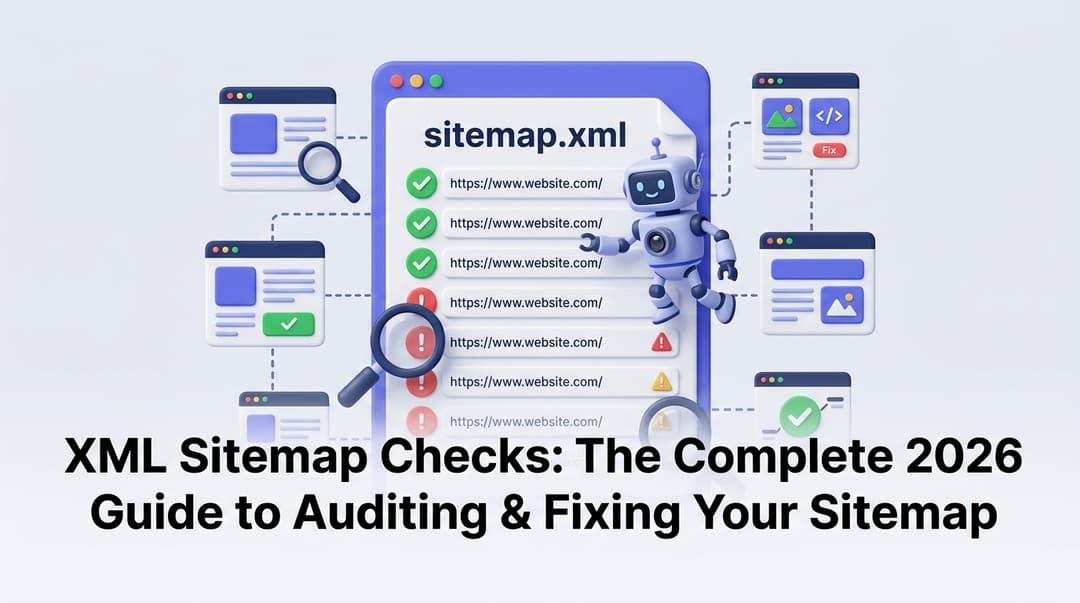
XML Sitemap Checks: The Complete 2026 Guide to Auditing & Fixing Your Sitemap
Learn how to run thorough XML sitemap checks in 2026. Discover common errors, how to fix them, and best practices to improve crawling and indexing.
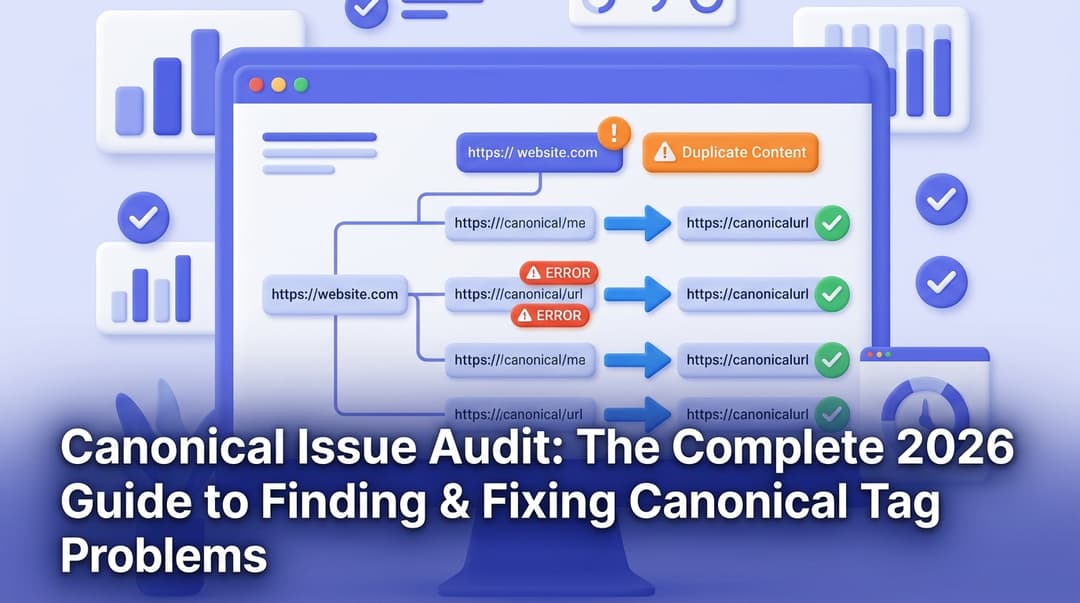
Canonical Issue Audit: The Complete 2026 Guide to Finding & Fixing Canonical Tag Problems
Learn how to run a full canonical issue audit in 2026. Discover the most common canonical tag errors, step-by-step fixes, and tools to protect your SEO rankings.