Best Programmatic SEO Tools in 2026 (Built for AI Search)

 Summarize in ChatGPT
Programmatic SEO lets you create hundreds or thousands of web pages using templates, structured data, and automation. Instead of writing each page by hand, you define a pattern — like “best restaurants in {city}” — and generate pages for every variation at once. Companies like Zapier, Wise, Airbnb, and Nomad List have used this approach to capture massive long-tail search traffic.
The challenge is that programmatic SEO is never a single tool. You need different tools for keyword research, data collection, page generation, publishing, indexing, and performance tracking. Most guides stop at indexing. This one goes further: in 2026, with AI platforms like ChatGPT, Claude, Gemini, and Perplexity answering more and more search queries directly, you also need to know whether your pSEO pages are visible in AI-generated responses — not just in Google’s traditional results.
Here are the best tools for each stage of the programmatic SEO workflow.
1. Keyword Research
Programmatic SEO starts with finding a head term and modifiers that can generate hundreds of long-tail keyword variations. You need tools that let you discover these patterns at scale, filter by search volume and difficulty, and export the data for your templates.
Ahrefs
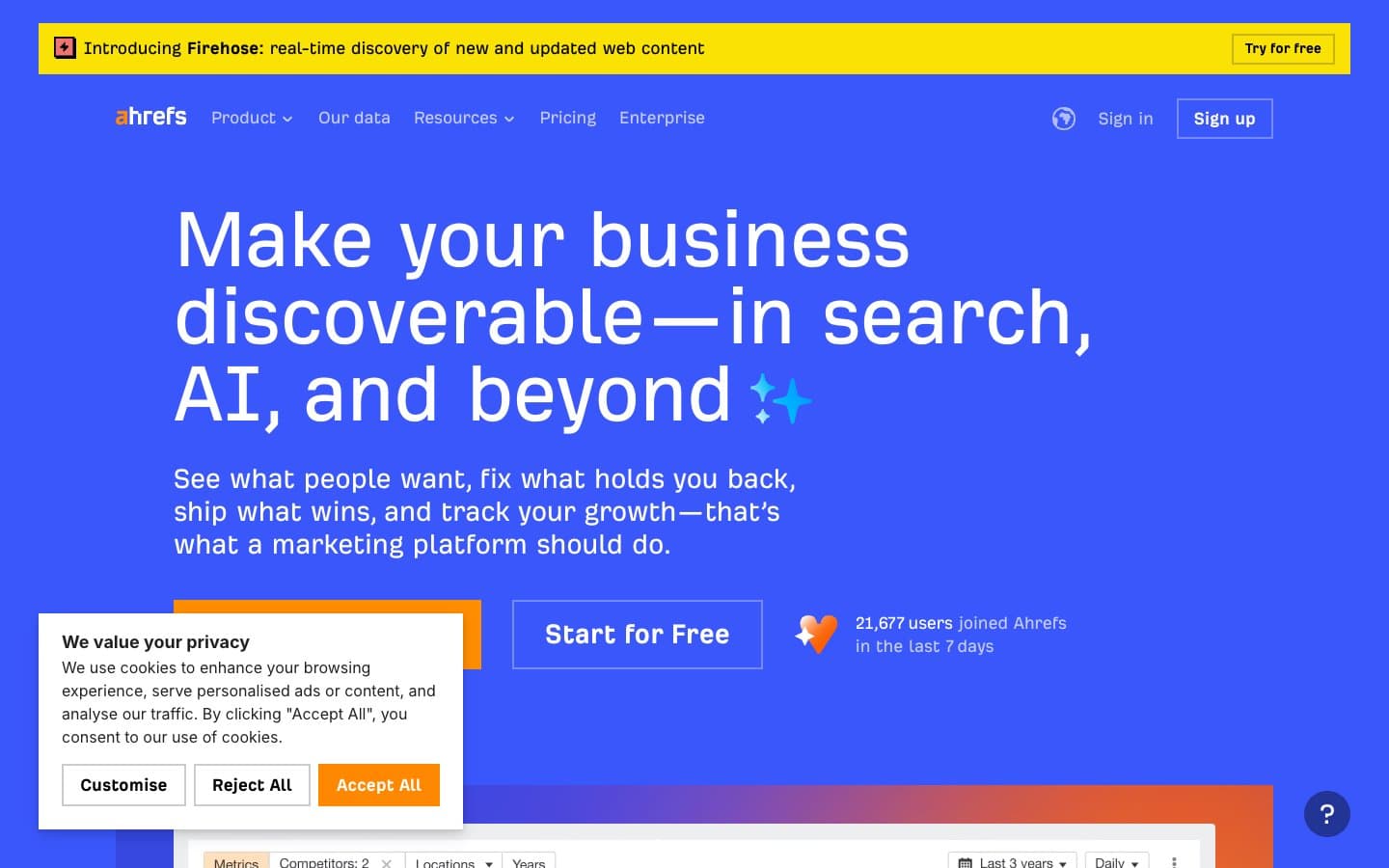
Ahrefs is the industry standard for keyword research at scale. Its Keyword Explorer and Matching Terms report let you enter a head term, then filter by modifiers, volume ranges, and keyword difficulty. For pSEO, the key feature is the ability to export thousands of keyword variations to CSV, which you can then feed directly into your data pipeline. Ahrefs also lets you analyse competitor domains to discover which modifier patterns they’re targeting — essential for identifying gaps in your own programmatic strategy.
Pricing: Starts at $129/month (Lite).
Website: ahrefs.com
Ahrefs — ahrefs.com
Semrush
Semrush’s Keyword Magic Tool is particularly strong for programmatic SEO because it automatically groups keywords by topic and modifier type. Enter a seed keyword and it returns thousands of variations with volume, difficulty, intent, and CPC data. The clustering feature helps you identify which modifier groups have enough aggregate volume to justify building programmatic page templates. Semrush also offers a Position Tracking tool that can monitor rankings across your entire programmatic page set at scale.
Pricing: Starts at $139.95/month (Pro).
Website: semrush.com
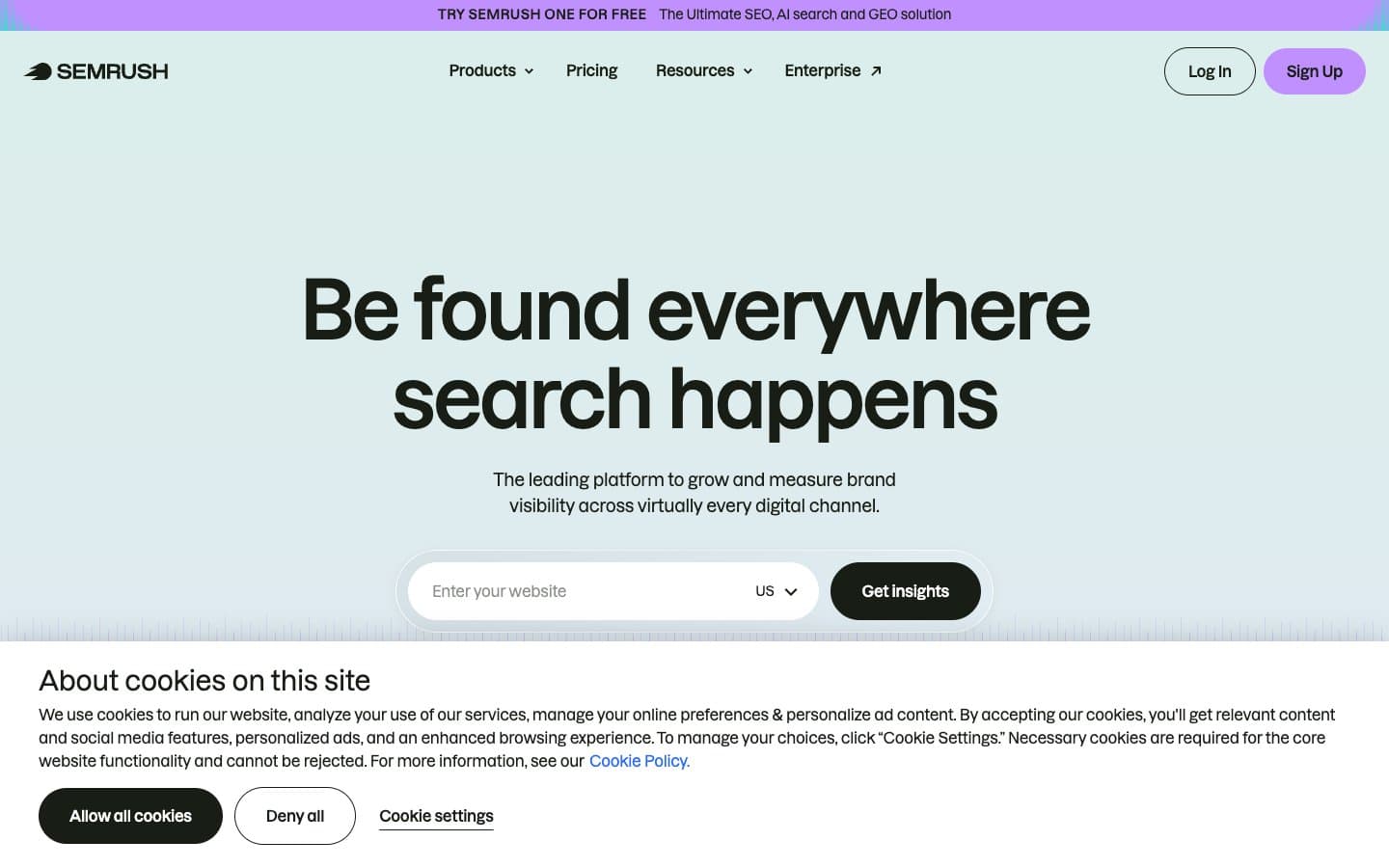
Semrush — semrush.com
LowFruits
LowFruits is built specifically for finding low-competition keywords, which makes it a natural fit for programmatic SEO. It analyses SERPs in bulk and highlights keywords where weak domains (forums, user-generated content, thin pages) are ranking — meaning your template-generated pages have a realistic shot at outranking them. The SERP weakness analysis is the standout feature: instead of relying on estimated difficulty scores, it checks the actual top-10 results for each keyword.
Pricing: Credit-based, starting at $29/month.
Website: lowfruits.io
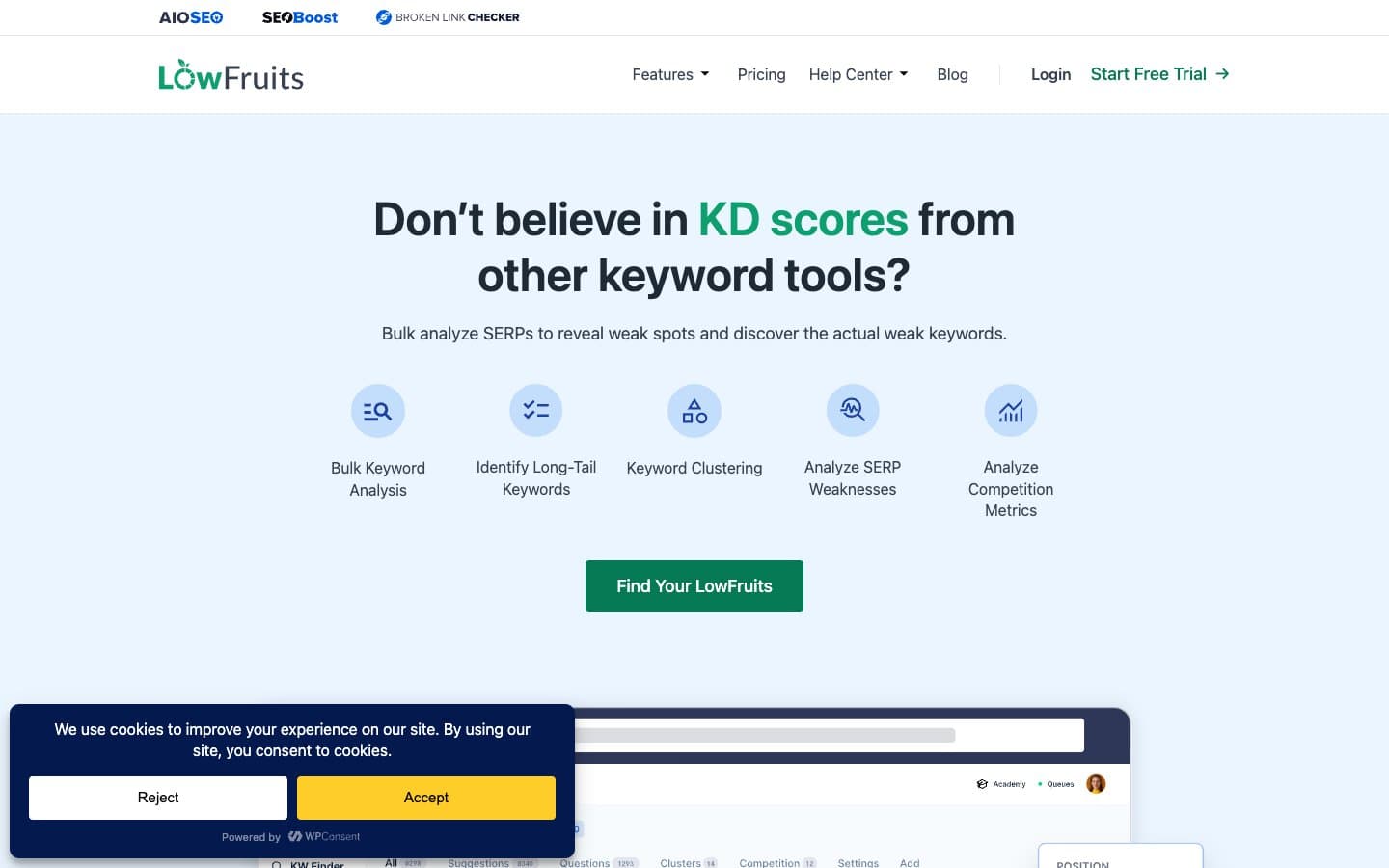
LowFruits — lowfruits.io
2. Data Collection and Enrichment
Programmatic SEO pages are only as good as the data behind them. Thin data produces thin pages, which Google will either refuse to index or actively demote. You need reliable sources of structured data and tools to organise it.
Bardeen
Bardeen is a browser-based automation and web scraping tool that lets you extract structured data from websites without writing code. For pSEO, it’s useful for building datasets from public sources: scraping business directories, product listings, review sites, or any structured web page. You can set up automated workflows that pull data directly into Google Sheets or Airtable, keeping your datasets fresh as source data changes.
Pricing: Free for individuals; $15/month for teams.
Website: bardeen.ai
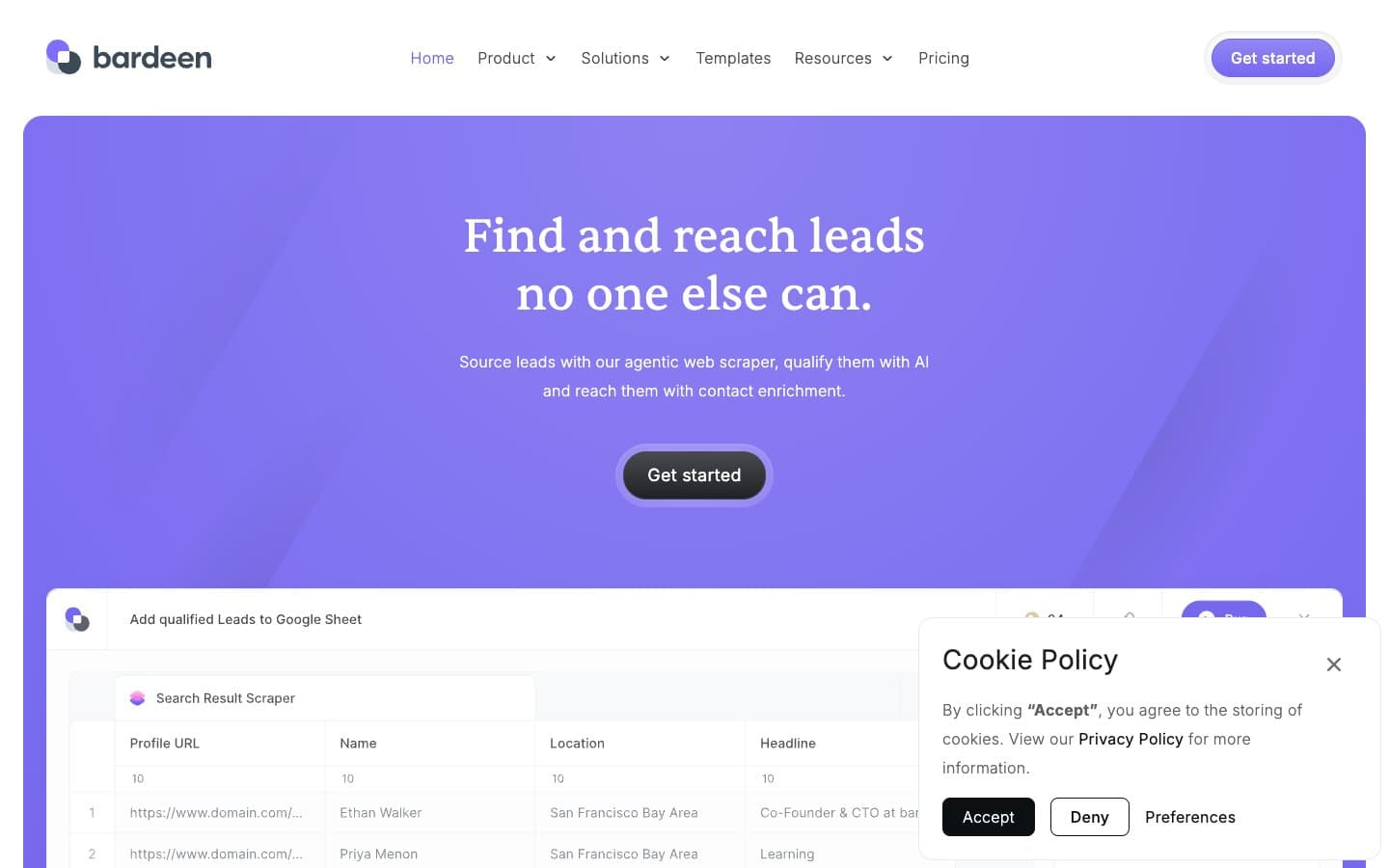
Bardeen — bardeen.ai
Clay
Clay combines data enrichment with AI-powered automation. While it’s primarily marketed for sales teams, its data enrichment capabilities are powerful for pSEO: you can take a list of companies, locations, or products and enrich each row with additional data points from dozens of sources. This turns a simple list of cities into a rich dataset with population, climate data, cost of living, and more — exactly the kind of depth that makes programmatic pages genuinely useful rather than thin.
Pricing: Free tier available; paid plans from $134/month.
Website: clay.com
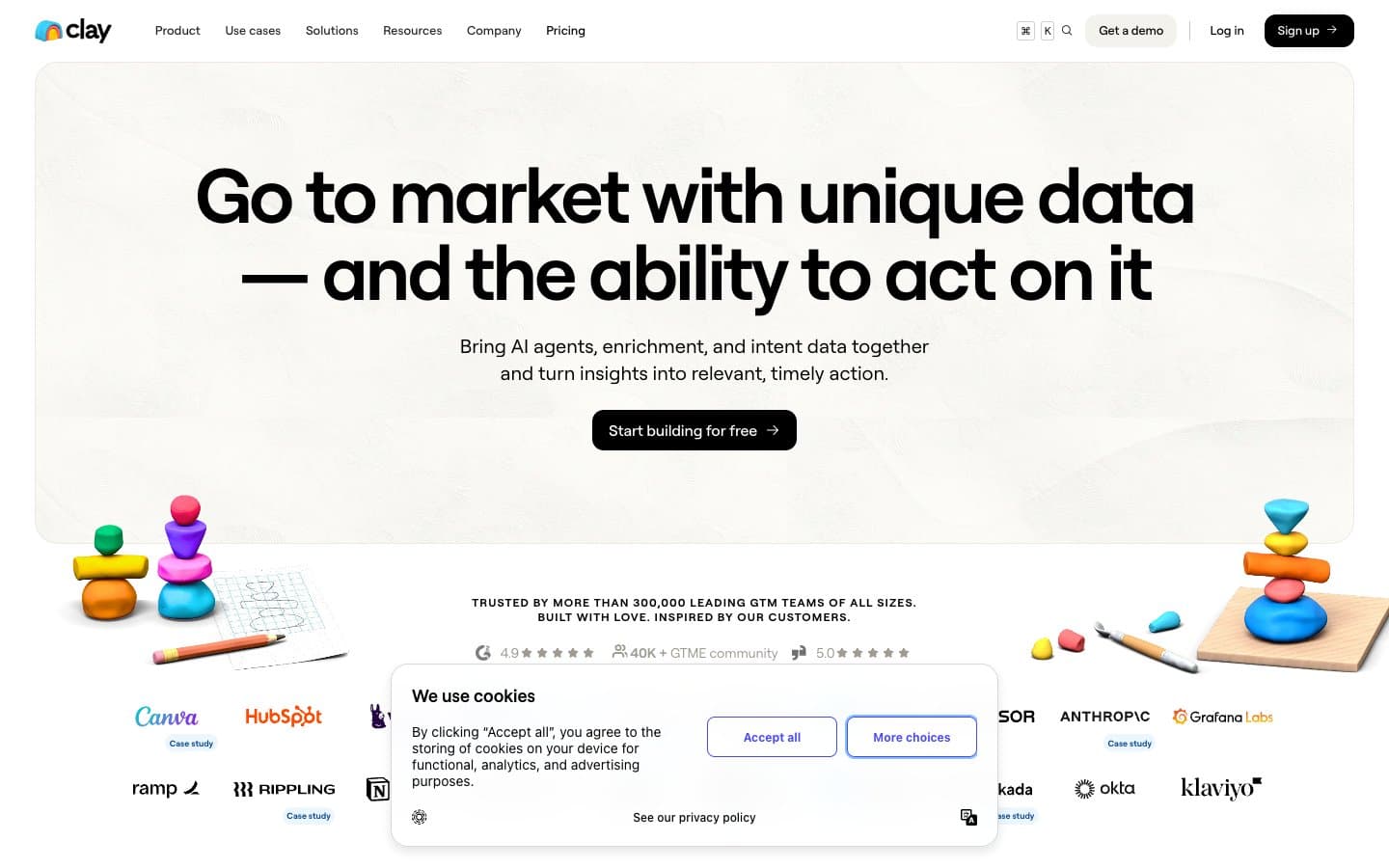
Clay — clay.com
3. Page Generation and Content Creation
This is the core of any programmatic SEO stack: the tools that take your data and templates and produce actual web pages. The category ranges from simple spreadsheet-to-page converters to full AI-powered content platforms.
SEOmatic
SEOmatic is the most established dedicated programmatic SEO platform. It’s designed specifically for agencies and teams that need to create recurring page types — service + location pages, category pages, comparison pages — at scale. You build a template once, connect your data source, and SEOmatic generates hundreds of pages with consistent SEO quality. It publishes directly to WordPress, Webflow, and other CMS platforms. The built-in AI writer helps paraphrase content across pages to avoid duplicate content issues.
Pricing: Starts at $49/month.
Website: seomatic.ai
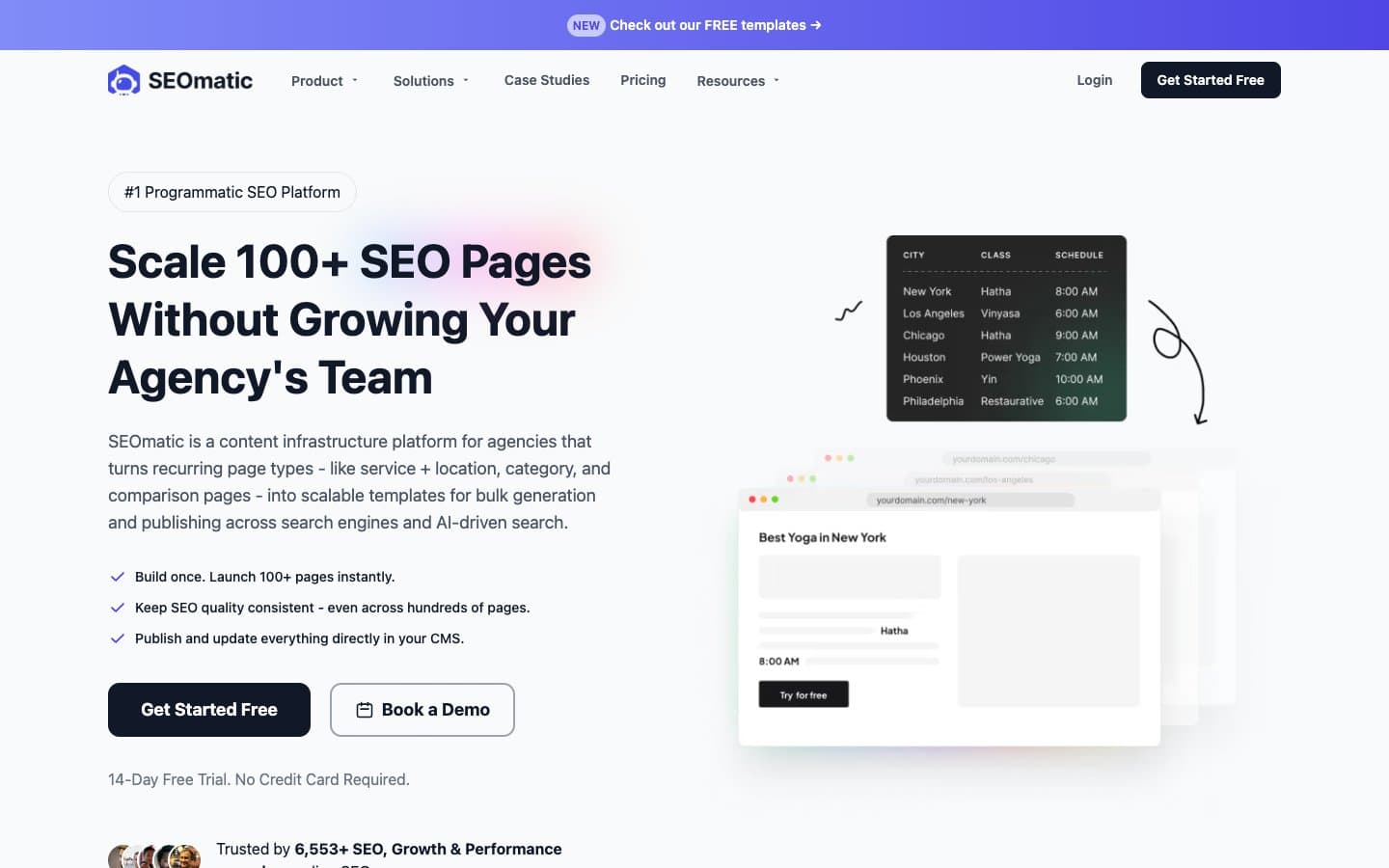
SEOmatic — seomatic.ai
Byword
Byword takes a different approach: it’s an AI article writer built for bulk generation. Upload a CSV with your target keywords or topics, and Byword generates complete, optimised articles for each row. It supports 80+ languages, publishes directly to WordPress and Webflow, and includes a research step that analyses top-ranking content before writing. This makes it particularly effective for content clusters, comparison pages, and informational content where each page needs more than just template variables — it needs actual prose.
Pricing: Starts at $99/month (25 articles).
Website: byword.ai
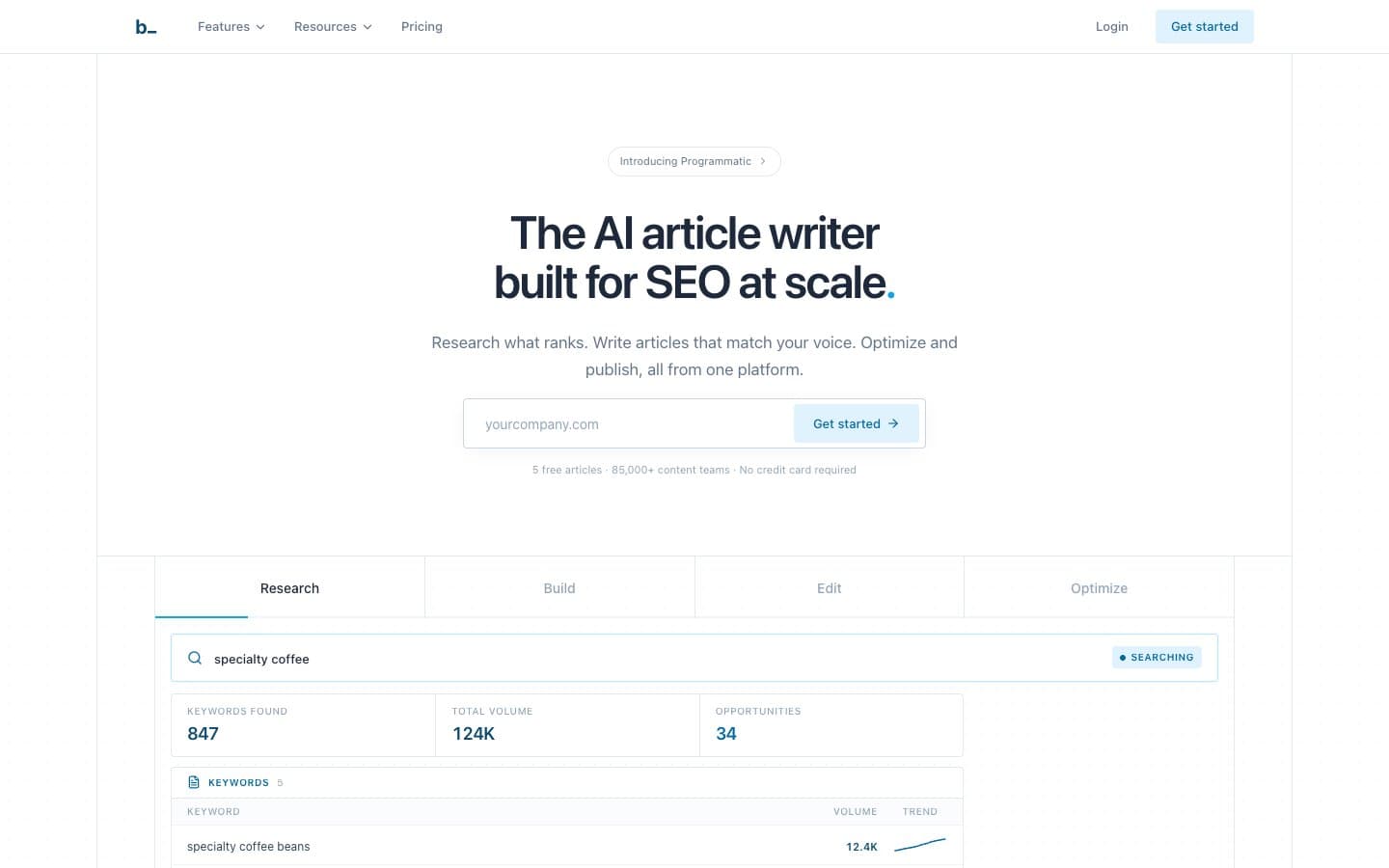
Byword — byword.ai
Typemat
Typemat is the simplest and most affordable option for getting started with programmatic SEO. Paste a public Google Sheets URL, map your columns to template variables, and it generates pages you can import into WordPress, Wix, or Squarespace. There’s no account required to try it, and the free tier lets you create 5 pages. For small-scale pSEO experiments or quick prototyping, Typemat’s zero-friction approach is hard to beat.
Pricing: Free for 5 pages; $57 lifetime for unlimited.
Website: typemat.com
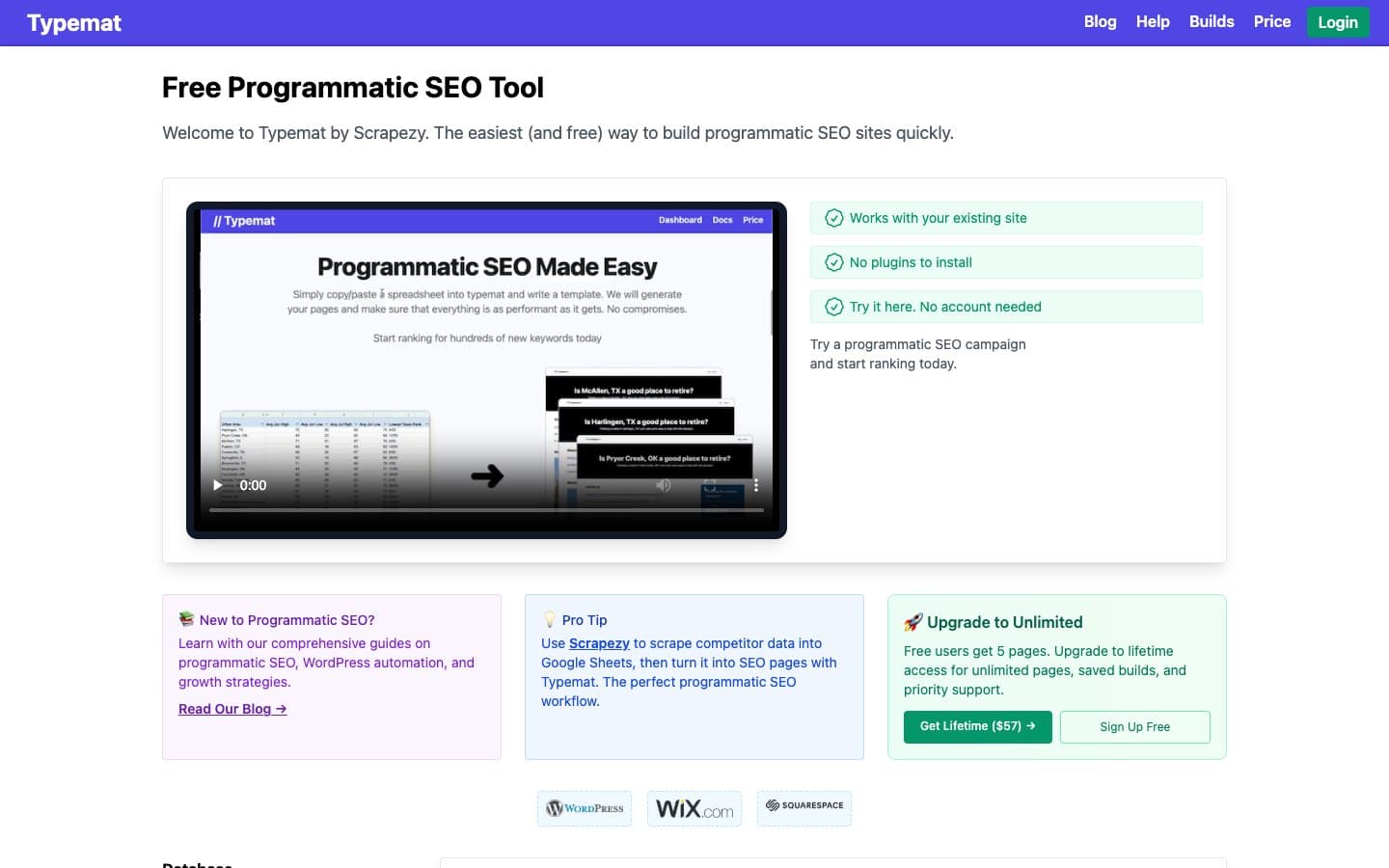
Typemat — typemat.com
4. CMS and Publishing
Once your pages are generated, you need somewhere to publish them. The choice of CMS affects how easily you can sync data, manage thousands of URLs, and maintain site performance.
Webflow
Webflow has become the CMS of choice for many pSEO practitioners, especially when paired with data sync tools like Whalesync. Its CMS collections can be populated programmatically via API, and its visual builder gives you full control over page templates without writing code. The trade-off is that Webflow’s CMS has item limits on lower plans (10,000 items on the top plan), which can be a constraint for very large programmatic campaigns.
Pricing: CMS plans from $29/month.
Website: webflow.com
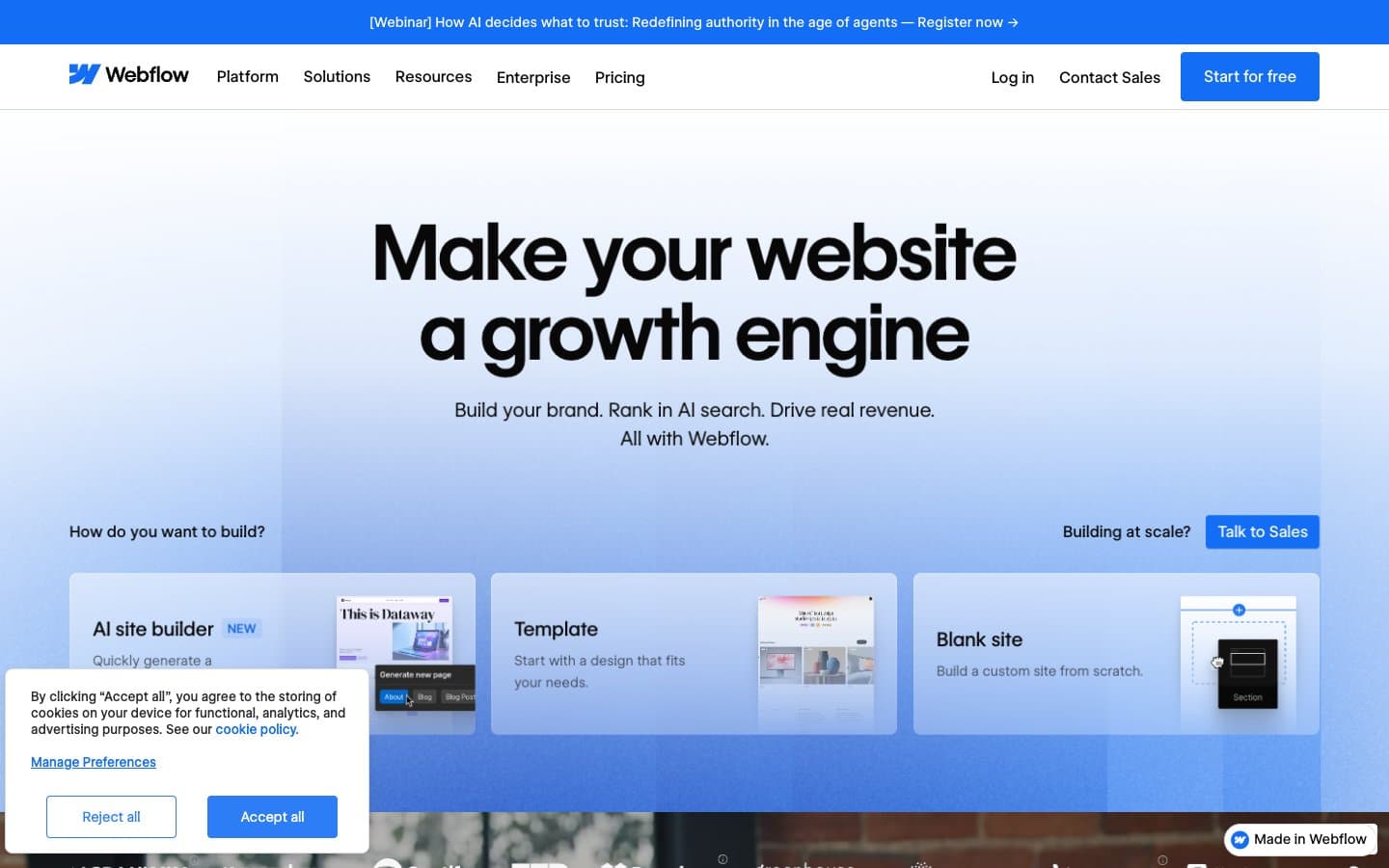
Webflow — webflow.com
WordPress remains the most common choice overall, especially when combined with WP All Import for bulk page creation from XML or CSV. For developers building custom solutions, Next.js offers static generation capabilities that work well for programmatic pages at very large scale.
5. Indexing and Technical SEO
Generating pages is only half the battle. Google needs to discover, crawl, and index them. With programmatic SEO producing hundreds or thousands of new URLs, fast and reliable indexing becomes critical.
Foudroyer
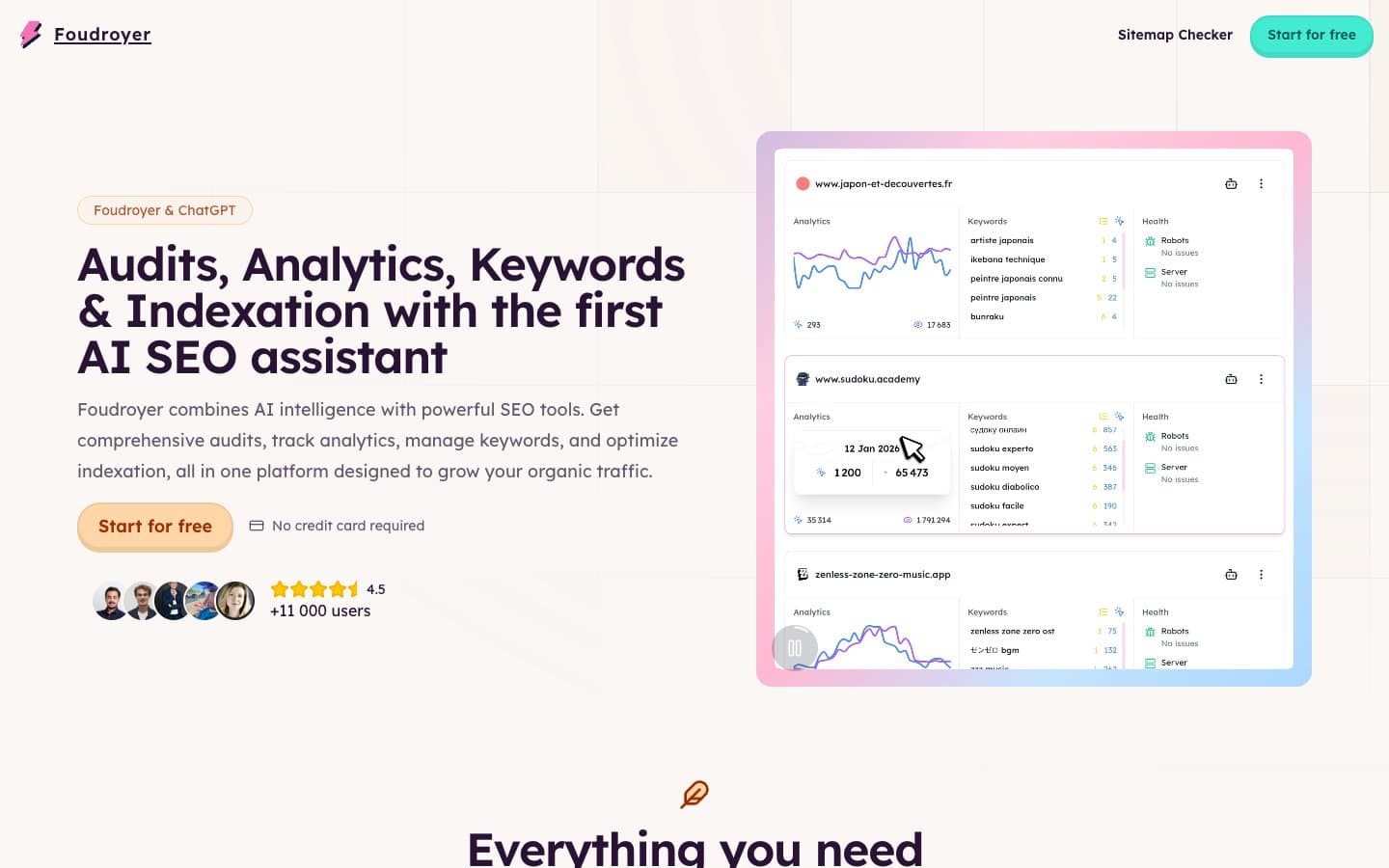
Foudroyer is an indexing-focused tool that combines Google Search Console integration with automated indexing requests. It monitors which of your pages are indexed, identifies issues preventing indexing, and can submit pages for crawling in bulk. For programmatic SEO sites where new pages are being added continuously, this kind of automated indexing management saves significant manual effort.
Pricing: Free tier available; paid plans from €9.99/month.
Website: foudroyer.com
Foudroyer — foudroyer.com
Screaming Frog
Screaming Frog SEO Spider is essential for auditing your programmatic pages at scale. It crawls your site and identifies duplicate titles, missing meta descriptions, thin content, broken internal links, and other technical issues that are common with template-generated pages. Running a Screaming Frog crawl after deploying a batch of programmatic pages is a critical quality control step — it catches the mistakes that templating systems often produce.
Pricing: Free for up to 500 URLs; £259/year for unlimited.
Website: screamingfrog.co.uk
Screaming Frog — screamingfrog.co.uk
6. Performance Monitoring
Google Search Console and Google Analytics are the obvious starting points for tracking how your programmatic pages perform in organic search. GSC shows you which queries drive impressions and clicks, and GA4 tracks on-site behaviour and conversions. For programmatic SEO, the key is segmenting your analytics by page template type so you can identify which patterns are driving results and which need refinement.
Tools like Semrush’s Position Tracking or Ahrefs’ Rank Tracker can monitor keyword rankings across your entire programmatic page set, giving you a portfolio-level view of performance over time.
7. The Missing Step: AI Visibility Tracking
This is where most programmatic SEO guides end. And in 2025, that was fine. But in 2026, there’s a problem.
AI platforms are eating long-tail search traffic — the exact type of traffic that programmatic SEO is designed to capture. When someone asks ChatGPT “best restaurants in Austin for vegetarians” instead of Googling it, your carefully optimised pSEO page for that exact query never gets seen. Gartner predicts traditional search volume will decline 25–50% by 2028. McKinsey projects $750 billion in consumer spending will flow through AI search. The long-tail queries that make pSEO profitable are migrating to AI platforms.
Here’s the uncomfortable reality for programmatic SEO pages specifically:
Template-generated pages are less likely to be cited by AI. AI platforms prioritise content with original analysis, expert commentary, and unique data — exactly the qualities that template-driven pages tend to lack. McKinsey found that only 5–10% of AI citations come from brand-owned pages. And 80% of URLs cited by ChatGPT and Perplexity don’t even rank in Google’s top 100, meaning your Google rankings are a poor proxy for AI visibility.
Each AI platform has its own discovery algorithm. Only 11% of domains are cited by both ChatGPT and Perplexity. Only 20% overlap exists between Claude and ChatGPT results. You can’t assume that ranking on Google means you’re visible in AI answers.
This means that if you’re investing in programmatic SEO, you need to track not just how your pages rank on Google, but whether they’re appearing in AI-generated responses across ChatGPT, Claude, Gemini, and Perplexity.
QuickSEO
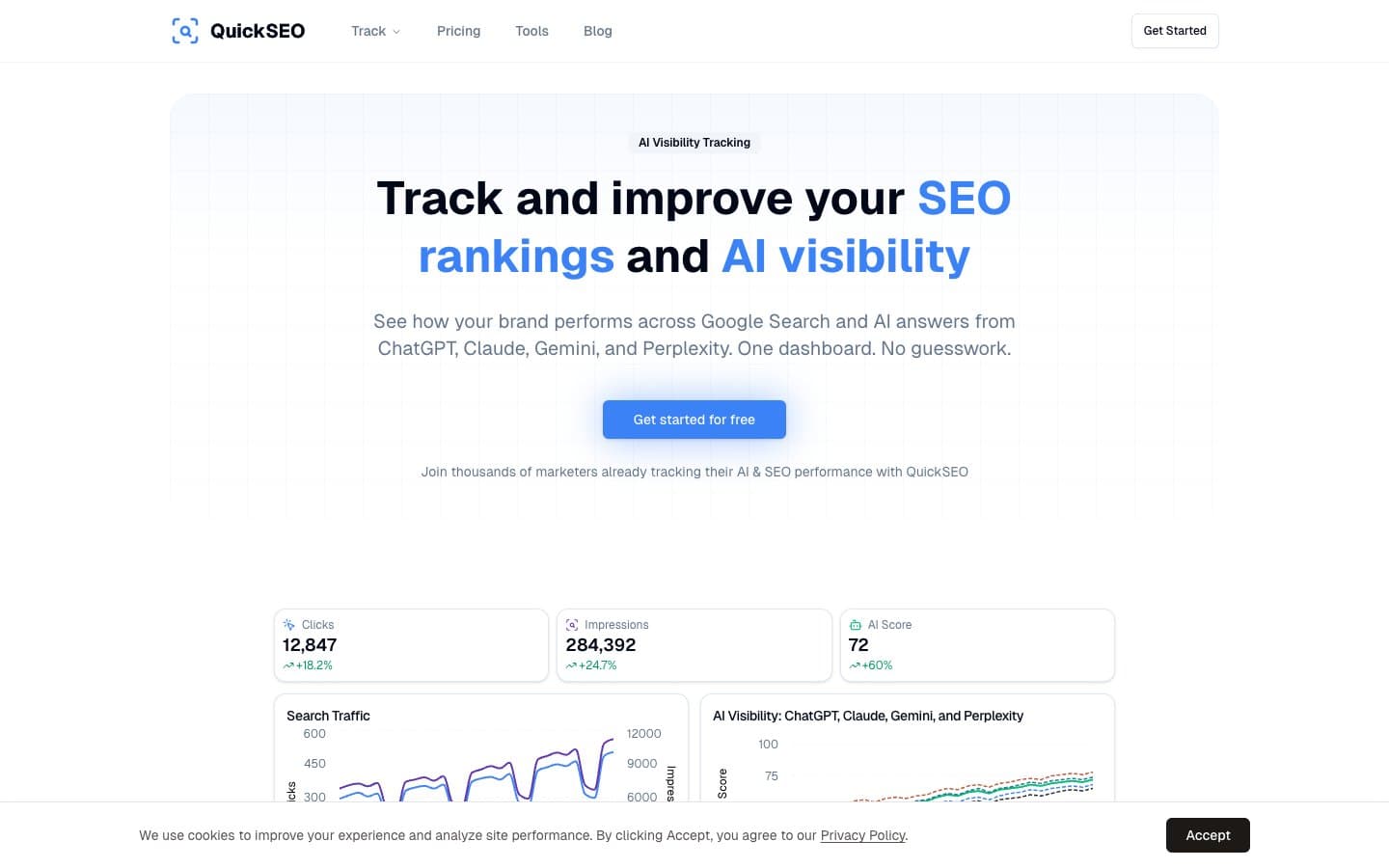
QuickSEO connects your Google Search Console data with AI visibility tracking across ChatGPT, Claude, Gemini, and Perplexity in a single dashboard. You can see exactly which of your pages and keywords are driving traffic from Google, and separately track whether your brand is appearing in AI-generated answers to the same queries. Seeing GSC and AI side by side is particularly valuable for programmatic SEO: it shows you which of your template page types are working in traditional search versus AI search, so you know where to invest in content improvements.
Pricing: Starter at $99/month; Pro at $199/month; Business at $399/month.
Website: quickseo.ai
QuickSEO — quickseo.ai
How to Make Your Programmatic Pages AI-Visible
If you want your pSEO pages to show up in AI-generated responses, not just Google’s organic results, here are five practical steps:
1. Add unique expert content to every template. Don’t rely solely on data variables. Include original commentary, proprietary analysis, or curated recommendations that can’t be found elsewhere. AI platforms reward pages with genuine first-hand information.
2. Use structured data and schema markup. AI crawlers rely heavily on structured data to understand page content. Implement relevant schema types (LocalBusiness, Product, FAQ, HowTo) across your templates.
3. Build topical authority with internal linking. Connect your programmatic pages into coherent topic clusters. A page about “best restaurants in Austin” should link to your Austin city guide, your restaurant category page, and related location pages. This signals topical depth to both Google and AI systems.
4. Ensure AI bots can crawl your pages. Check that your robots.txt doesn’t block AI crawlers (GPTBot, ClaudeBot, PerplexityBot, Google-Extended). Consider implementing an llms.txt file to help AI systems understand your site structure.
5. Monitor and iterate. Use an AI visibility tracking tool to see which pages and queries are generating AI citations. Double down on what works, and improve pages that rank well on Google but are invisible to AI.
Wrapping Up
Programmatic SEO in 2026 requires more than just generating pages at scale. The tools in this guide cover the full workflow, from discovering the right keywords with Ahrefs, Semrush, or LowFruits, through collecting data with Bardeen and Clay, generating pages with SEOmatic, Byword, or Typemat, publishing to Webflow or WordPress, ensuring indexing with Foudroyer and Screaming Frog, and — the step most guides miss — tracking whether your pages are actually visible in the AI search platforms that are capturing an increasing share of the queries you’re targeting.
The best programmatic SEO stack isn’t about picking one tool. It’s about combining the right tools for each stage of the workflow, and making sure you’re measuring visibility across both Google and AI platforms.
Want to see how your brand appears in AI search results? Start tracking your brand’s AI visibility for free at quickseo.ai.
Enter your website to track its AI visibility across ChatGPT, Gemini, Claude, and Perplexity — and turn chatbot mentions into traffic.
- Set up in minutes
- Cancel anytime
Keep reading
Related posts
More articles on the same topics, prioritized by shared tags and keyword overlap.