Top 6 Otterly Alternatives for AI Search Monitoring in 2026

 Summarize in ChatGPT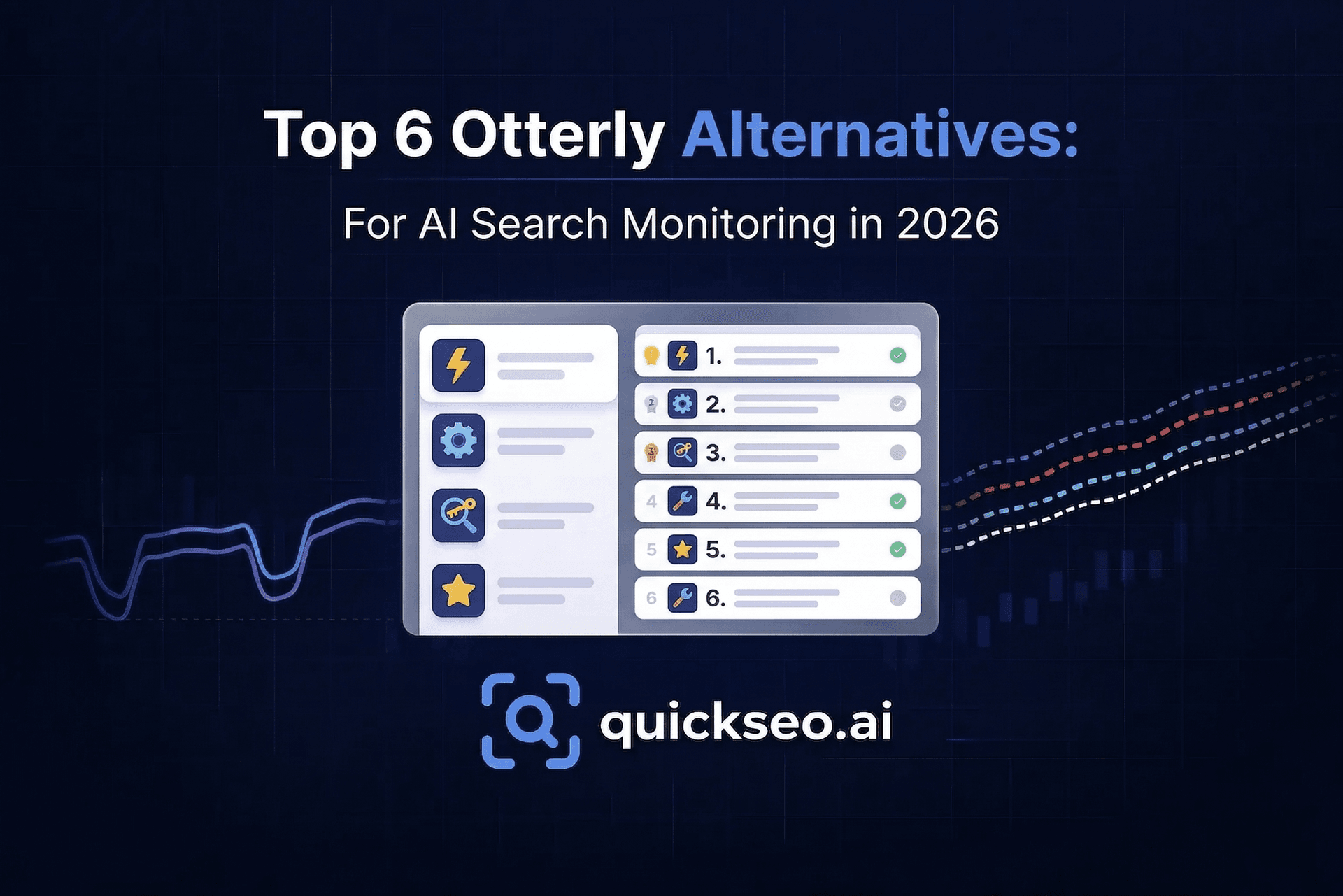
AI is reshaping how people discover brands online. A recent study found that 44% of consumers now say AI chatbots are their primary search tool, and that number keeps climbing. If you’ve been using Otterly.ai to track your brand’s visibility across AI platforms, you already understand why this matters. But Otterly isn’t the only game in town—and depending on your needs, it might not be the best fit.
Maybe you need deeper Google Search Console analytics alongside your AI tracking. Maybe Otterly’s pricing feels steep for what you get. Or perhaps you want a tool that gives you both traditional SEO data and AI visibility in a single dashboard—something like QuickSEO, which was built from the ground up to solve exactly that problem.
In this guide, we’ll walk through the six best alternatives to Otterly for AI search monitoring in 2026, starting with the one we think delivers the most value for the price.
1. QuickSEO — Best Overall Otterly Alternative
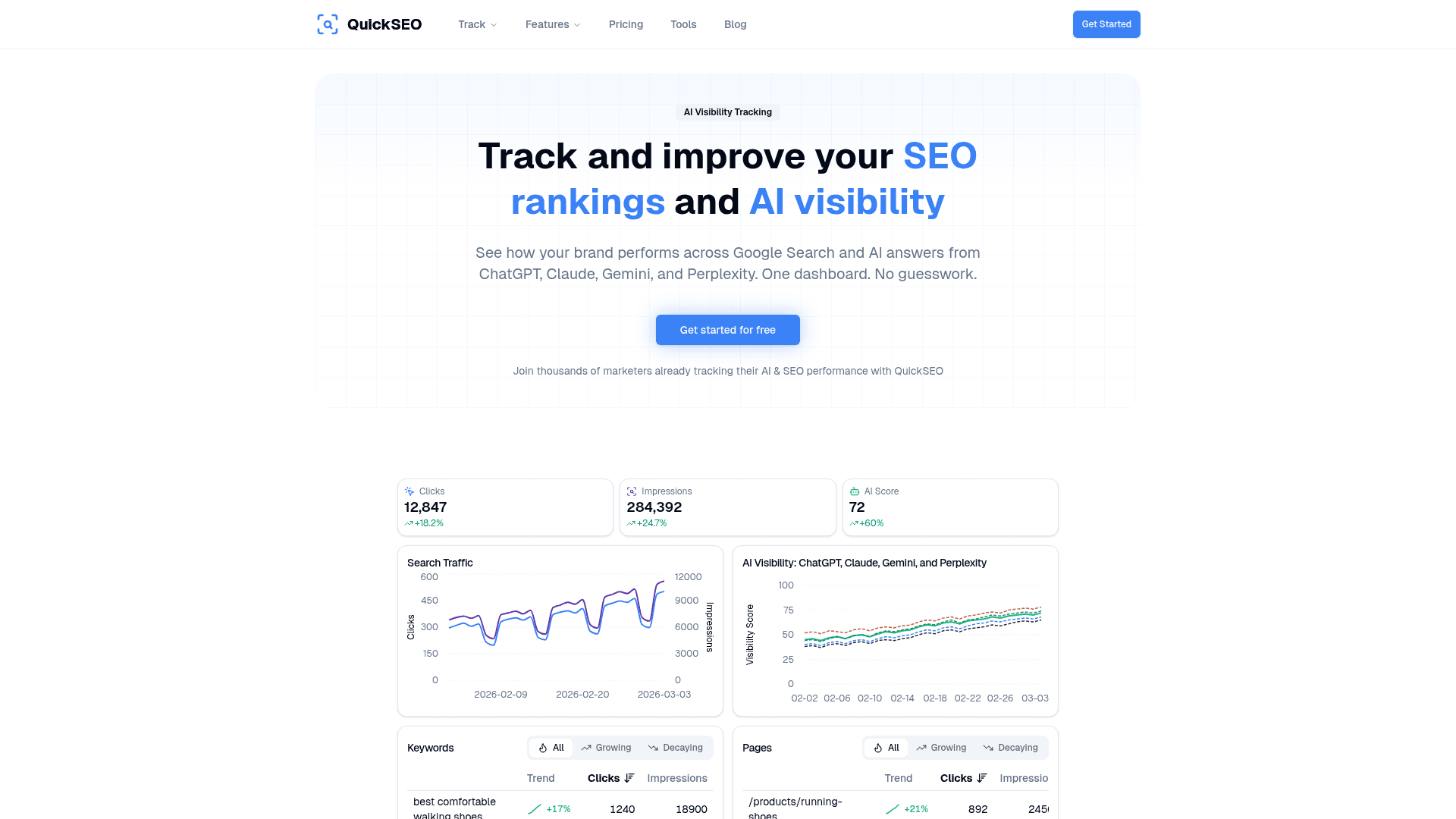
QuickSEO takes the top spot because it solves a problem most other tools only half-address: it combines full Google Search Console analytics with weekly AI visibility tracking across ChatGPT, Claude, Gemini, and Perplexity—all inside one clean dashboard. Instead of jumping between your Search Console and a separate AI monitoring tool, you get the complete picture in a single view.
What makes QuickSEO particularly compelling is its tracked prompts feature. You define the questions your target audience actually asks AI chatbots—like “best project management tools for startups”—and QuickSEO monitors your brand’s ranking position in each AI’s response over time. It also runs sentiment analysis, so you can see whether AI platforms talk about your brand positively, neutrally, or negatively.
Key features: Advanced Google Search Console analytics, weekly AI visibility tracking across any 3 of the 4 chatbots, custom prompt tracking (50–350 prompts by plan), sentiment analysis, branded vs. non-branded keyword segmentation, page grouping, and competitor tracking.
Pricing: Starts at $99/month (Starter) for 1 website and 50 tracked prompts. Pro is $199/month for 150 prompts and Business $399/month for 350 — every plan covers one website.
Best for: Marketing teams and SEO professionals who want traditional search analytics and AI visibility monitoring in one place, without paying enterprise prices.
2. Semrush — Best for Enterprise-Scale SEO + AI Visibility
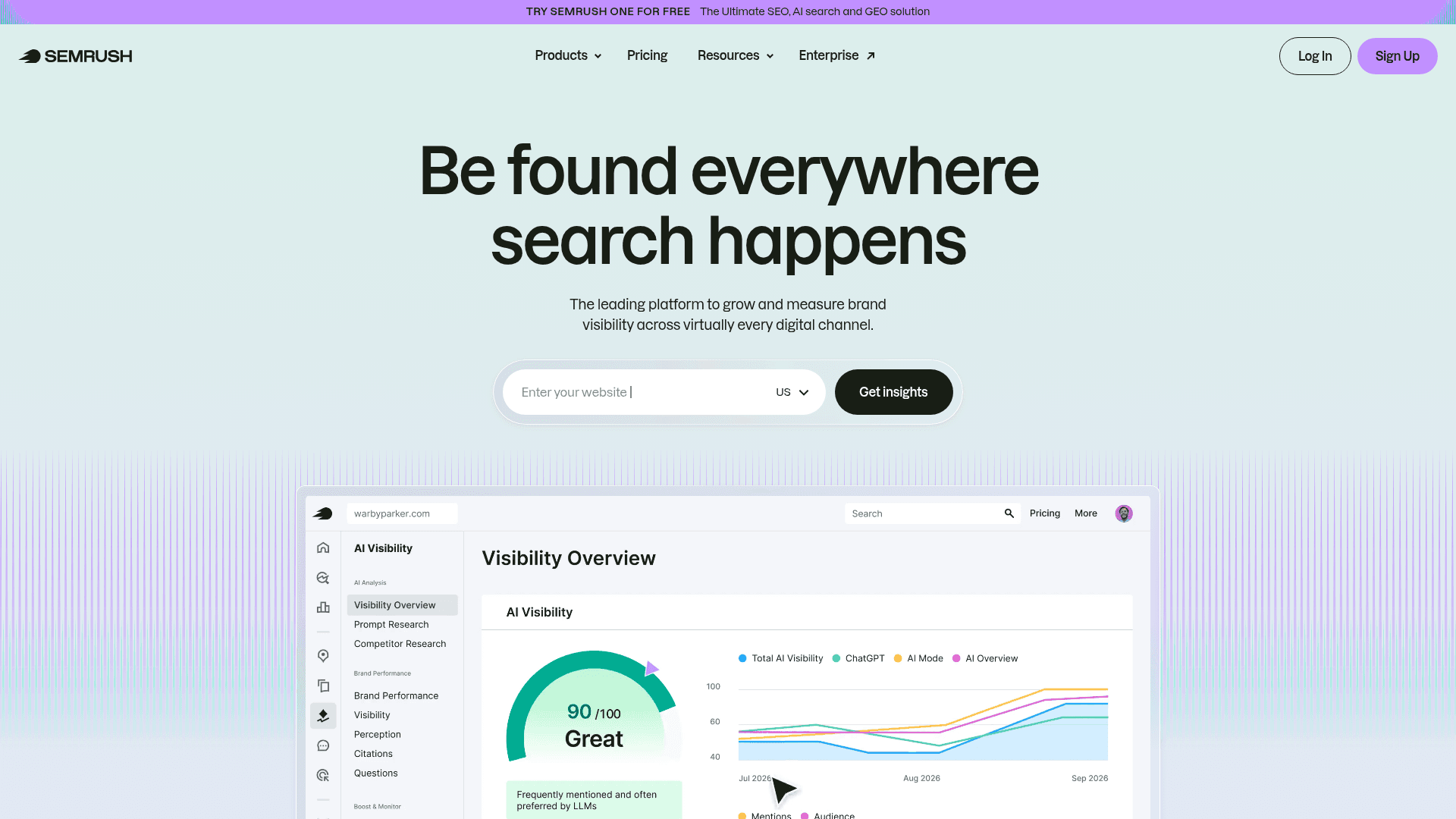
Semrush has been a household name in SEO for over 17 years, and it’s adapted to the AI era with its new AI Visibility Toolkit. Built into Semrush One, this toolkit monitors how brands appear across LLM-generated answers, drawing from a database of 213+ million tracked prompts. If you’re already invested in the Semrush ecosystem for keyword research, backlink analysis, or competitive intelligence, adding AI visibility feels like a natural extension.
The trade-off is complexity and cost. Semrush is a massive platform with dozens of tools, which can feel overwhelming if all you need is AI search monitoring. The AI visibility features are also bundled into higher-tier plans, so you might end up paying for a lot of functionality you don’t use. If you want a focused, streamlined alternative, a tool like QuickSEO gives you the AI tracking essentials without the enterprise price tag.
Key features: 27 billion keyword database, 43 trillion backlinks, AI Visibility Toolkit with LLM prompt tracking, content optimization, competitive benchmarking, PPC and social media tools.
Pricing: Free 7-day trial available. Paid plans start around $139/month for the Pro tier, but AI visibility features require higher-tier subscriptions.
Best for: Large marketing teams and enterprises that need a comprehensive digital marketing suite and are willing to pay a premium for all-in-one functionality.
3. Ahrefs — Best for Data-Driven AI and Search Visibility
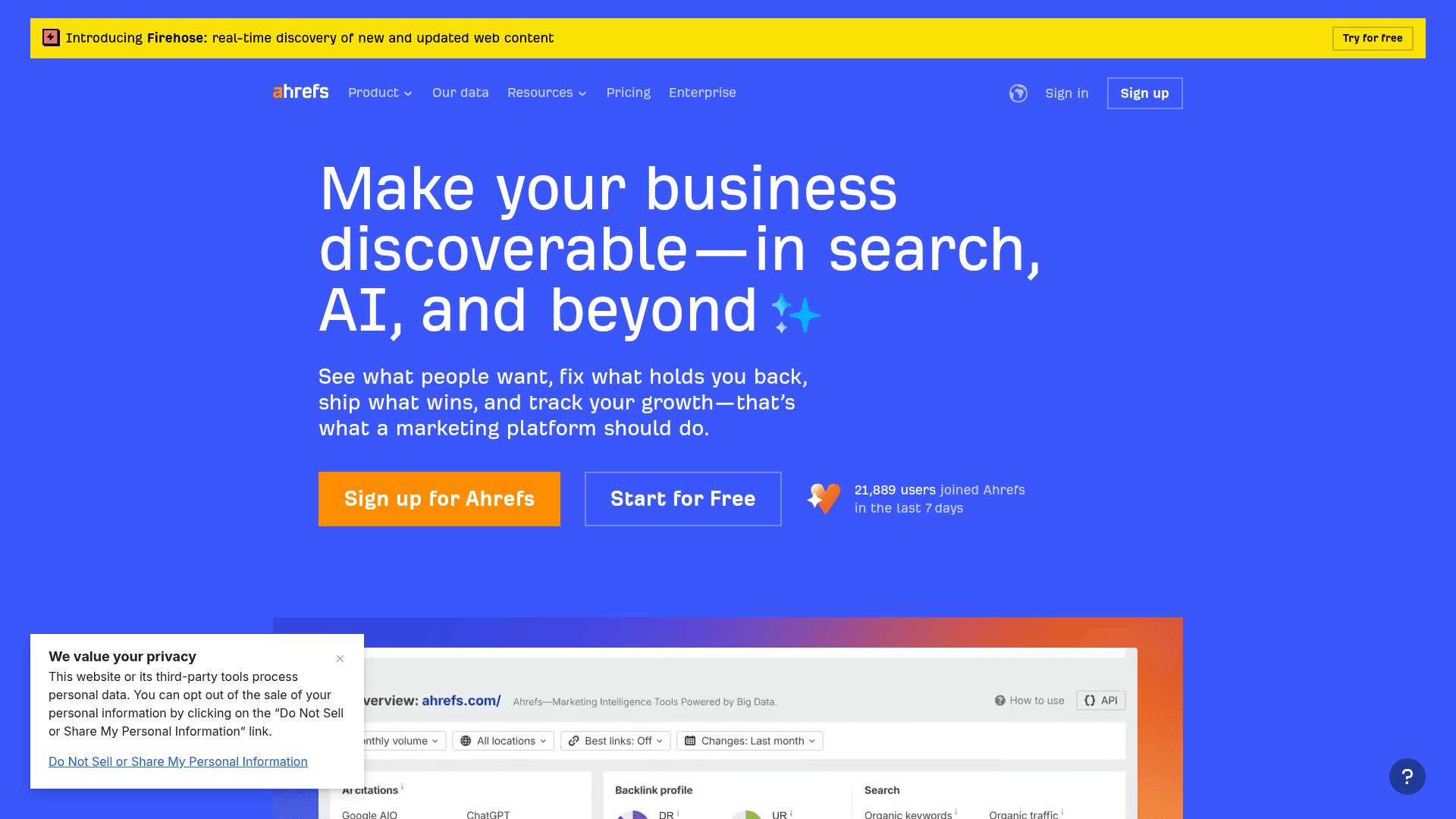
Ahrefs has evolved from a pure backlink analysis tool into what it now calls an “AI Marketing Platform Powered by Big Data.” With one of the largest search and AI databases online, Ahrefs helps marketers maintain brand discoverability across both traditional search and AI-generated answers. Their data infrastructure is genuinely massive—they crawl billions of pages and process enormous volumes of search data daily.
Where Ahrefs excels is depth of data. If you need to understand exactly which backlinks drive authority, which keywords trend across AI responses, and how competitors rank in both organic search and AI citations, Ahrefs gives you the raw data to figure it out. The downside is that it’s still primarily an SEO research tool rather than a dedicated AI monitoring dashboard. For teams that specifically want a dashboard showing “how does my brand rank across ChatGPT, Gemini, Claude, and Perplexity this week?”—a purpose-built tool like QuickSEO is more direct.
Key features: Massive backlink index, keyword research, site audits, content explorer, rank tracking, AI search visibility data, competitive analysis.
Pricing: Starts at $129/month (Lite plan). Higher tiers unlock more advanced features and data limits.
Best for: SEO professionals and content teams who prioritize deep data analysis and need robust research tools alongside AI visibility insights.
4. Peec AI — Best for AI-Only Brand Analytics
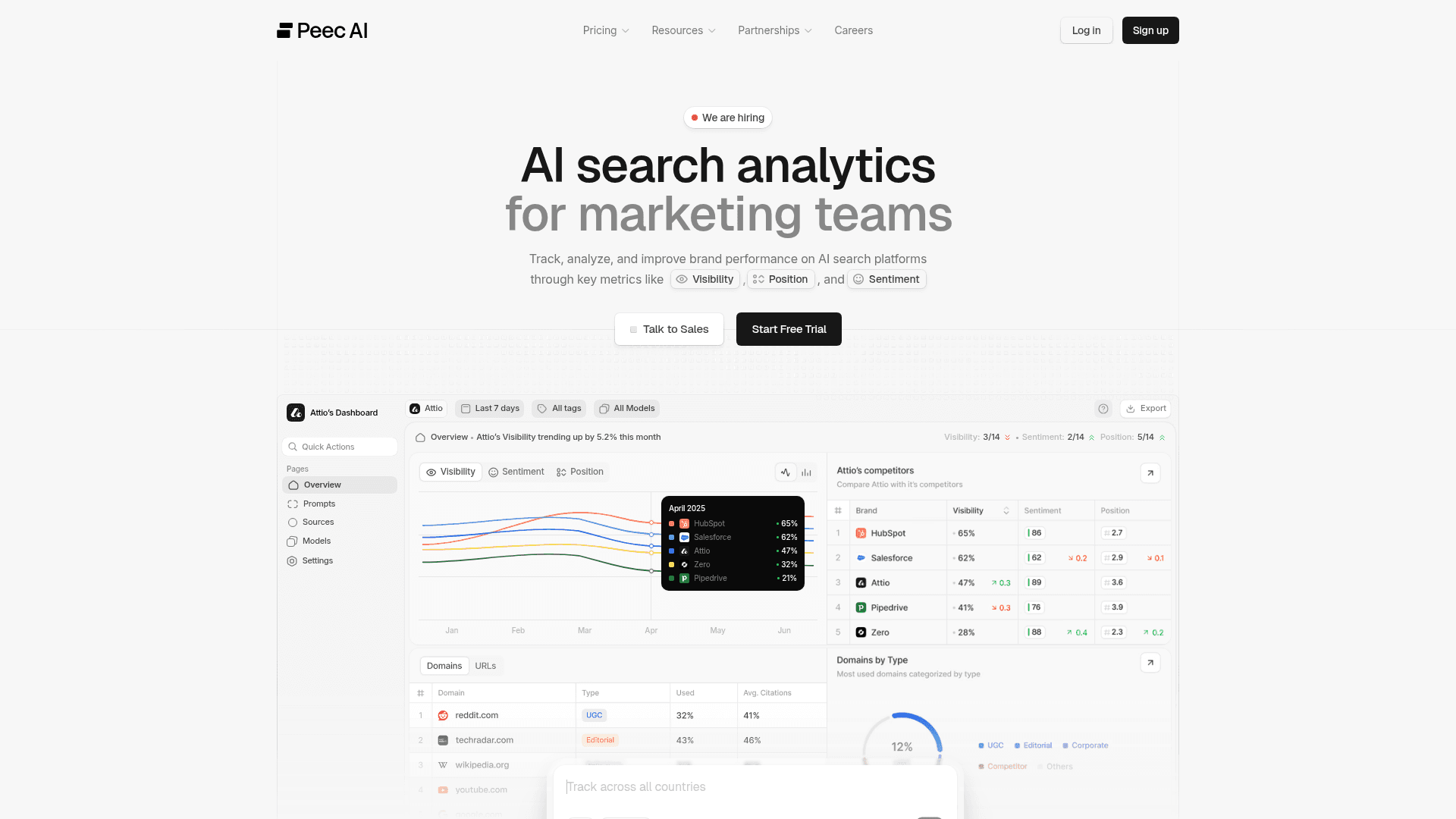
Peec AI is a pure-play AI search analytics platform that focuses exclusively on monitoring brand performance across ChatGPT, Perplexity, and Gemini. It measures three core metrics: visibility (how often you appear), position (where you rank vs. competitors), and sentiment (how AI models frame your brand). With 2,000+ marketing teams using the platform and a $29M funding round, Peec has serious traction in the AI monitoring space.
Peec stands out with its AI-suggested prompts feature, which surfaces high-volume conversational queries based on actual search volume data—so you’re not guessing which prompts to track. It also integrates with Looker Studio and offers API access for custom reporting. The main limitation is that Peec doesn’t include traditional search analytics. If you need Google Search Console data in the same tool, you’ll need to pair Peec with something else or choose a combined solution like QuickSEO.
Key features: AI visibility, position, and sentiment tracking across 3 platforms; AI-suggested prompts based on search volume; competitive benchmarking; CSV export; Looker Studio and API integrations; strategy recommendations.
Pricing: Free trial available. Premium plans start at competitive price points (contact for details).
Best for: Enterprise brands and agencies that want deep AI-only analytics with integrations into their existing reporting stack.
5. BrightEdge — Best for Enterprise SEO with AI Readiness
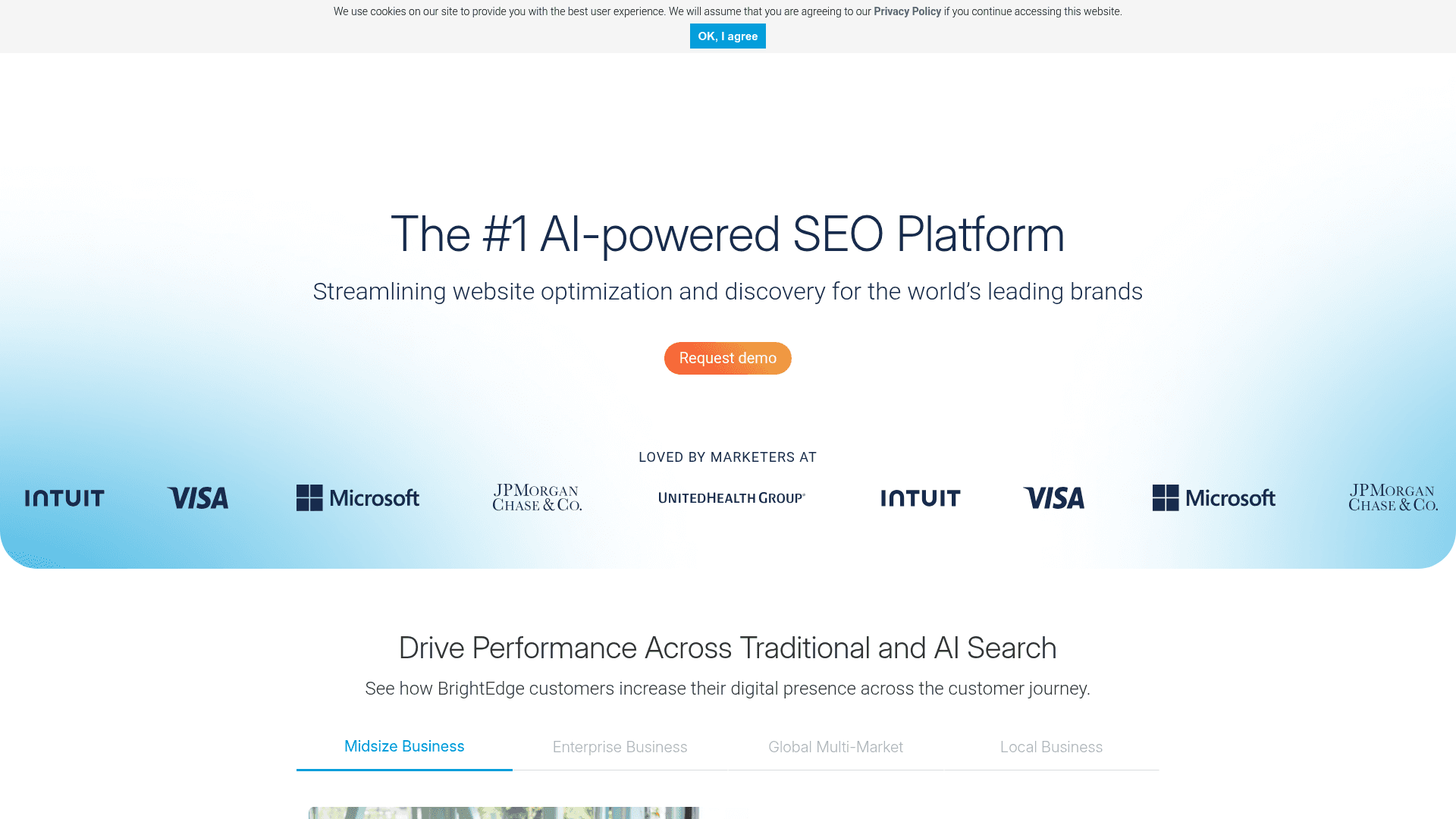
BrightEdge is an enterprise-grade SEO platform that’s been around for years and has recently added AI-focused features to stay relevant. Its Data Cube X offers 4 billion data points spanning 10 years of historical analysis, and its AI Catalyst feature uses generative parser technology to prepare your content for Google AI Overviews and ChatGPT responses. The Copilot and Autopilot features provide AI-driven insights and automated optimization.
BrightEdge delivers impressive results—clients report up to 95% organic revenue growth and 171% increases in page-one rankings. But it’s designed for large organizations with dedicated SEO teams and sizable budgets. There’s no self-serve pricing on their website; you’ll need to talk to sales. For small-to-mid-size teams that want AI visibility monitoring without the enterprise sales cycle, more accessible tools like QuickSEO offer transparent pricing and faster onboarding.
Key features: Data Cube X (4B data points, 10 years historical), AI Catalyst for generative search readiness, Copilot AI insights, Autopilot automated optimization, enterprise-grade reporting and governance.
Pricing: Enterprise pricing only (contact sales). Expect premium rates.
Best for: Large enterprises with dedicated SEO teams that need a platform with deep historical data, automated optimization, and AI readiness features.
6. Otterly.ai — The Incumbent to Compare Against
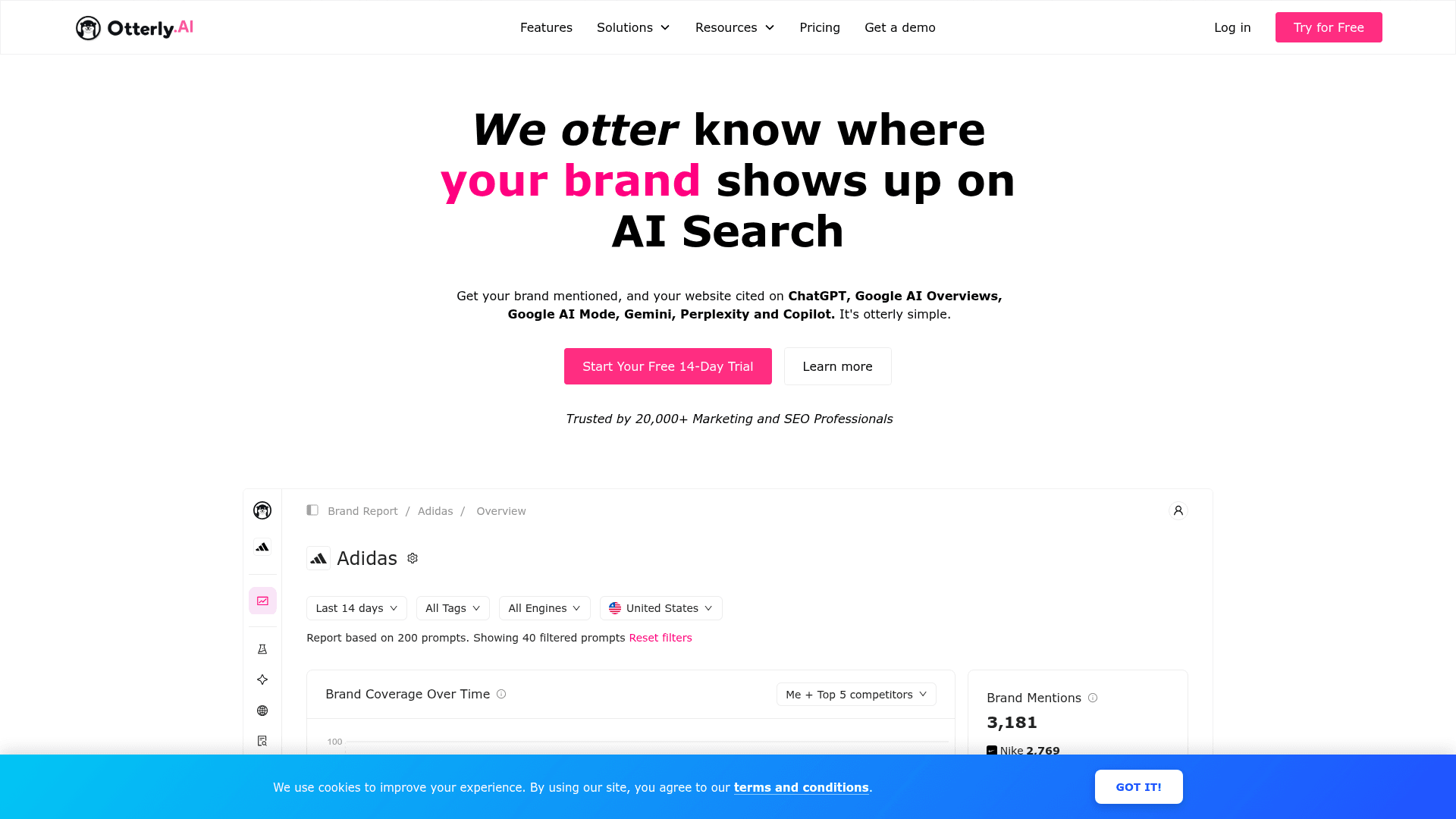
Since this is a list of Otterly alternatives, it’s worth noting what Otterly itself does well—and where the alternatives might serve you better. Otterly monitors brand mentions and website citations across six AI search engines: ChatGPT, Google AI Overviews, Google AI Mode, Perplexity, Gemini, and Microsoft Copilot. That’s the widest AI platform coverage on this list. It also offers GEO auditing (analyzing 25+ on-page factors), multi-country support across 40+ countries, and automated weekly reports.
The main reasons teams look for alternatives come down to a few factors. Otterly starts at $29/month, which sounds affordable, but that entry tier comes with limitations. It doesn’t include Google Search Console analytics, so you’re still context-switching between tools for the full picture. And while Otterly covers more AI platforms (six vs. four), many teams find that ChatGPT, Perplexity, Claude, and Gemini cover the vast majority of real-world AI search traffic—making tools like QuickSEO a more practical choice when you also want traditional search data in the same dashboard.
Key features: 6 AI platform monitoring, GEO auditing (25+ on-page factors), citation tracking, competitive analysis, multi-country support (40+ countries), real-time alerts, automated weekly reports.
Pricing: Starts at $29/month. 14-day free trial, no credit card required.
Best for: Teams that need the widest AI platform coverage and don’t mind using a separate tool for traditional search analytics.
How to Choose the Right Otterly Alternative
The best choice depends on what you’re optimizing for. If you want the most complete picture of your brand’s search presence—both Google and AI—in a single, affordable dashboard, QuickSEO is the clear winner. It deeply integrates Google Search Console analytics with AI visibility tracking at a price point accessible to growing teams.
If budget is unlimited and you need a full digital marketing suite, Semrush or Ahrefs will give you the most tools under one roof. If you’re enterprise-scale with dedicated SEO resources, BrightEdge offers the deepest historical data and automation. And if you want AI-only analytics with advanced reporting integrations, Peec AI is a strong contender.
Whatever you choose, the key takeaway is this: AI search visibility is no longer optional. With nearly half of consumers using AI as their primary search tool, brands that ignore this channel are leaving traffic—and revenue—on the table. The right monitoring tool helps you understand where you stand and what to do about it.
Ready to see how your brand ranks across Google and AI? Try QuickSEO today and get the full picture in one dashboard.
Enter your website to track its AI visibility across ChatGPT, Gemini, Claude, and Perplexity — and turn chatbot mentions into traffic.
- Set up in minutes
- Cancel anytime
Keep reading
Related posts
More articles on the same topics, prioritized by shared tags and keyword overlap.