Free Indexable-but-Noncanonical Finder
Identify pages that are indexable (no noindex) but have a canonical tag pointing to a different URL. This conflict sends mixed signals to search engines and can cause duplicate content issues, wasted crawl budget, and unpredictable indexing.
Check for Indexable Non-Canonical Pages
Enter a sitemap URL (e.g. https://example.com/sitemap.xml) or paste a list of page URLs (one per line, up to 50).
QuickSEO shows clicks, impressions, keywords and pages for every website you manage, compared with the period before.
- Unlimited websites on the free plan
- No credit card needed
What Is an Indexable-but-Noncanonical Conflict?
Every page on your site sends two key signals to search engines: whether it can be indexed (controlled by meta robots and X-Robots-Tag directives) and which URL is the canonical version (controlled by the rel="canonical" tag). When these signals conflict, you have an indexable-but-noncanonical page.
Specifically, this happens when a page has no noindex directive (making it indexable) but its canonical tag points to a different URL. The page is telling search engines: "You can index me, but the preferred version is actually over here." Google must then decide which signal to trust, and the result is often unpredictable.
What This Tool Checks
For each URL you provide, the tool performs these checks:
- Indexability: Checks the meta robots tag and X-Robots-Tag HTTP header for noindex directives. A page without noindex is considered indexable.
- Canonical tag:Extracts the rel="canonical" link tag and determines whether it is self-referencing or points to a different URL.
- Conflict detection: Flags pages that are indexable but have a non-self-referencing canonical — the core conflict this tool is designed to find.
- Canonical target validation: Fetches the canonical target URL to verify it returns HTTP 200. Broken canonical targets are flagged as critical issues.
- Cross-domain canonicals: Detects when a canonical tag points to a different domain, which Google treats as a hint rather than a directive.
Why This Matters for SEO
Canonical chain conflicts are one of the most subtle and damaging technical SEO issues. They rarely cause visible errors but silently erode your search performance:
- Duplicate content risk: Google may ignore the canonical tag and index both the original page and the canonical target, creating duplicate content.
- Wasted crawl budget: Googlebot crawls pages that ultimately will not be indexed if the canonical is honored, consuming crawl budget that could be used on important pages.
- Split link equity: When both versions get indexed, backlinks and internal links may be split between the two URLs, diluting ranking signals.
- Unpredictable indexing: Google treats canonical tags as hints, not directives. The search engine may pick either URL as the canonical, leading to the wrong page appearing in search results.
- GSC reporting confusion: Google Search Console may report impressions and clicks under the canonical URL rather than the actual indexed URL, making analytics data misleading.
How to Use This Tool
- Enter your URLs — Paste a sitemap URL to scan all listed pages, or enter individual page URLs (one per line, up to 50).
- Click "Find Conflicts" — The tool fetches each page, checks the canonical tag, verifies indexability, and validates canonical targets.
- Review the score and summary — The overall score reflects how many pages have canonical conflicts. Summary cards show the breakdown by severity.
- Inspect individual pages — Each page shows its indexability status, canonical URL, whether the canonical target exists, and specific conflict signals.
- Filter and export — Use filters to focus on conflicts only, and export results as CSV for your audit report.
How to Fix Canonical Conflicts
- Make the canonical self-referencing:If the page has unique content and should be indexed, change the canonical tag to point to the page's own URL.
- Add noindex to true duplicates: If the page is a duplicate of the canonical target, add a noindex meta tag to remove the conflict and prevent duplicate indexing.
- Use 301 redirects instead: If the page should not exist at all, replace it with a 301 redirect to the canonical target. This is the strongest signal to search engines.
- Fix broken canonical targets: If the canonical URL returns a 404 or 5xx error, either update the canonical to a valid URL or remove it entirely.
- Avoid cross-domain canonicals unless necessary: Cross-domain canonical tags are treated as weak hints. Use them only for syndicated content with explicit agreements between domains.
Frequently Asked Questions
What does "indexable but noncanonical" mean?
An indexable-but-noncanonical page is one that has no noindex directive (so search engines can index it) but has a canonical tag pointing to a different URL. This creates a conflict: the page says "index me" through the absence of noindex, but also says "the preferred version is at this other URL" through its canonical tag. Search engines must decide which signal to follow.
Why are canonical chain conflicts bad for SEO?
Canonical chain conflicts send mixed signals to search engines. Google treats canonical tags as hints, not directives. When a page is indexable but points its canonical elsewhere, Google may ignore the canonical and index the page anyway, creating duplicate content. Or Google may honor the canonical and waste crawl budget on a page it will ultimately not index.
How do I fix indexable-but-noncanonical pages?
You have three main options: (1) Make the canonical self-referencing if the page should be indexed on its own. (2) Add a noindex meta tag if the page should not be indexed, which removes the conflict. (3) Set up a 301 redirect to the canonical target if the page is truly a duplicate. The right fix depends on whether the page has unique, valuable content.
What happens when a canonical target URL is broken?
When a canonical tag points to a URL that returns a 404 or 5xx error, search engines are likely to ignore the canonical entirely. The indexable page may get indexed under its own URL, but the broken canonical signal degrades overall crawl quality and wastes crawl budget. This is considered a critical issue that should be fixed immediately.
How many URLs can I check at once?
You can check up to 50 URLs at once, either by pasting them directly (one per line) or by entering a sitemap URL. The tool fetches each page, checks its canonical tag, verifies indexability, and validates that the canonical target URL actually exists.
QuickSEO shows clicks, impressions, keywords and pages for every website you manage, compared with the period before.
- Unlimited websites on the free plan
- No credit card needed
From the blog
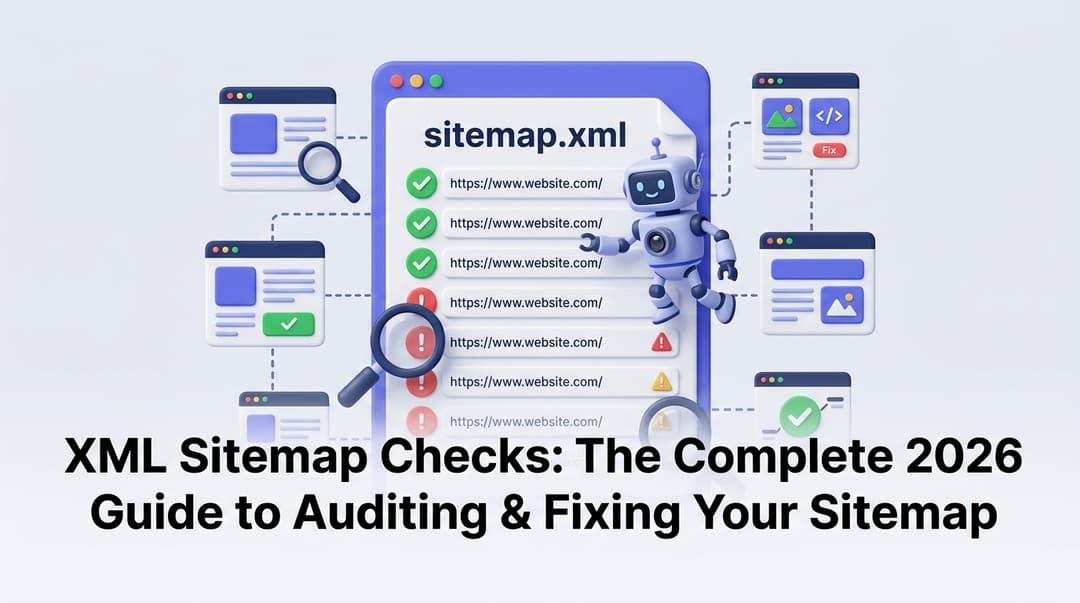
XML Sitemap Checks: The Complete 2026 Guide to Auditing & Fixing Your Sitemap
Learn how to run thorough XML sitemap checks in 2026. Discover common errors, how to fix them, and best practices to improve crawling and indexing.
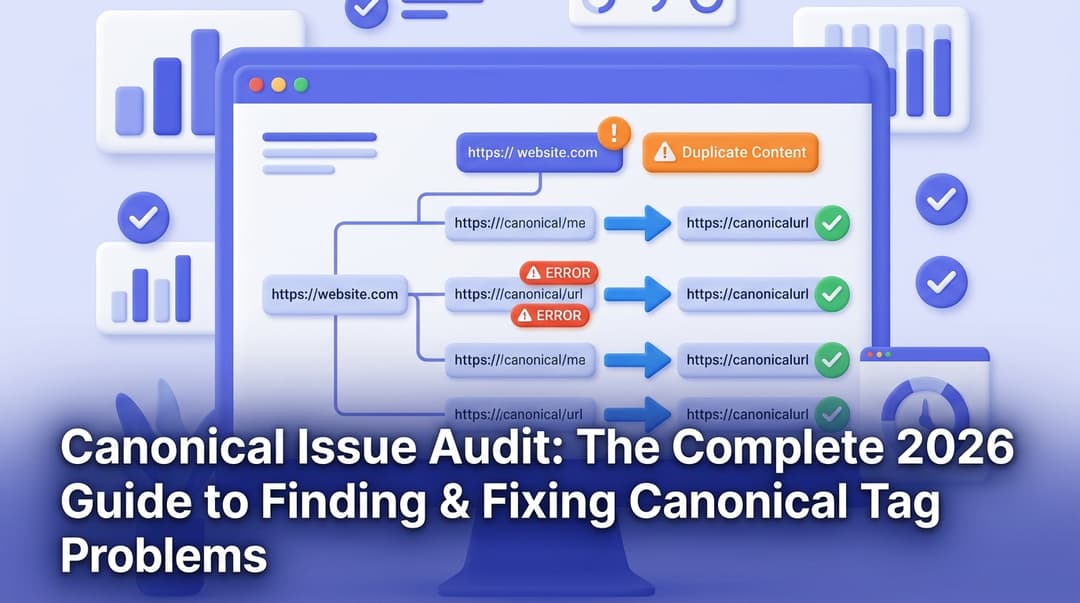
Canonical Issue Audit: The Complete 2026 Guide to Finding & Fixing Canonical Tag Problems
Learn how to run a full canonical issue audit in 2026. Discover the most common canonical tag errors, step-by-step fixes, and tools to protect your SEO rankings.
Related Tools
Flag mismatches between HTML canonical, HTTP header canonical, and sitemap URLs.
Noindex CheckerCheck if a page is blocked from indexing via noindex tags or headers.
Indexability Matrix BuilderBuild a full indexability matrix with robots.txt, meta robots, X-Robots-Tag, and canonical status.