Best Claude SEO Tracking Tools in 2026: 8 Tested & Ranked

 Summarize in ChatGPT
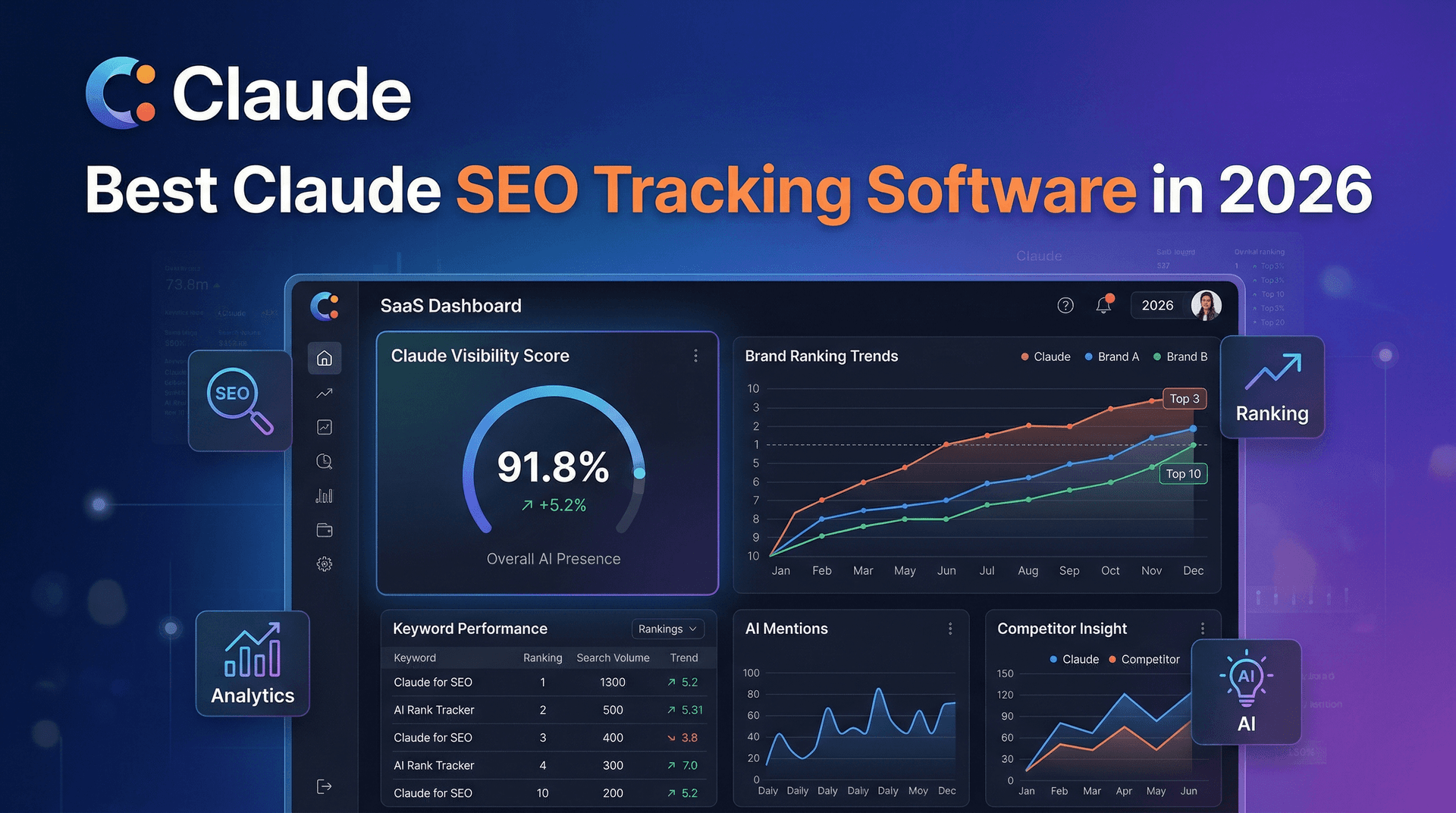
If you’re running an online business in 2026 and you’re not tracking how your brand shows up in Claude’s AI responses, you’re leaving money on the table. Claude, built by Anthropic, has quietly become one of the most influential AI platforms for brand discovery. Recent data shows that Claude mentions brands in 97.3% of its responses — far more than ChatGPT (73.6%) or Google AI Overviews (48.5%). That makes tracking your Claude visibility not just a nice-to-have, but a competitive necessity.
The problem? Most businesses still have no idea how they appear in AI search results. Only 16% of brands actively track their AI visibility across platforms like ChatGPT, Claude, Gemini, and Perplexity. The other 84% are flying blind while competitors quietly capture AI-driven traffic. Tools like QuickSEO are changing that by combining Google Search Console analytics with AI visibility tracking in a single dashboard — but there’s a whole ecosystem of specialized tools worth knowing about.
In this guide, we’ll break down the best Claude SEO tracking software available right now, what each tool does well, and how to choose the right one for your needs.
Why Claude SEO Tracking Matters More Than Ever
The search landscape has fundamentally shifted. According to McKinsey, $750 billion in consumer spending will flow through AI search by 2028. Gartner predicts a 25–50% decline in traditional search volume. And 44% of consumers already say AI is their primary search source. When someone asks Claude “What’s the best project management tool?” or “Which running shoes should I buy?”, your brand either shows up in the answer or it doesn’t. There’s no page two to scroll to.
Unlike traditional SEO, where you can track rankings for specific keywords across search engine results pages, Claude SEO tracking measures different signals: how often Claude mentions your brand, whether it cites your content, the sentiment of those mentions, and how you compare to competitors within the same AI responses. This is a fundamentally different game, and it requires purpose-built tools.
What to Look for in Claude SEO Tracking Software
Before diving into specific tools, here’s what actually matters when evaluating Claude tracking platforms:
If you also need to audit ChatGPT specifically, our free ChatGPT rank tracker runs a one-off check in seconds.
Brand Mention Tracking: Does the tool monitor how frequently Claude mentions your brand when users ask relevant questions?
Citation Monitoring: When Claude cites sources, does it link to your pages? This is the AI equivalent of earning backlinks.
Sentiment Analysis: Is Claude talking about your brand positively, neutrally, or negatively? This directly affects conversion.
Competitor Benchmarking: How does your visibility compare to competitors within the same prompt responses?
Crawler Access Tracking: Are ClaudeBot and anthropic-ai allowed to crawl your priority pages? If they can’t access your content, they can’t cite it.
Google Search Console Integration: The best tools combine traditional SEO data with AI visibility metrics so you get the complete picture in one place.
The 8 Best Claude SEO Tracking Tools in 2026
We tested over a dozen platforms and narrowed it down to the tools that offer genuine value for tracking your Claude AI visibility. Here’s what we found.
1. QuickSEO — Best All-in-One SEO + AI Visibility Platform
QuickSEO stands out because it doesn’t treat Claude tracking as an afterthought or bolt-on feature. It’s built from the ground up to merge Google Search Console analytics with weekly AI visibility tracking across three of the four major AI platforms — your pick of ChatGPT, Claude, Gemini, and Perplexity.
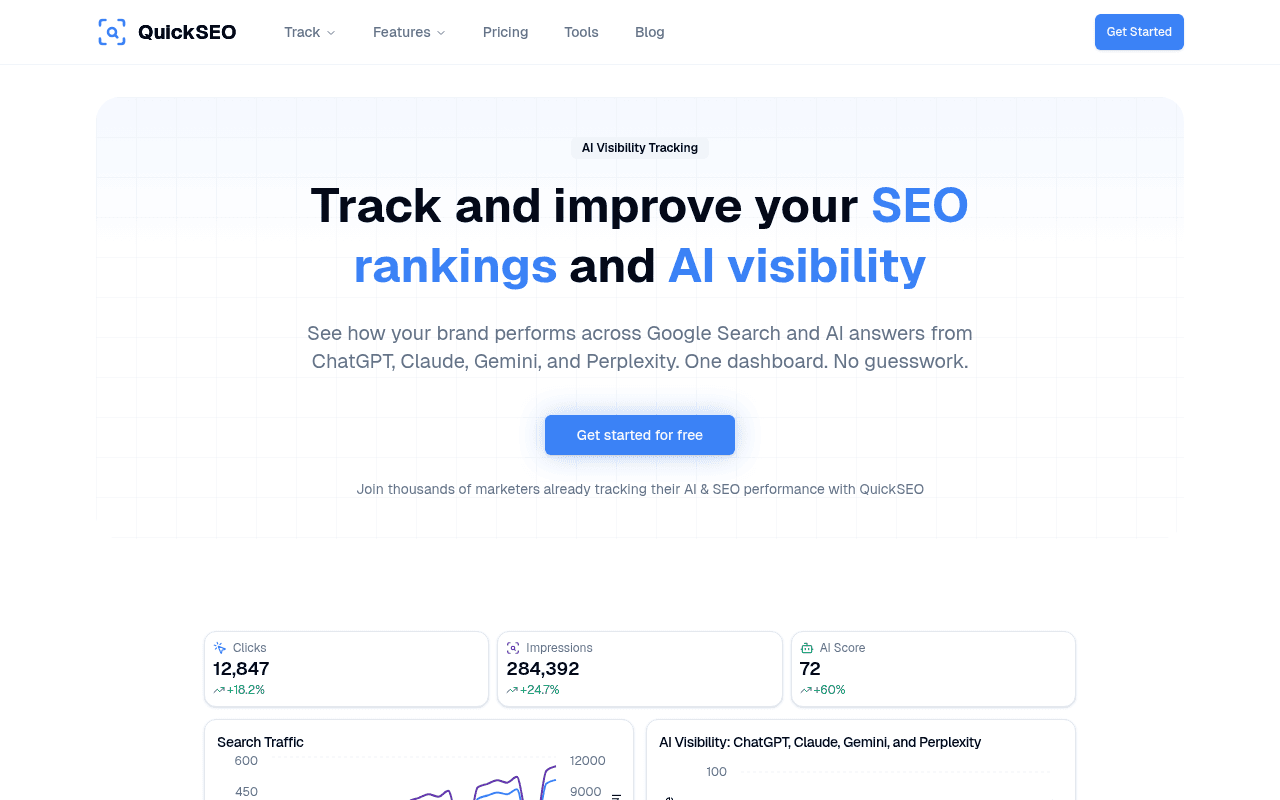
QuickSEO’s unified dashboard tracking both Google Search and AI visibility
What makes QuickSEO particularly powerful is its tracked prompts feature. You define the exact questions your customers ask AI chatbots, and QuickSEO shows you precisely where your brand ranks in each response. It also provides sentiment analysis, competitor tracking, and cited pages monitoring — all in a single, clean dashboard.
The platform also generates AI-powered recommendations based on your visibility data, telling you exactly what content to create and optimize. For example, it might suggest writing a comparison article because competitors are being mentioned more frequently in specific prompt categories. Plans start at $99/month for Starter, with Pro at $199/month and Business at $399/month.
2. AIclicks — Best for Deep Claude-Specific Analytics
AIclicks has positioned itself as the specialist tool for Claude analytics. Starting at $39/month, it offers prompt-level visibility tracking, citation intelligence, and GEO (Generative Engine Optimization) auditing. Where AIclicks really shines is its Claude-specific depth: it provides sentiment analysis within Claude’s responses, competitive mention tracking, and detailed trend data that goes beyond simple “mentioned/not mentioned” binary tracking.
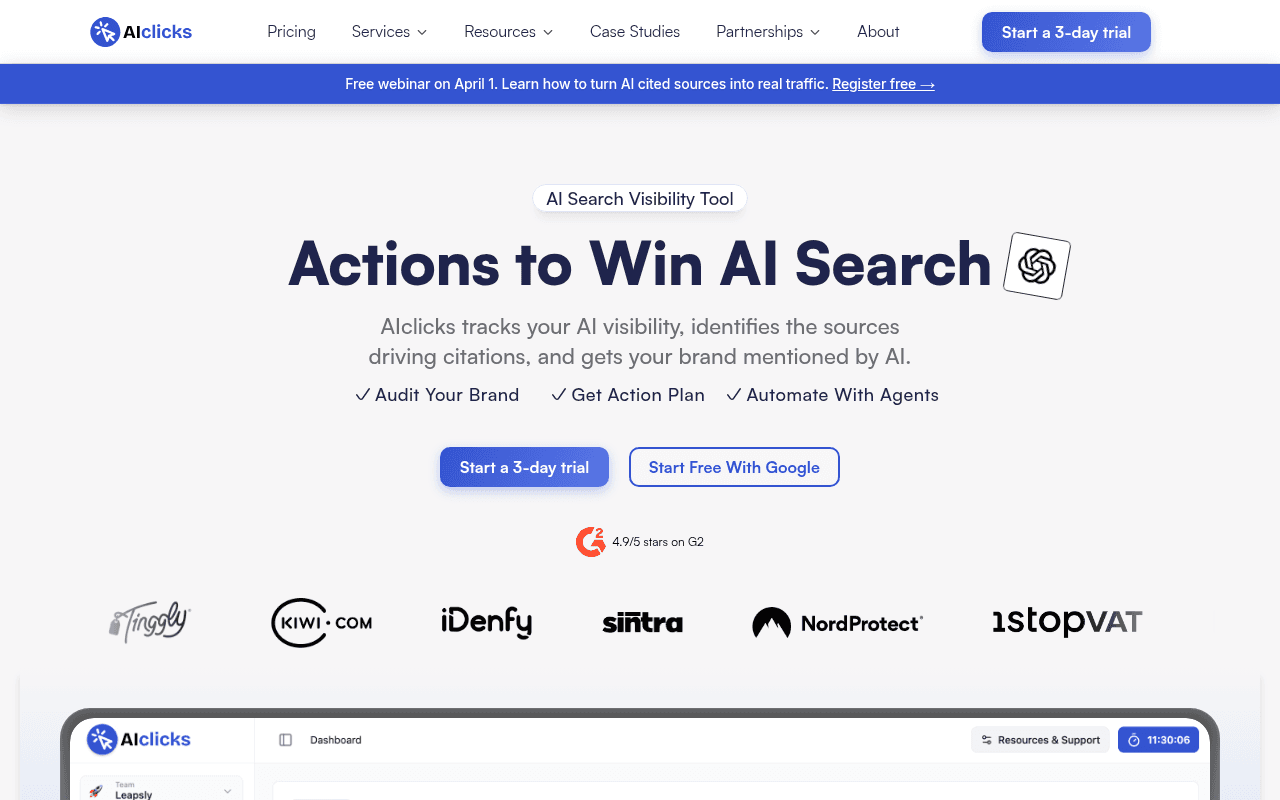
AIclicks dashboard — AI search visibility tracking and GEO optimization
The tool also offers API access and white-label options for agencies, making it a strong choice if you manage multiple client accounts. The tiered pricing goes up to $499/month for enterprise-level features. If your primary concern is Claude specifically (rather than broad AI platform coverage), AIclicks is worth considering. That said, if you also need Google Search Console data and multi-platform AI tracking in one place, a tool like QuickSEO may be a better fit since it combines both dimensions.
3. XSeek — Best for Real-Time Monitoring
XSeek excels at real-time crawling of Claude’s web index. At $59.99/month for its Pro plan, it provides up-to-date visibility data and citation changes as frequently as Claude’s index refreshes. This is particularly useful if you’re actively publishing new content and want to see how quickly Claude picks it up.
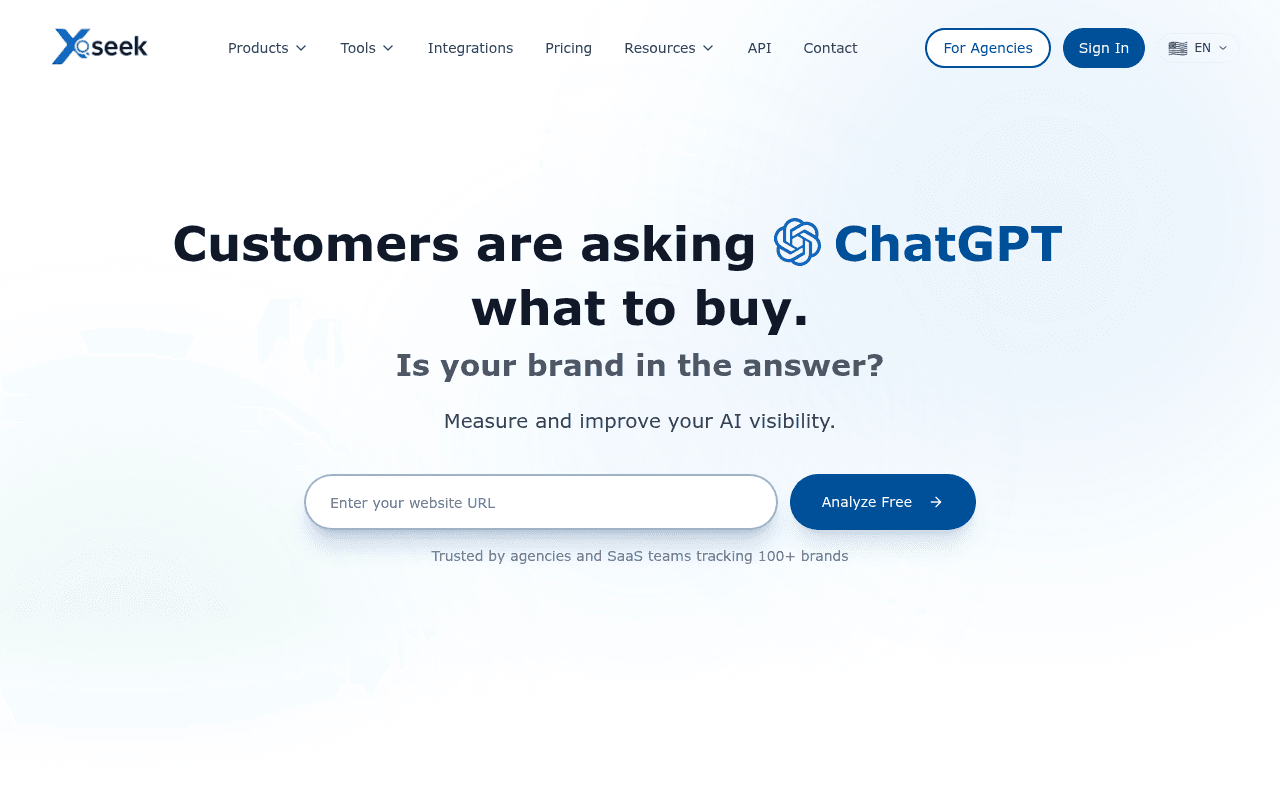
xSeek — AI-first search analytics platform for tracking brand visibility
The platform also accounts for Brave Search indexing, which most competitors ignore — a notable advantage since Claude sometimes pulls from Brave Search results. XSeek’s API enables automation of reports and alerts, making it a solid pick for SEO teams that want to integrate AI visibility data into their existing reporting workflows.
4. Ahrefs Brand Radar — Best for Enterprise Teams Already Using Ahrefs
Ahrefs Brand Radar is the AI visibility add-on to the Ahrefs ecosystem. Priced between $129 and $699/month (on top of your Ahrefs subscription), it integrates AI brand mention tracking with Ahrefs’ existing backlink analysis, keyword research, and competitive intelligence data. If your team already relies on Ahrefs for traditional SEO, Brand Radar adds AI tracking without requiring a completely separate platform.
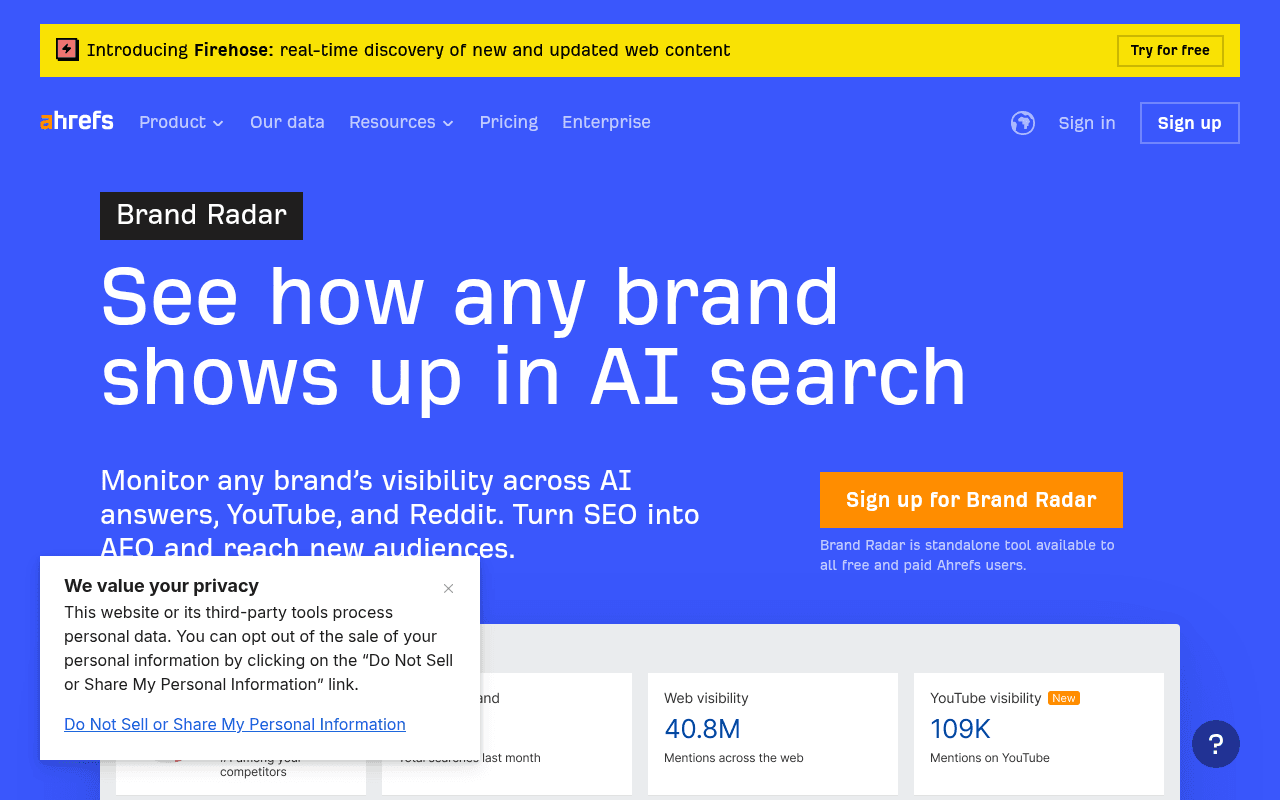
Ahrefs Brand Radar — AI visibility tracking within the Ahrefs ecosystem
The downside is cost — when combined with a base Ahrefs subscription, you’re looking at significant monthly spend. For teams that need a more focused, cost-effective solution for AI visibility specifically, standalone platforms tend to deliver better value.
5. Rankability — Best for Agency White-Label Reporting
Rankability is built for agencies. Its white-label reporting, share-of-voice visualization, and Claude rank tracking features make it straightforward to create branded client reports that include AI visibility data. Pricing starts at $149/month for the SEO Specialist plan (2 users, 20 content optimizers) and scales up to $449/month for the SEO Master tier.

Rankability — SEO + AEO software built for agencies
The platform provides clear competitor comparisons showing how your client’s brand stacks up against rivals in Claude’s responses. Where it falls short compared to something like QuickSEO’s AI-powered recommendations is in actionable guidance — Rankability is primarily a reporting tool rather than a strategic advisory platform.
6. LLMrefs — Best for Cross-Platform LLM Monitoring
LLMrefs takes a broad approach, tracking brand mentions across Claude, ChatGPT, and Gemini simultaneously. At $79/month for the Pro plan (with a free tier available), it’s a solid option if you want coverage across multiple LLMs without breaking the bank. The citation reports are useful for understanding which of your pages are being referenced by which AI platforms.
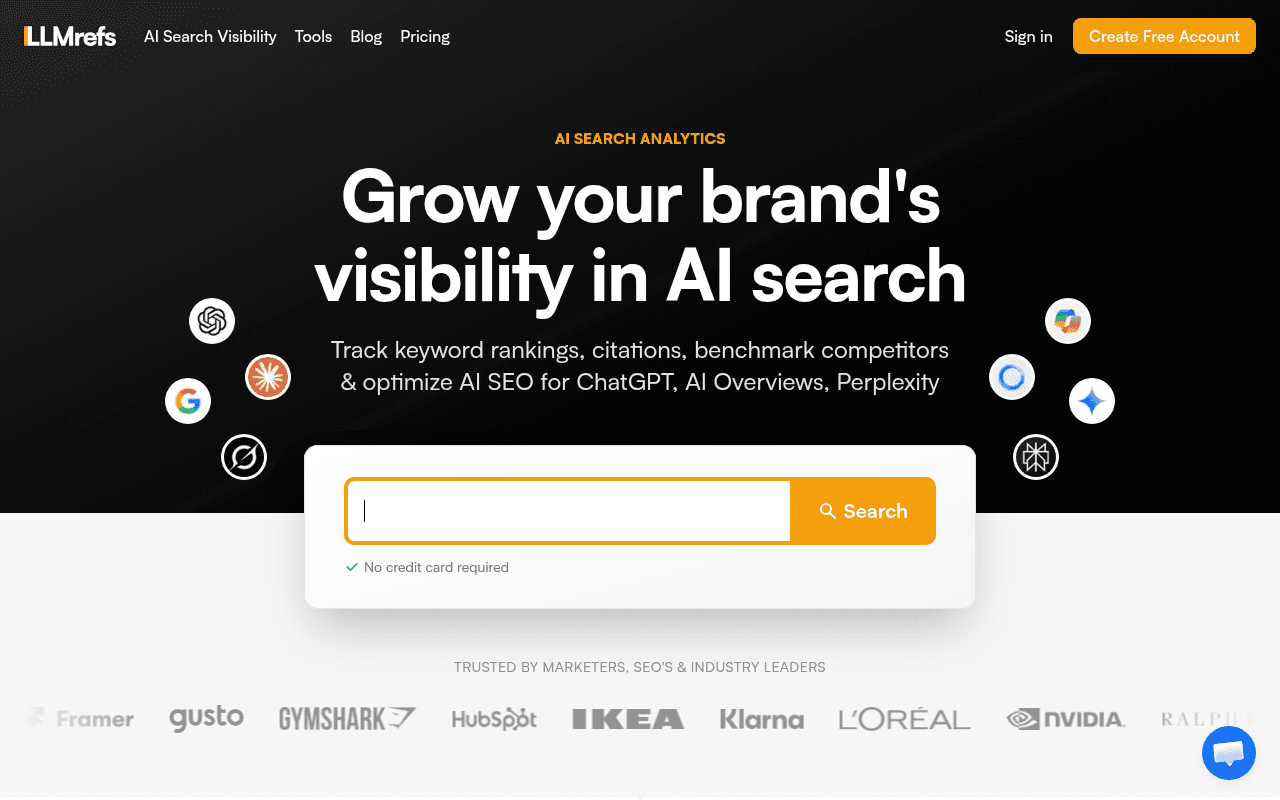
LLMrefs — generative AI search analytics and LLM SEO tracker
The trade-off with the generalist approach is that LLMrefs doesn’t go as deep on Claude-specific analytics as dedicated tools. If Claude is your primary focus, you may want more specialized software.
7. AI Rank Lab — Best Free Option for Getting Started
AI Rank Lab offers a legitimately useful free plan for Claude rank tracking, making it the obvious starting point if you’re new to AI visibility monitoring. The paid Starter plan at $79/month adds real-time alerts and faster data refresh rates. Setup is quick, and the interface is clean enough that non-technical marketers can get value from it immediately.
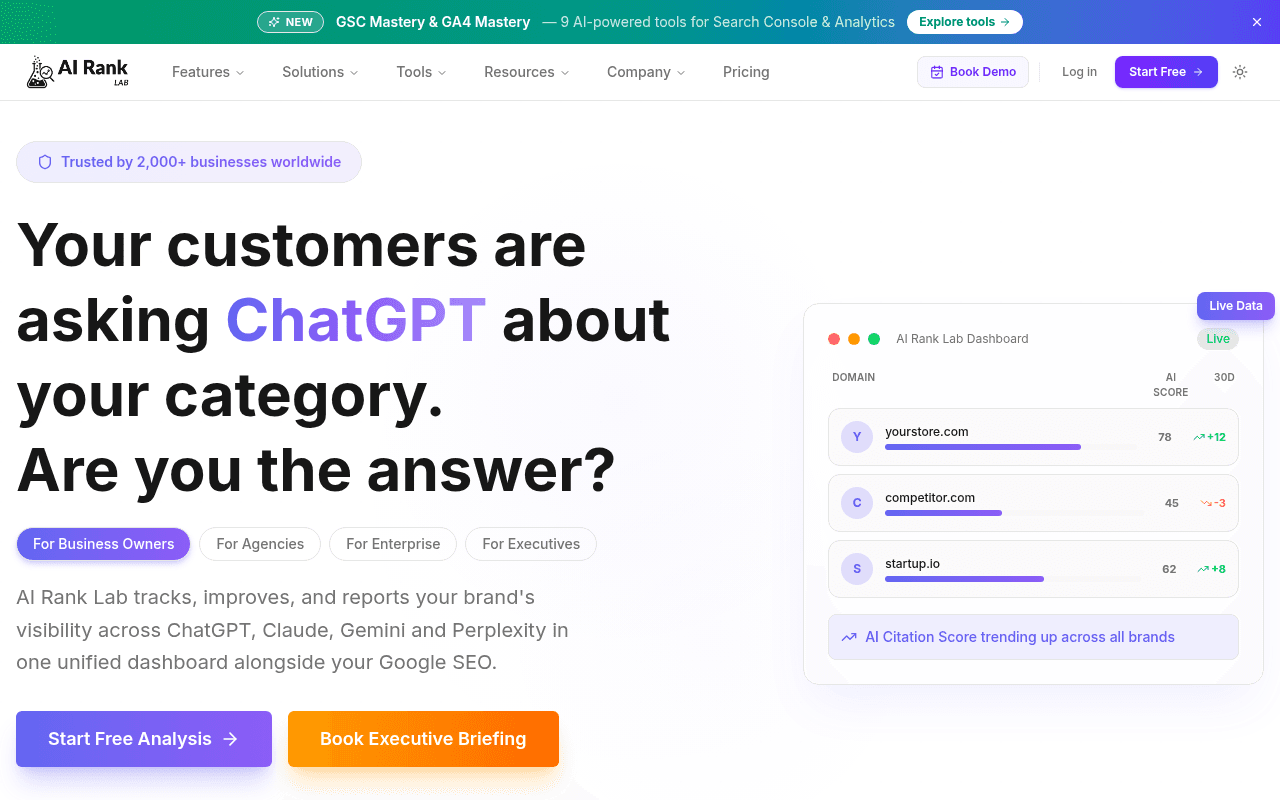
AI Rank Lab — track your brand on ChatGPT, Gemini, and Perplexity
While the free tier has obvious limitations in terms of prompt volume and update frequency, it’s more than sufficient for small businesses testing the AI visibility waters before committing to a paid tool.
8. Keyword.com — Best Budget Option for Traditional SEO Users
Keyword.com is a traditional SERP tracking tool that has expanded into AI visibility. At approximately $24/month, it’s the most affordable paid option on this list. It now includes citation context analysis and competitor tracking for Claude responses, layered on top of its existing keyword tracking infrastructure.
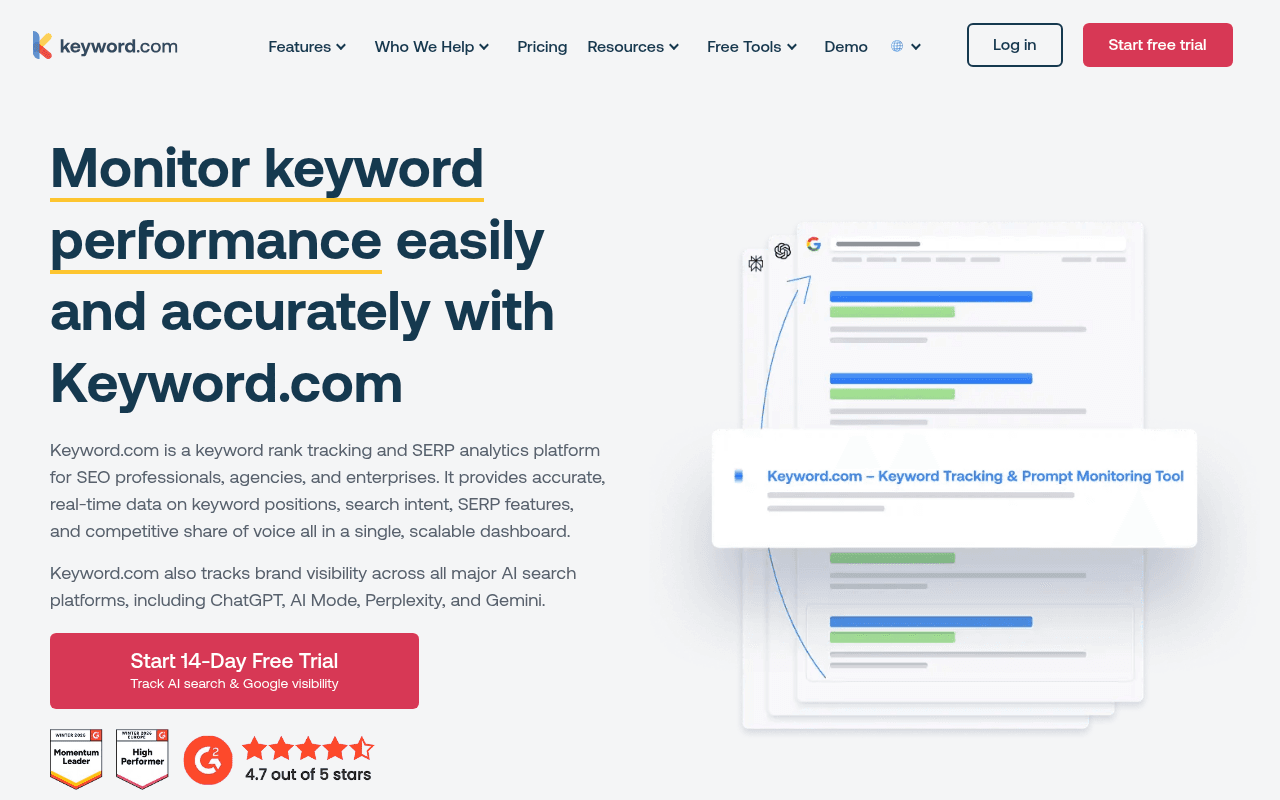
Keyword.com — accurate keyword rank tracker with AI visibility features
The Claude-specific features are relatively new, so they’re not as mature as purpose-built platforms. But for teams on a tight budget who want some AI visibility data alongside their traditional rank tracking, it’s a practical entry point.
Quick Comparison: Pricing & Key Features
Tool | Pricing | Key Features | Best For |
QuickSEO | $99–$399/mo | GSC + AI tracking, any 3 of the 4 chatbots, recommendations | All-in-one SEO + AI |
AIclicks | $39–$499/mo | Claude analytics, sentiment, GEO audit | Deep Claude focus |
XSeek | $59.99/mo | Real-time monitoring, API, Brave indexing | Speed & automation |
Ahrefs Radar | $129–$699/mo | AI mentions + full Ahrefs ecosystem | Enterprise teams |
Rankability | $149–$449/mo | White-label reports, share of voice | Agency reporting |
LLMrefs | $79/mo | Multi-LLM tracking, citation reports | Cross-platform |
AI Rank Lab | Free–$79/mo | Free tier, real-time alerts, quick setup | Getting started |
Keyword.com | ~$24/mo | SERP + Claude tracking, budget-friendly | Budget option |
How to Choose the Right Claude Tracking Tool
The right choice depends on where you are in your AI visibility journey. If you’re just getting started and want to understand how AI search works, AI Rank Lab’s free tier is a no-risk way to get your feet wet. If you need serious, actionable intelligence that combines Google Search Console data with comprehensive AI visibility tracking, QuickSEO delivers the most complete picture at a competitive price point.
For agencies managing multiple clients, Rankability’s white-label capabilities or AIclicks’ API make reporting straightforward. And for enterprise teams already embedded in the Ahrefs ecosystem, Brand Radar adds AI tracking without disrupting existing workflows.
The key principle is this: don’t try to track Claude visibility with traditional SEO tools alone. AI search is a different game with different signals, and you need purpose-built software to measure what matters. The tools listed here represent the best options available in 2026 — pick the one that fits your budget, team size, and strategic goals, and start tracking before your competitors do.
Practical Tips to Improve Your Claude SEO Visibility
Tracking alone isn’t enough — you also need to act on the data. Here are the strategies that actually move the needle on Claude visibility, based on what’s working in 2026:
Make sure ClaudeBot can crawl your site. Check your robots.txt for blocks on ClaudeBot or anthropic-ai user agents. If Claude can’t access your content, it can’t cite it.
Create structured, comparison-style content. Claude favors pages with clear data structures, comparison tables, and FAQ sections. These formats are highly citable.
Build topical authority. Claude tends to cite brands that demonstrate deep expertise in a specific topic area, not just individual pages.
Monitor and respond to sentiment. Use tools with sentiment analysis (like QuickSEO’s sentiment tracking) to detect when Claude starts describing your brand negatively, so you can address the underlying issues.
Track your competitors in AI responses. Knowing which brands appear alongside yours in Claude’s answers helps you identify content gaps and positioning opportunities.
The Bottom Line
Claude SEO tracking is no longer optional for serious marketers. With AI search capturing an increasing share of consumer attention and purchasing decisions, understanding how your brand appears in Claude’s responses is as important as tracking your Google rankings. The tools in this guide range from free options for beginners to enterprise-grade platforms for teams managing multiple brands.
If you want to get started with the most comprehensive approach — one that unifies Google Search Console data with AI visibility tracking across ChatGPT, Claude, Gemini, and Perplexity — give QuickSEO a try for free. It’s the fastest way to see the complete picture of how your brand performs across both traditional and AI search.
Enter your website to track its AI visibility across ChatGPT, Gemini, Claude, and Perplexity — and turn chatbot mentions into traffic.
- Set up in minutes
- Cancel anytime
Keep reading
Related posts
More articles on the same topics, prioritized by shared tags and keyword overlap.