ChatGPT vs Google Search in 2026: Market Share, Query Volume, and Conversion Data

 Summarize in ChatGPT
Two years ago, asking whether ChatGPT would meaningfully compete with Google was a thought experiment. In 2026 it's a measurable fact. ChatGPT has 900 million weekly active users, processes 2.5 billion prompts per day, and just hit roughly 17% of all global digital queries — the first time in two decades that anyone has cracked Google's near-monopoly with double-digit share. Google still owns the lion's share of total volume and ad revenue, but the click economy underneath that volume is fragmenting in ways traditional SEO tools weren't built to measure.
This post is the data foundation. Every figure below is sourced from primary disclosures (OpenAI, Alphabet earnings, McKinsey, Pew, Gartner) or rigorous secondary analysis (Similarweb, Semrush, Ahrefs, Adobe Digital Insights). Where studies disagree, both ranges are shown. The goal: give you the numbers you actually need to make calls about budget, content, and tooling — not yet another think piece.
1. Market share: where ChatGPT and Google stand in 2026
The headline number
Across all devices globally, Google still dominates traditional search at 90.04% (StatCounter, January 2026) — but that figure understates what's happening, because it only counts traditional search engines. Once you include AI assistants in the denominator, the picture changes:
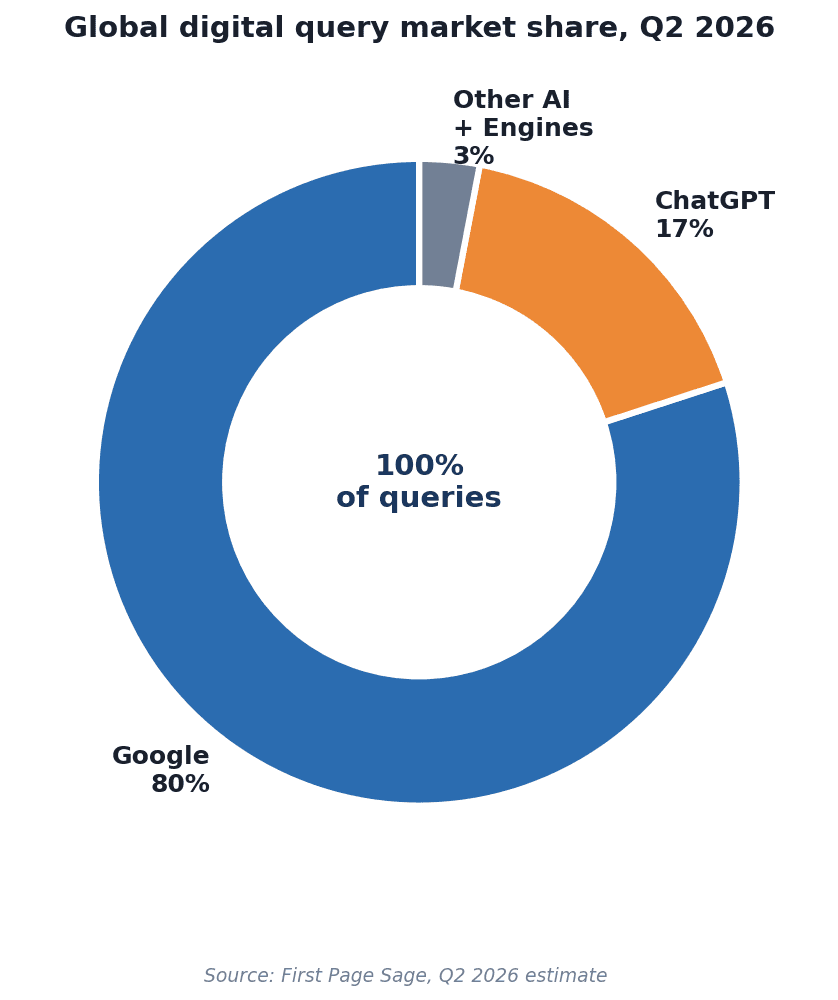
Figure 1: Global digital query share including AI assistants. Source: First Page Sage, Q2 2026 estimate.
First Page Sage's Q2 2026 estimate puts Google at ~80% of all digital queries, ChatGPT at ~17%, and other AI platforms plus alternative search engines at the remaining ~3%. Adwait X and Graphite's independent analyses (March 2026) corroborate the range — Graphite separately found ChatGPT now accounts for 20% of search-related traffic worldwide and 12% in the US.
The crucial nuance: Google search hasn't actually shrunk in absolute terms. Total search usage (search engines + LLMs combined) has grown 26% globally and 16% in the US. The pie got bigger, and AI took the new slice. Sundar Pichai stated on Alphabet's Q4 2025 earnings call that Search 'had more usage in Q4 than ever before.'
Curious whether ChatGPT is recommending you right now? You can check your ChatGPT visibility for free in about 30 seconds.
Google's slow but real erosion
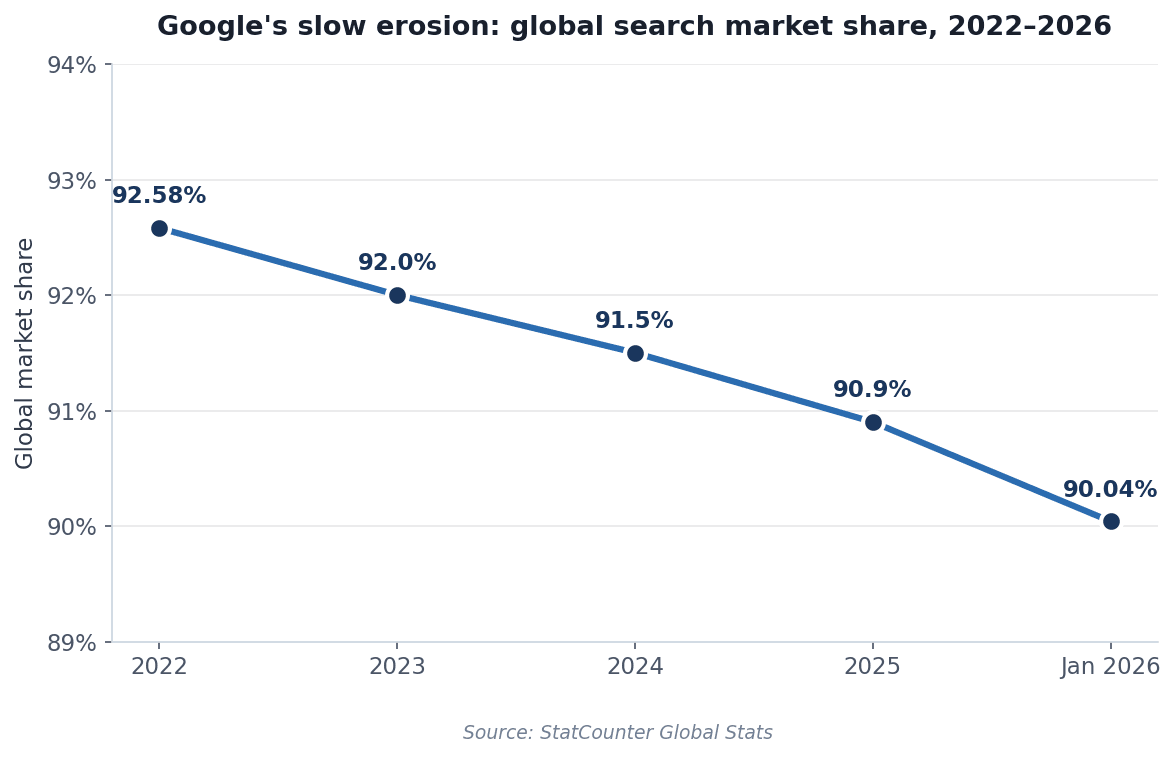
Figure 2: Google's global search market share, 2022–2026. Source: StatCounter Global Stats.
Google's slide is gradual but consistent — about 0.48 percentage points per year on average. The bigger device-level story: on US tablets, Google's share fell from 85.45% to 73.07% in twelve months — the steepest device-level drop on record. Bing's desktop share climbed to 12.21% globally and 8.16% in the US, largely thanks to Copilot integration.
Search engine market share: the full picture
Engine | Global | US (all devices) | US Desktop |
|---|---|---|---|
90.04% | 84.17% | ~88% | |
Bing | 4.31% | 10.52% | 8.16% (global) |
Yahoo | 1.45% | 2.86% | — |
DuckDuckGo | 0.89% | 1.84% | — |
Yandex | 2.49% | — | — |
Baidu | 0.55% | — | — |
Table 1: Search engine market share, January–March 2026. Source: StatCounter.
2. The more interesting fight: ChatGPT vs the rest of the AI category
If you only track ChatGPT, you're already missing the most aggressive shift of 2026. Within the AI chatbot category itself, ChatGPT's share of web traffic has dropped from 87.2% to 68% in twelve months — the steepest decline of any dominant tech platform in recent memory. Gemini quadrupled. Grok went from negligible to 15%+ on mobile after the X-integrated relaunch.
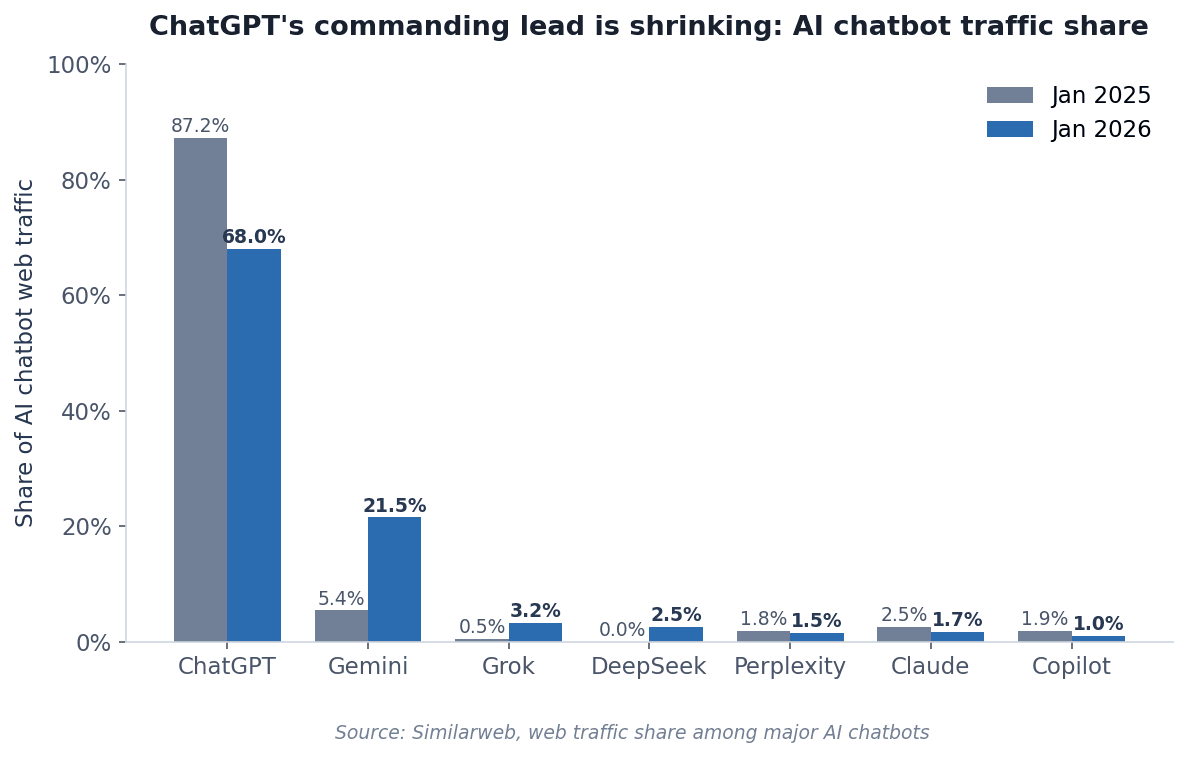
Figure 3: AI chatbot web traffic share, January 2025 vs January 2026. Source: Similarweb.
Andreessen Horowitz partner Olivia Moore characterized the dynamic as 'winner take all, or at least winner take most,' noting 'things are changing very quickly.' Apptopia's Tom Grant: 'ChatGPT built the category, but as viable alternatives have scaled, users are naturally diversifying their toolkit.'
The implication for brands is straightforward. Tracking visibility on ChatGPT alone is no longer sufficient. If 32% of AI-chatbot queries now happen somewhere other than ChatGPT, and the platforms cite different sources, you need a multi-platform view — or you'll optimize for the channel your buyers are leaving while ignoring the ones they're moving to.
3. User base: how many people are actually using each
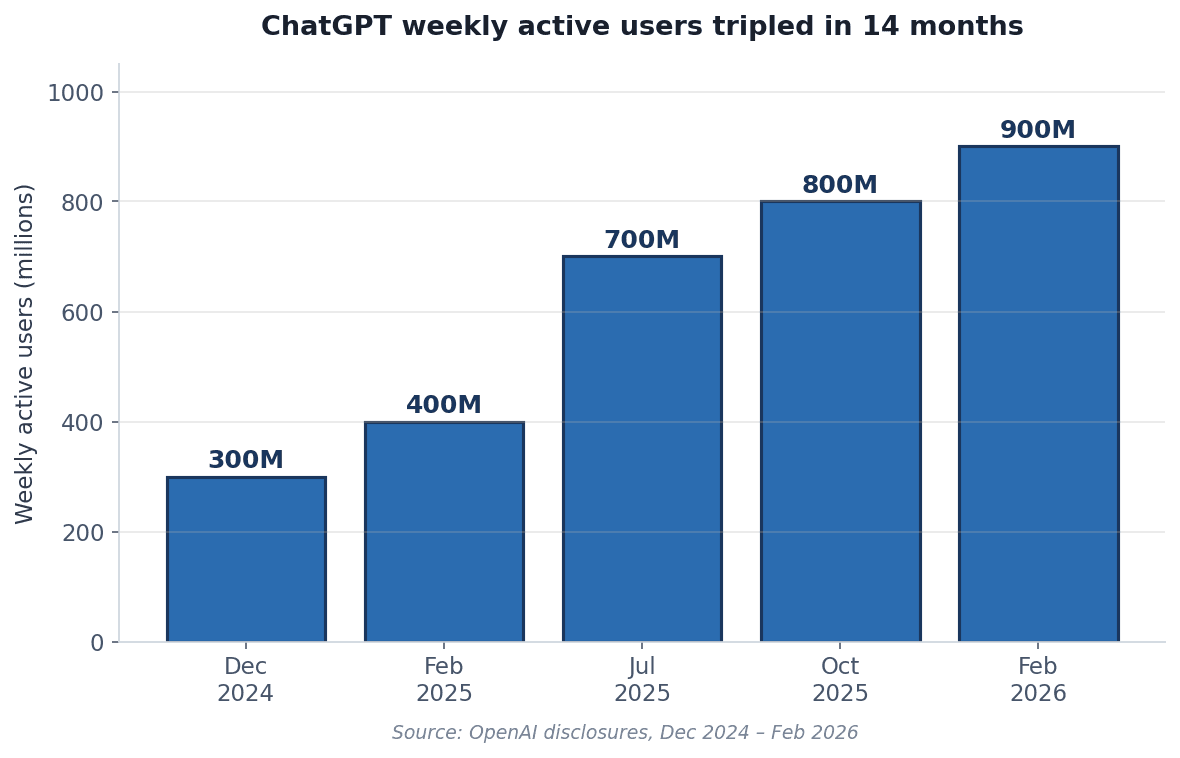
Figure 4: ChatGPT weekly active users, December 2024 – February 2026. Source: OpenAI disclosures.
ChatGPT tripled its weekly active user base in 14 months. OpenAI says it will be the fastest tech platform to reach 1 billion weekly active users, and January–February 2026 were the company's largest-ever subscriber-growth months.
Metric | ChatGPT | |
|---|---|---|
Active users | 900M weekly | ~5B users |
Daily queries | 2.5B prompts | 13.7–16.4B searches |
Monthly visits to platform | 5.35–5.7B | ~84B |
Avg session duration | 12m 34s | ~5m |
Pages per visit | ~4 | ~9 |
2025 revenue | $13.1B | ~$224B (search ads) |
Annualized run rate | $25B (Feb 2026) | ~$240B+ |
Valuation / market cap | $852B | Alphabet ~$2T+ |
Mobile / desktop split | Desktop heavier; mobile growing fastest | ~71% mobile, ~26% desktop |
Table 2: ChatGPT vs Google scale comparison, Q1 2026. Sources: OpenAI, Alphabet earnings, Similarweb, Backlinko, DemandSage.
The raw scale gap is still about 5.5–6.5× in Google's favor on daily queries. By SparkToro/Datos's stricter clickstream methodology — which excludes ChatGPT's writing, coding, and brainstorming uses to count only 'search-like' prompts — Google handles 373× more search-equivalent queries than ChatGPT. The point isn't that ChatGPT has caught Google. The point is that ChatGPT didn't exist five years ago, and a 17% share is what 'changing fast' actually looks like in numbers.
4. Search query displacement and the zero-click problem
This is the section that should scare every SEO. The headline finding from Datos/SparkToro's Q4 2025 State of Search: Google searches per US user fell ~20% YoY — not because users left Google, but because each user now needs fewer searches per task thanks to AI summaries. Industry analysts have started calling this 'the Great Decoupling': total Google search volume continues to grow in absolute terms, while per-user volume contracts.
Click-through rates collapse when an AI Overview appears
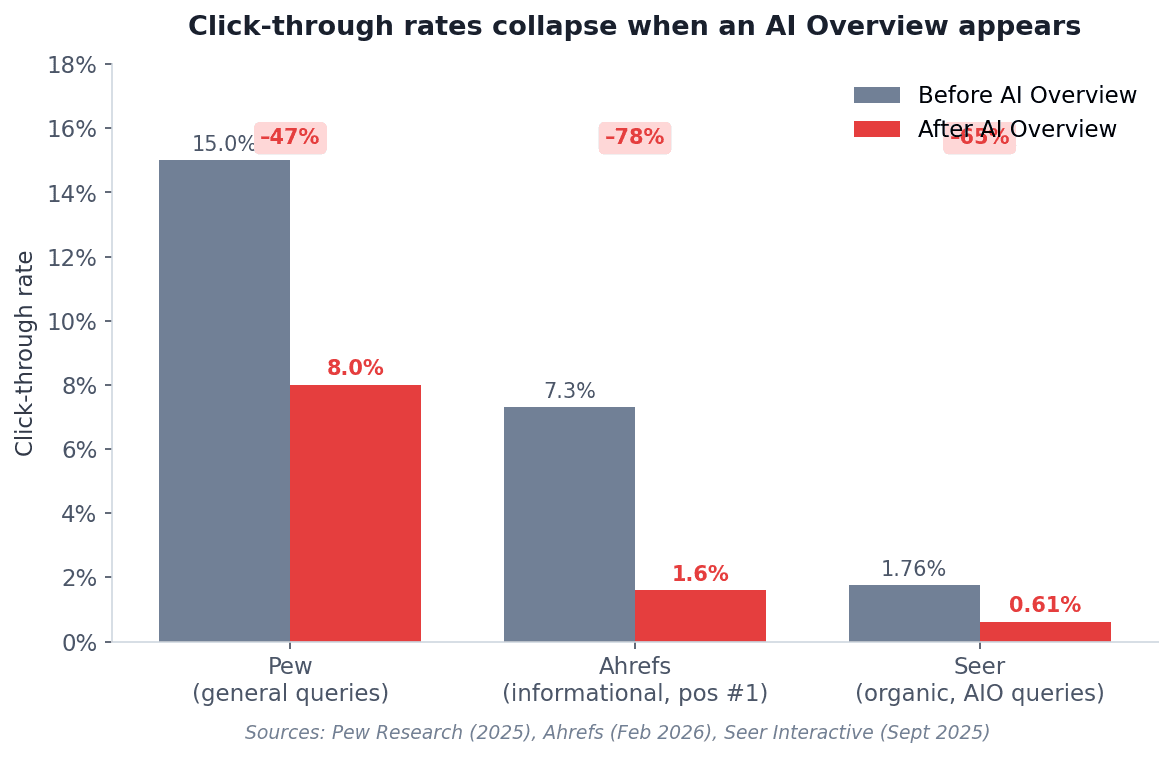
Figure 5: CTR before and after AI Overviews, three independent studies. Sources: Pew Research (2025), Ahrefs (Feb 2026, 300K keywords), Seer Interactive (Sept 2025).
Three independent studies converge on the same conclusion: when Google shows an AI Overview, organic CTR drops between 47% and 78%. Ahrefs's 300,000-keyword analysis found position-1 CTR for AIO-triggering informational queries fell from 7.3% (Dec 2023) to 1.6% (Dec 2025). Seer's data on paid CTR is even harsher — a 68% drop.
The flip side: brands that are cited inside an AI Overview earn 35% more organic clicks and 91% more paid clicks. Citation has effectively become the new ranking signal. The problem? AI Overview citations change 70% of the time for the same query, and traditional SEO tools don't track them.
Zero-click is the new normal
Metric | Latest figure | Source |
|---|---|---|
Zero-click rate (general Google searches) | 60–69% (rose from 56% in May 2024) | Similarweb / SparkToro |
Zero-click rate, Google AI Mode specifically | 93% | WebFX synthesis, 2026 |
AI Overview prevalence in SERPs | 13–60% (varies by methodology) | Pew, AirOps, Advanced Web Ranking |
10+ word queries triggering AI summaries | 53% | Pew Research, 2025 |
1–2 word queries triggering AI summaries | 8% | Pew Research, 2025 |
Daily Mail's measured CTR (mobile, AIO present) | 20% → 7% | Daily Mail internal data |
Per-user Google search volume YoY (US) | –20% | Datos / SparkToro Q4 2025 |
Table 3: Zero-click and AI Overview key statistics, 2025–2026.
5. Demographics: who actually uses what
ChatGPT's user base is younger, more educated, and more global than Google's — though it's normalized fast. The 84.5% male skew in early 2025 closed dramatically: by July 2025 OpenAI's own usage study found 52% of identifiable users had typically feminine names, up from 37% in January 2024.
Segment | ChatGPT adoption (US) | Notes |
|---|---|---|
All US adults | 34% | Pew, June 2025; double the 18% in July 2023 |
18–29 years old | 58% | The single largest cohort |
30–49 years old | 41% | Strong workplace adoption |
50–64 years old | 25% | — |
65+ years old | 10% | Slowest adoption segment |
Postgraduate degree | ~45% (work use) | vs 34% for bachelor's-only |
Households $75K+ (teens) | 62% | vs 52% in lower-income households |
Employed, age 18–29 | 38% | Use ChatGPT on the job |
Table 4: ChatGPT user demographics in the US. Source: Pew Research, June 2025; OpenAI.
Globally, India has reached 100M ChatGPT WAU; the US (~16% of users) and India (~16%) are the two largest country bases. ChatGPT growth in lowest-income countries was more than 4× the rate in highest-income countries by May 2025. Industry adoption: legal AI usage is 11.9× higher than baseline; finance and health both 2.9× (Previsible, December 2025).
6. How people actually use each platform
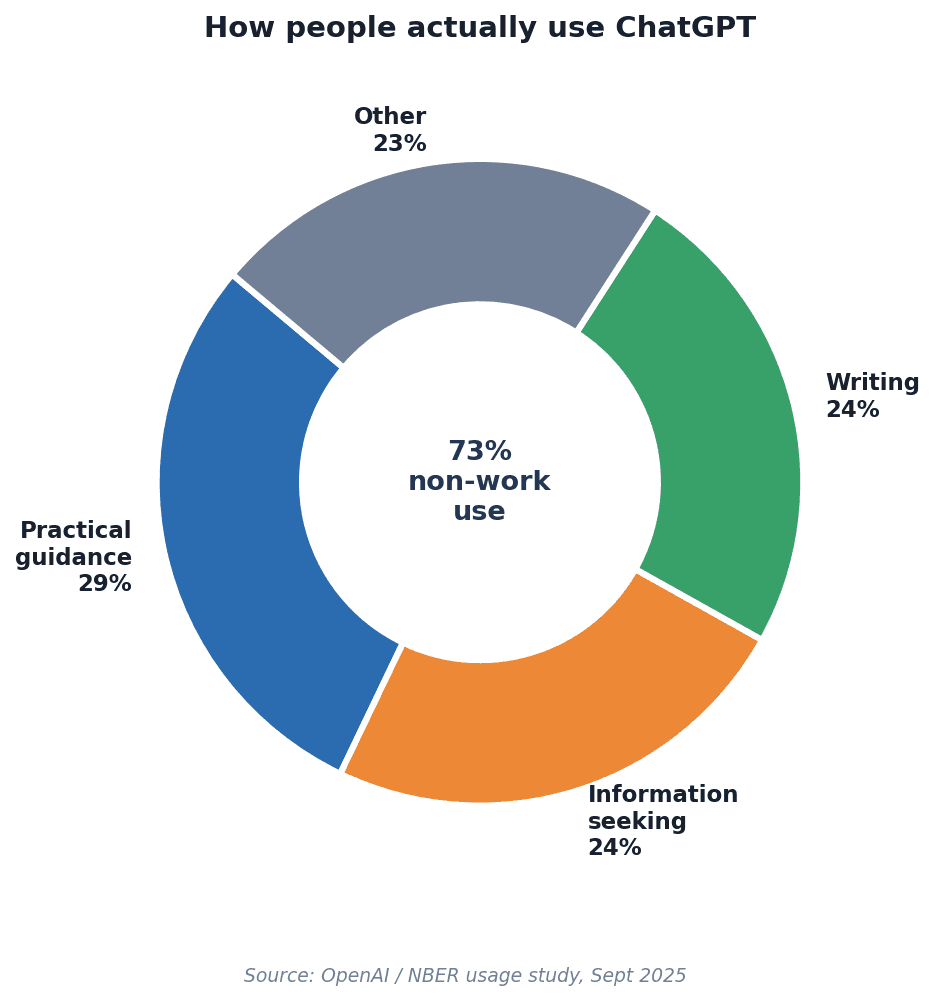
Figure 6: ChatGPT use case breakdown. Source: OpenAI / NBER usage study, September 2025.
OpenAI's own analysis of 1.5M conversations (Sept 2025) found 73% of ChatGPT usage is non-work (up 20 points YoY). Three use cases — practical guidance (29%), seeking information (24%), and writing (24%) — account for 77% of all conversations.
Google by contrast remains heavily transactional, navigational, and local. 84% of US consumers use Google daily for local business searches, and 76% of smartphone searches result in a visit within 24 hours. The two platforms are increasingly complementary rather than head-to-head: ChatGPT for research and decision support, Google for verification and last-click action.
The Walmart data point illustrates this perfectly. When ChatGPT's native Instant Checkout launched in September 2025, Walmart's EVP told WIRED that conversion rates inside ChatGPT were 3× lower than for the same shoppers routed back to Walmart's website. OpenAI subsequently pivoted from native checkout to product discovery — letting merchants own the checkout. The implication: ChatGPT in 2026 is mid-funnel research and influence, not last-click conversion.
7. The commerce data SMBs need to see
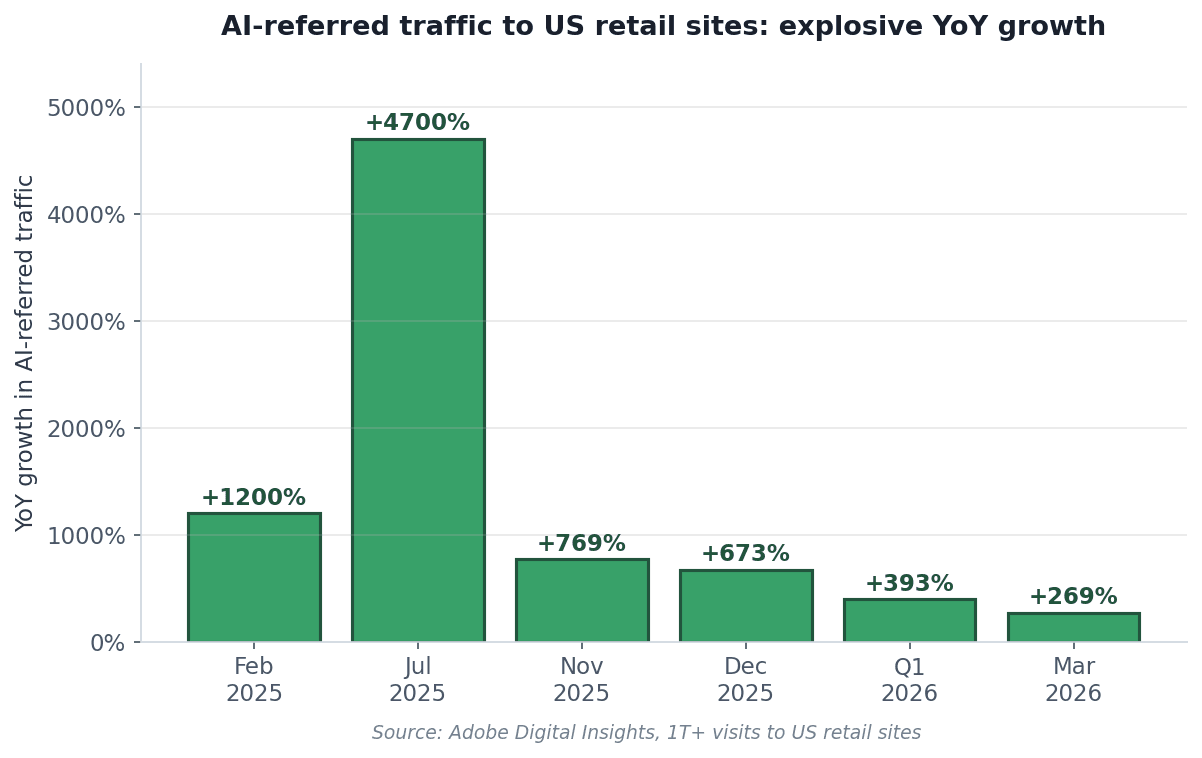
Figure 7: AI-referred traffic to US retail sites, YoY growth. Source: Adobe Digital Insights.
Adobe's Digital Insights team tracks 1+ trillion visits to US retail sites and has published the most rigorous longitudinal data on AI-driven commerce. The growth curve is the steepest in any digital channel since mobile commerce.
Behavior | AI-referred traffic | Non-AI traffic |
|---|---|---|
Conversion rate (Mar 2026) | +42% better than non-AI | Baseline |
Conversion lift (holiday 2025 avg) | +31% | — |
Conversion lift (Thanksgiving 2025) | +54% | — |
Conversion lift (Black Friday 2025) | +38% | — |
Time on site | +45% | — |
Pages per visit | +13% | — |
Bounce rate | –33% | — |
Revenue per visit YoY (holiday) | +254% | — |
Returns rate (online, AI-influenced) | –1.2% YoY | Baseline |
Table 5: AI-referred vs non-AI traffic performance on US retail sites, 2025–2026. Source: Adobe Digital Insights.
Twelve months earlier, AI traffic converted 38% worse than non-AI. By March 2026, it converted 42% better — an 80-percentage-point swing in a year. This is the data point that makes the budget case for AI visibility tracking. The traffic isn't just larger; it's qualitatively higher-intent than the typical organic visit.
Industry breakdown (Q1 2026 vs YoY): Retail +693%, Travel +539%, Financial Services +266%, Tech/Software +120%, Media/Entertainment +92%. B2B SaaS lags consumer because B2B buyers move slower, but Forrester's 2025 data shows B2B AI-search traffic growing roughly 40% month-over-month off a small base.
8. The visibility gap: why your SEO tools are blind here
This is the section that justifies why a Google-only SEO stack is now insufficient. Ranking on Google does not get you cited by ChatGPT.
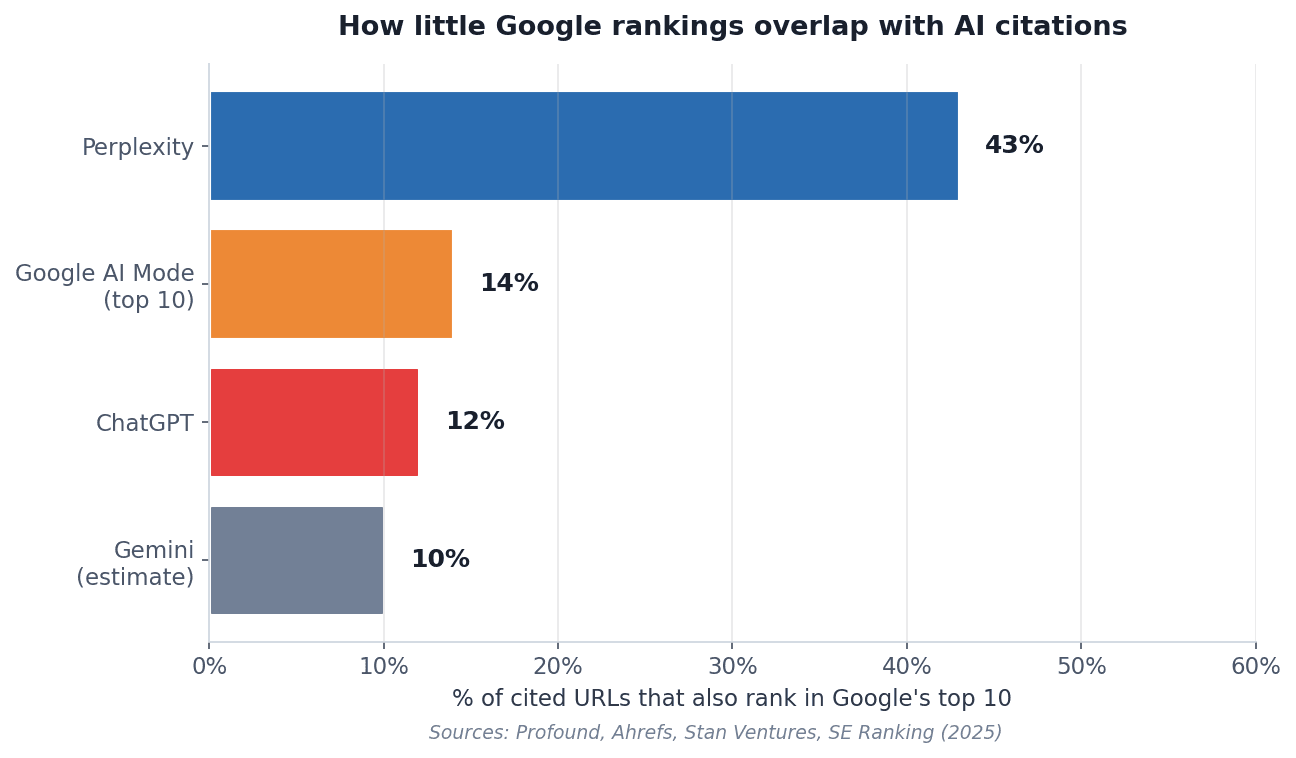
Figure 8: Citation overlap between Google rankings and AI platforms. Sources: Profound, Ahrefs, Stan Ventures, SE Ranking.
Profound's analysis of 41M results across ChatGPT, AI Overviews, Perplexity, and Copilot found ChatGPT results overlap only 12% with the Google SERP — and only 26% with Bing, even though ChatGPT browsing is Bing-powered. Ahrefs (15,000 queries) found 80% of LLM citations don't even rank in Google's top 100. SE Ranking's August 2025 study found just 14% of URLs cited by Google's own AI Mode rank in Google's top 10.
The most uncomfortable finding for SEOs: 28.3% of ChatGPT's most-cited pages have zero organic visibility in Google (Ahrefs). These are pages that win the AI channel without ranking at all in the channel SEOs spend their time on.
What ChatGPT actually trusts
AI platforms cite different sources than Google ranks. The pattern across multiple studies:
Brand-owned websites comprise only 5–10% of sources AI search references (McKinsey).
65%+ of cited sources in CPG and financial services are publishers, UGC, or affiliate sites (McKinsey).
Domains with 32K+ referring domains are 3.5× more likely to be cited (SE Ranking).
Brands with millions of mentions on Reddit and Quora have ~4× higher citation odds (SE Ranking).
Profiles on Trustpilot, G2, Capterra, Sitejabber, and Yelp correlate with 3× higher citation odds.
Earned media distribution boosts AI citations by up to 325% vs publishing only on your own site (Stacker, Dec 2025).
The 16% problem
McKinsey's September 2025 CMO survey of Fortune 500 brands found only 16% of brands systematically track AI search performance. Among SMBs the number is almost certainly lower. Layered on that:
GEO performance lags SEO by 20–50% even for industry leaders (McKinsey).
Major categories — credit cards, hotels, electronics, apparel — show leading brands absent from AI-generated answers despite strong Google presence.
AI recommendations are highly inconsistent: <1 in 100 chance ChatGPT/Google AI returns the same brand list across 100 identical prompts (SparkToro).
AI Overview citations change 70% of the time for the same query; 45.5% of citations get replaced when the answer regenerates (Ahrefs).
Google Search Console, Ahrefs, Semrush, BrightEdge, Conductor — every SEO tool you currently use measures Google. None of them, by default, tells you whether ChatGPT, Claude, Gemini, or Perplexity is recommending you, citing you, or describing you positively. For SMBs and agencies, this means 84% of brands are flying blind on the channel that already influences a third of buyer research.
9. The publishers who got hit (this could be you)
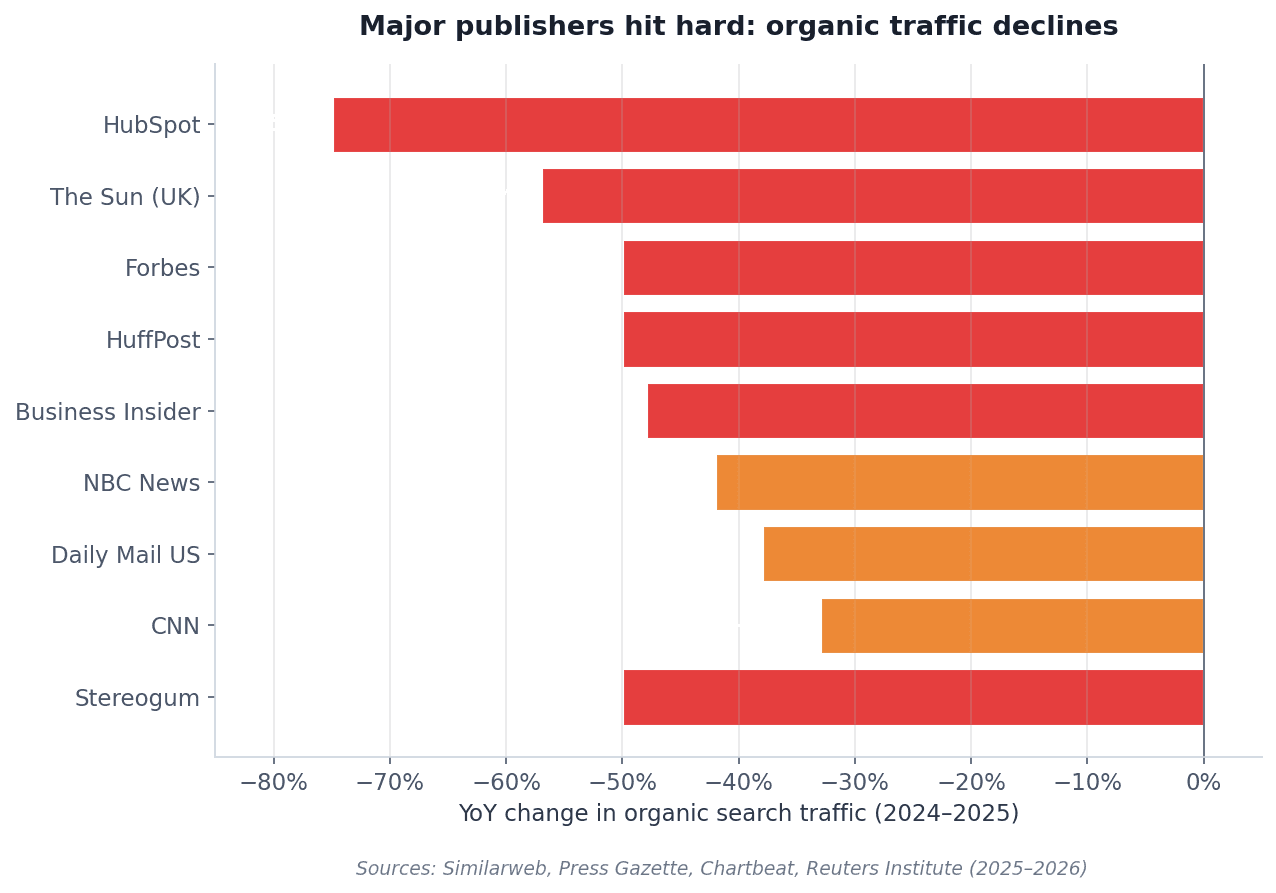
Figure 9: YoY organic traffic declines at major publishers, 2024–2025. Sources: Similarweb, Press Gazette, Chartbeat, Reuters Institute.
HubSpot is the canary. Organic traffic fell from ~13.5M monthly visits (Nov 2024) to under 7M by Dec 2024 and stayed there through 2025 — a 70–80% drop from peak. CEO Yamini Rangan acknowledged on the company's earnings call that 'AI Overviews are giving answers, and fewer people are clicking through to websites.' HubSpot's own customers' organic traffic is down 27% YoY (HubSpot disclosure, April 2026).
What's striking is that HubSpot still commands 35.3% share of voice in AI-generated answers for its category (AthenaHQ data) and is cited in nearly every CRM-related AI response. The traffic loss is real; the brand visibility is intact. That asymmetry is the new game: brands that lose Google clicks but win AI citations preserve influence; brands that lose both lose the market.
The good news, if you can call it that, is that some publishers gained:
People.com: +27% YoY
Men's Journal: +415% YoY
Top 10 largest sites globally: +1.6% in 2025
Brand strength is the moat. Mid-sized publishers (rank 100–10,000) suffered most — which maps almost exactly onto the SMB and small-agency customer base. If you're not a top-10 brand and you're content-dependent, you are the most exposed cohort in this transition.
10. What the analysts are forecasting
Source | Prediction | Timeframe |
|---|---|---|
Gartner | Traditional search engine volume drops 25% | By 2026 |
Gartner | Organic search traffic declines 50%+ | By 2028 |
McKinsey | AI-mediated search influences $750B in retail revenue | By 2028 |
McKinsey | 20–50% traffic decline for unprepared brands | By 2028 |
Google (own forecast) | AI Overviews appear in 75%+ of searches | By 2028 |
AirOps / Xponent21 | ChatGPT overtakes Google query volume at current growth | By 2027 |
Semrush | AI search surpasses organic in research-heavy verticals | ~2028 |
Forrester | B2B buyers adopt AI search at 3× consumer rate | Already underway |
Table 6: Major analyst projections on AI search vs traditional search.
A sober reading: most of these forecasts were issued before 2026's actual numbers came in, and the current data is tracking ahead of the more conservative estimates. Gartner's 25%-decline-by-2026 prediction may not hit on absolute volume (Google search continues to grow), but on a per-user basis the US is already there.
11. What this means for SMBs, SEOs, and agencies
Eight non-obvious takeaways for the QuickSEO audience, ranked by what's most actionable in the next 90 days:
Per-user search volume is the leading indicator, not total volume. US users now query Google ~20% less per person than a year ago. The pie hasn't shrunk; the slice you used to win is being eaten before it ever leaves Google. Track impressions and average queries per user in GSC, not just total clicks.
AI is 1% of traffic — and converts 4–11× better. Conductor's 1.08% AI traffic share number is the most-cited 'too small to matter' stat, but it's misleading. AI is 31% better at converting ecommerce traffic (Visibility Labs) and 42% better than non-AI in retail (Adobe, March 2026). Top-of-funnel discovery is moving here first, conversion will follow.
Ranking on Google does not get you cited by ChatGPT. The overlap is 11–12%, and 28.3% of ChatGPT's most-cited pages have zero Google visibility. Google Search Console will never tell you whether ChatGPT recommends you. You need a separate measurement layer.
ChatGPT is increasingly a doorway, not a destination. Outbound referrals up 206% YoY; 21.6% of all ChatGPT outbound traffic goes back to Google. The buyer journey is now ChatGPT → Google → your site. If you only optimize for Google, you've ceded the first step in the funnel.
The 16% number is the strategic gap. Only 16% of Fortune 500 brands track AI search systematically (McKinsey). For SMBs, the number is much lower. That makes AI visibility one of the few channels where small brands can outflank larger competitors right now, before the laggards wake up.
Earned media beats owned media for AI citations. AI search pulls 5–10% from your own site and 65%+ from Reddit, Quora, review sites, publishers, and UGC. Earned media distribution boosts citation rates 325%. Building topical authority on your own blog is necessary but no longer sufficient — you have to be where the LLMs read.
Tracking ChatGPT alone is no longer enough. ChatGPT's share of AI chatbot traffic dropped from 87% to 68% in twelve months. Gemini quadrupled, Grok 10×'d. If you optimize only for ChatGPT, you'll be optimizing for the channel your buyers are leaving.
HubSpot's lesson is the SMB lesson, not the enterprise lesson. A 70%+ traffic loss with the world's most respected B2B content team means small content-dependent businesses are even more exposed. The protective factors that worked for HubSpot — brand mentions, citation share, transactional pages, vertical depth — are exactly what SMBs can build affordably today, if they can measure them.
Methodology and source notes
All figures in this post are taken from primary disclosures (OpenAI announcements, Alphabet earnings, McKinsey reports, Pew Research, Gartner press releases) where available, and from reputable secondary analysis (Similarweb, Semrush/Datos, Ahrefs, Adobe Digital Insights, Search Engine Land, TechCrunch, Fortune, Reuters Institute, Press Gazette) where primary sources don't publish.
Where studies disagree — most notably on AI Overview frequency (13–60% depending on methodology), conversion-rate uplift (–9% to +5.1×), and zero-click rates (38–69%) — both ranges and the methodological reasons are noted in the body. Several Gartner and McKinsey projections are scenario forecasts rather than measured outcomes; the verbs 'could,' 'may,' and 'predicts' should be read accordingly.
Last updated: April 30, 2026. We'll refresh this post quarterly as new earnings and analyst data emerges. If you spot a stat that's been superseded, please let us know.
Tracking both Google and ChatGPT in one place is the only way to see this shift as it happens. QuickSEO combines your Google Search Console analytics with weekly visibility tracking across ChatGPT, Claude, Gemini, and Perplexity — so you can see exactly where your search traffic is moving and why. Start tracking at quickseo.ai →
Sources and further reading
Pew Research — 34% of US adults have used ChatGPT, double the 2023 share (June 2025)
Similarweb — Generative AI statistics for 2026, ChatGPT's ~79% share and Gemini's 157% growth
Similarweb — Gen AI referral traffic plateaued since May 2025 despite climbing usage
SparkToro / Datos — Google received ~373x more searches than ChatGPT in 2024 (clickstream analysis)
SparkToro — Is Google losing search market share? Rand Fishkin's data-led counterpoint
Search Engine Land — Seer Interactive: AI Overviews drive 61% organic and 68% paid CTR drops
Search Engine Land — Define Media Group: organic search clicks down 42% since AI Overviews expanded
Search Engine Land — Pew Research study: CTR falls from 15% to 8% when an AI summary is shown
Datos — State of Search Q3 2025: AI-driven search adoption alongside traditional search resilience
Enter your website to track its AI visibility across ChatGPT, Gemini, Claude, and Perplexity — and turn chatbot mentions into traffic.
- Set up in minutes
- Cancel anytime
Try it yourself
Related free tools
Free SEO tools related to the topics covered in this article.
Keep reading
Related posts
More articles on the same topics, prioritized by shared tags and keyword overlap.