Robots.txt vs Sitemap Conflict Checker
Find URLs in your XML sitemap that are blocked by robots.txt rules. These conflicts send mixed signals to search engines and can hurt your SEO performance.
Check Robots.txt vs Sitemap Conflicts
QuickSEO shows clicks, impressions, keywords and pages for every website you manage, compared with the period before.
- Unlimited websites on the free plan
- No credit card needed
What Are Robots.txt and Sitemap Conflicts?
A robots.txt file tells search engine crawlers which pages they can and cannot access, while an XML sitemap lists the pages you want search engines to find and index. A conflict occurs when a URL appears in your sitemap (signaling "please index this") but is also blocked by a robots.txt Disallow rule (signaling "do not crawl").
This contradiction confuses search engines. Google and other crawlers will respect the robots.txt directive and skip the page, but they may still index the URL without its content if external links point to it. The result is wasted crawl budget and potentially poor search listings.
Why These Conflicts Matter for SEO
- Wasted crawl budget: Search engines spend time discovering sitemap URLs only to find they are blocked, reducing the efficiency of your crawl budget.
- Indexing problems: Blocked pages may appear in search results with missing titles and descriptions because the crawler could not access the content.
- Mixed signals: Search engines may interpret conflicting directives as a sign of poor site maintenance, which can affect crawl prioritization.
- Lost rankings: Important pages that are accidentally blocked will not be crawled or ranked, even if they appear in your sitemap.
How to Fix Robots.txt vs Sitemap Conflicts
For each conflicting URL, decide whether it should be crawled and indexed:
- If the page should be indexed: Remove or modify the Disallow rule in robots.txt that blocks the URL. You can use an Allow rule for specific paths within a broader Disallow block.
- If the page should NOT be indexed: Remove the URL from your sitemap. If you want to prevent indexing entirely, add a
noindexmeta tag to the page instead of relying solely on robots.txt. - Review your CMS settings: Many CMS platforms auto-generate sitemaps. Check that your sitemap generator respects your robots.txt rules or has its own exclusion settings.
- Test after changes: After updating robots.txt or your sitemap, re-run this conflict checker to verify the issues are resolved.
How This Tool Works
- Fetches your site's robots.txt and parses all User-agent, Disallow, and Allow rules
- Discovers sitemaps from Sitemap directives in robots.txt, or falls back to /sitemap.xml
- Handles sitemap indexes by following child sitemaps (up to 5)
- Extracts up to 5,000 URLs from all discovered sitemaps
- Tests each URL against robots.txt rules for Googlebot and wildcard (*) user-agents, respecting Allow/Disallow precedence based on specificity
- Reports every sitemap URL that would be blocked from crawling
Frequently Asked Questions
What happens when a sitemap URL is blocked by robots.txt?
When a URL appears in your sitemap but is blocked by robots.txt, search engines receive conflicting signals. The sitemap says "this page is important, please index it" while robots.txt says "do not crawl this page." Google may still index the URL based on external links, but it cannot crawl the content, leading to thin or missing search results.
Should I fix robots.txt or sitemap conflicts?
Yes, you should resolve these conflicts. Decide for each URL: if the page should be indexed, remove the blocking robots.txt rule. If the page should not be indexed, remove it from the sitemap and use a noindex meta tag instead. Leaving conflicts unresolved wastes crawl budget and can hurt SEO.
Does Google ignore robots.txt for URLs in sitemaps?
No. Google respects robots.txt directives regardless of whether a URL is in your sitemap. If robots.txt blocks a URL, Googlebot will not crawl it even if it is listed in the sitemap. However, Google may still index the URL (without crawling its content) if other pages link to it.
How do Allow and Disallow rules interact in robots.txt?
When both Allow and Disallow rules match a URL, the more specific (longer) rule wins. For example, if you disallow /private/ but allow /private/public.html, the allow rule is more specific and takes precedence for that specific file. This tool accounts for this precedence when checking for conflicts.
How often should I check for robots.txt vs sitemap conflicts?
Check for conflicts whenever you update your robots.txt file, add new sections to your sitemap, or perform a site migration. It is also good practice to audit monthly, as auto-generated sitemaps from CMS plugins can add URLs that were previously blocked intentionally.
QuickSEO shows clicks, impressions, keywords and pages for every website you manage, compared with the period before.
- Unlimited websites on the free plan
- No credit card needed
From the blog
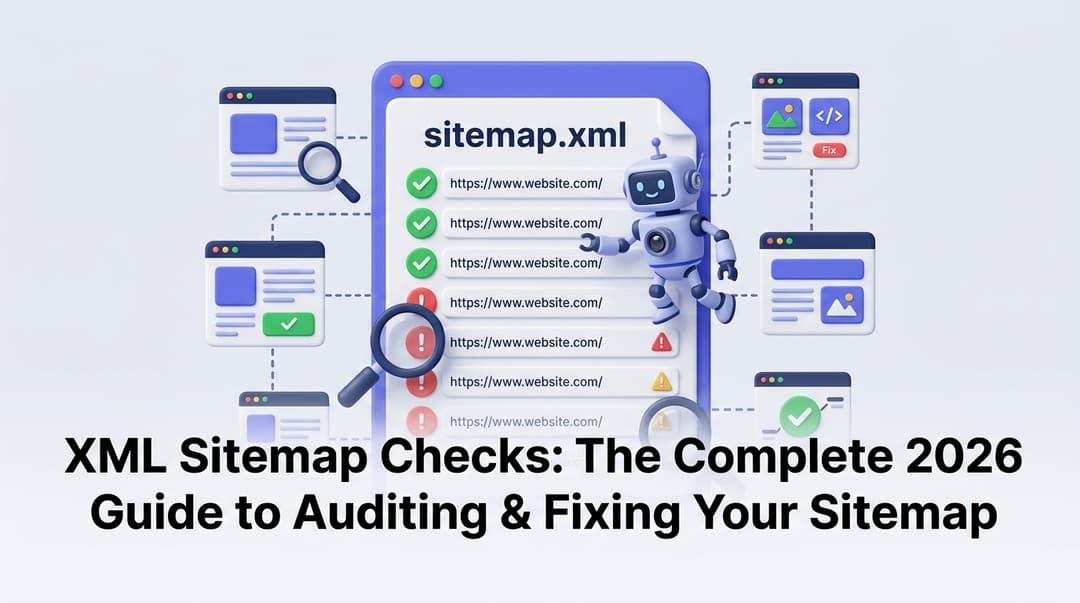
XML Sitemap Checks: The Complete 2026 Guide to Auditing & Fixing Your Sitemap
Learn how to run thorough XML sitemap checks in 2026. Discover common errors, how to fix them, and best practices to improve crawling and indexing.
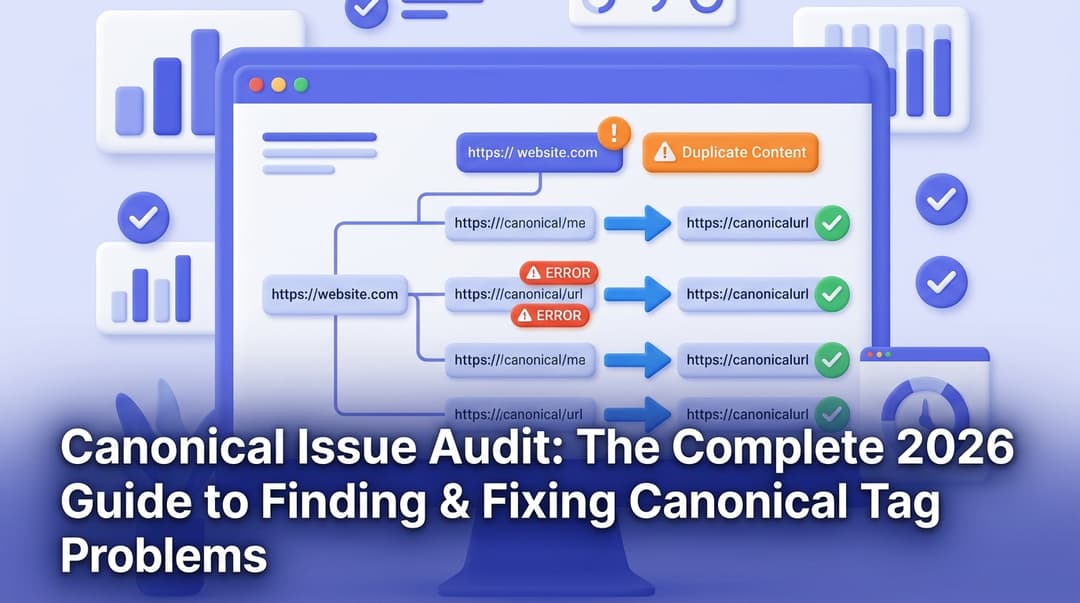
Canonical Issue Audit: The Complete 2026 Guide to Finding & Fixing Canonical Tag Problems
Learn how to run a full canonical issue audit in 2026. Discover the most common canonical tag errors, step-by-step fixes, and tools to protect your SEO rankings.