Free Keyword Grouping & Clustering Tool
Paste your keyword list and choose a mode: Classify by Intent to group keywords by modifier, search intent, funnel stage, and content type, or Cluster by Similarity to organize them into topical clusters by shared terms and n-gram overlap. Turn a raw list into a structured content plan in seconds — no signup, runs entirely in your browser.
Group Your Keywords
Classify each keyword by modifier, search intent, funnel stage, and content type.
0 keywords entered (min 3, max 200)
Enter your website to track its AI visibility across ChatGPT, Gemini, Claude, and Perplexity — and turn chatbot mentions into traffic.
- Set up in minutes
- Cancel anytime
Why Keyword Grouping Matters for Content Strategy
A keyword list is only useful when you know what to do with each keyword. Keyword grouping goes beyond topical clustering by classifying keywords across multiple actionable dimensions. This tells you not just which keywords are related, but what type of content to create, where each keyword fits in the buyer journey, and how to prioritize production.
- Match content format to intent — informational keywords need guides, commercial keywords need comparison pages, transactional keywords need product pages
- Map your funnel — identify gaps in your awareness, consideration, and decision content to build a complete conversion path
- Prioritize by modifier— "best" and "review" keywords signal high-value commercial intent, while "how to" keywords drive top-of-funnel traffic
- Plan content types — know exactly whether to create a blog post, a landing page, a comparison article, or a product page for each keyword
Two Modes: Classify by Intent vs. Cluster by Similarity
This tool combines two complementary approaches to organizing keywords. Pick the mode that matches your planning step:
- Classify by Intent labels every keyword across four structured dimensions (modifier, search intent, funnel stage, content type). Best for planning what type of content to create for each keyword and prioritizing production order.
- Cluster by Similaritygroups keywords by shared terms and n-gram overlap. All keywords about "running shoes" end up in one cluster regardless of intent. Best for identifying pillar topics and site architecture.
- Use both together: first cluster your keywords into topics, then switch to Classify mode on the keywords inside each cluster to plan the format and funnel stage for each page.
How to Use This Tool
- Pick a mode— "Classify by Intent" to label keywords by modifier/intent/funnel/content type, or "Cluster by Similarity" to group them into topical clusters
- Paste your keywords — enter one keyword per line (3-200 keywords supported)
- Run the tool — Classify mode shows tabs for each dimension; Cluster mode shows collapsible groups with shared terms
- Review the results — in Classify mode, switch between tabs to see the same keywords grouped by intent, funnel, modifier, or content type; in Cluster mode, expand each cluster to see the keywords and shared terms
- Copy and export — copy the full report to paste into your content planning spreadsheet or brief
Understanding the Four Grouping Dimensions
1. Modifier Type
Modifiers are the words that surround the core keyword and reveal what the searcher is looking for. Common modifiers include "best" (comparison), "how to" (tutorial), "vs" (direct comparison), "review" (evaluation), "free" (deal-seeking), "buy" (purchase-ready), and "near me" (local intent). Recognizing modifiers instantly tells you what format your content should take.
2. Search Intent
Every keyword has one of four intent types. Informational queries seek knowledge. Navigational queries seek a specific page or brand. Commercial queries research options before buying. Transactional queries are ready to convert. Matching your content to the correct intent is the most important factor for ranking.
3. Funnel Stage
Keywords map to your marketing funnel. Awareness keywords drive discovery and education. Consideration keywords help users evaluate solutions. Decision keywords capture users ready to buy. A balanced content strategy covers all three stages to guide visitors from first touch to conversion.
4. Content Type
Each keyword suggests a natural content format. "How to" keywords fit guides. "Best" keywords fit listicles or comparison pages. "Pricing" keywords fit product or landing pages. Using the right content type improves both user experience and search engine satisfaction.
Frequently Asked Questions
What is the difference between keyword grouping and keyword clustering?
They are two complementary modes of this tool. Grouping (Classify mode) classifies each keyword across structured dimensions — modifier type, search intent, funnel stage, and content type — so it tells you HOW to use each keyword. Clustering (Cluster mode) groups keywords by shared terms and n-gram overlap, so it tells you WHICH keywords belong to the same topic. Use Classify mode to plan content format and priority; use Cluster mode to plan pillar topics and site architecture.
How does the automatic keyword clustering work?
Cluster mode uses an algorithmic approach to analyze shared words and n-gram overlap between keywords. It groups keywords that share common terms, names each cluster after the most frequent shared words, and runs entirely in your browser with no server calls or wait times.
What are keyword modifier types?
Keyword modifiers are words that change the intent and context of a base keyword. Common modifiers include "best" (commercial comparison), "how to" (informational tutorial), "vs" (comparison), "review" (evaluation), "buy" (transactional), "free" (deal-seeking), and "near me" (local intent). Understanding modifiers helps you match content format to what the searcher actually wants.
How does search intent affect content creation?
Search intent determines what type of content Google expects to rank for a given query. Informational keywords need educational content like guides and tutorials. Commercial keywords need comparison pages, reviews, and listicles. Transactional keywords need product pages, pricing pages, and clear calls to action. Creating the wrong content type for an intent is a common SEO mistake.
What is a pillar topic and why does it matter?
A pillar topic is the main content piece that covers a broad subject comprehensively. Each keyword cluster from this tool maps to a pillar topic, and individual keywords become subtopics or supporting content. This structure helps search engines understand your topical authority and improves rankings across the entire cluster.
What are the marketing funnel stages for keywords?
Keywords map to three funnel stages: Awareness (top-of-funnel, educational — "what is CRM"), Consideration (mid-funnel, comparing solutions — "best CRM software"), and Decision (bottom-of-funnel, ready to act — "buy CRM subscription"). Balancing content across all three stages creates a complete conversion path from first discovery to purchase.
How many keywords can I group or cluster at once?
You can process up to 200 keywords per request in either mode. For best results, enter at least 10-20 keywords so the tool can identify meaningful patterns across modifier types, intents, funnel stages, content types, and shared terms.
Enter your website to track its AI visibility across ChatGPT, Gemini, Claude, and Perplexity — and turn chatbot mentions into traffic.
- Set up in minutes
- Cancel anytime
From the blog
Programmatic SEO with Claude Code: From Keyword Clusters to 10,000 Pages
Learn how to build a complete programmatic SEO pipeline with Claude Code — keyword clustering with HDBSCAN, page generation with validation, Next.js schema/sitemap automation, and real case studies showing 850%–10,737% traffic growth.
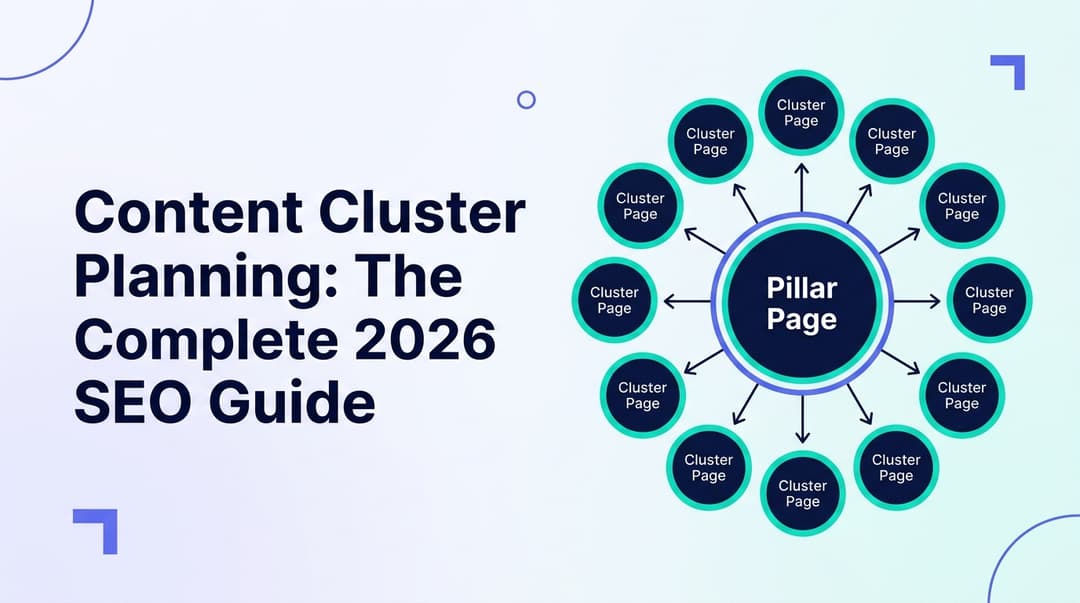
Content Cluster Planning: The Complete 2026 SEO Guide
Learn how to plan content clusters in 2026 to build topical authority, rank higher on Google, and get cited by ChatGPT, Gemini, and Perplexity.
Related Tools
Generate a hierarchical topical map from a seed topic — pillar pages and supporting subtopics in one go.
Keyword Cannibalization CheckerIdentify pages competing for the same keywords with severity ratings.
Blog Outline GeneratorCreate SEO-optimized blog outlines with H2/H3 structure.