AI Visibility Trends in 2026: What Every Brand Needs to Know

 Summarize in ChatGPT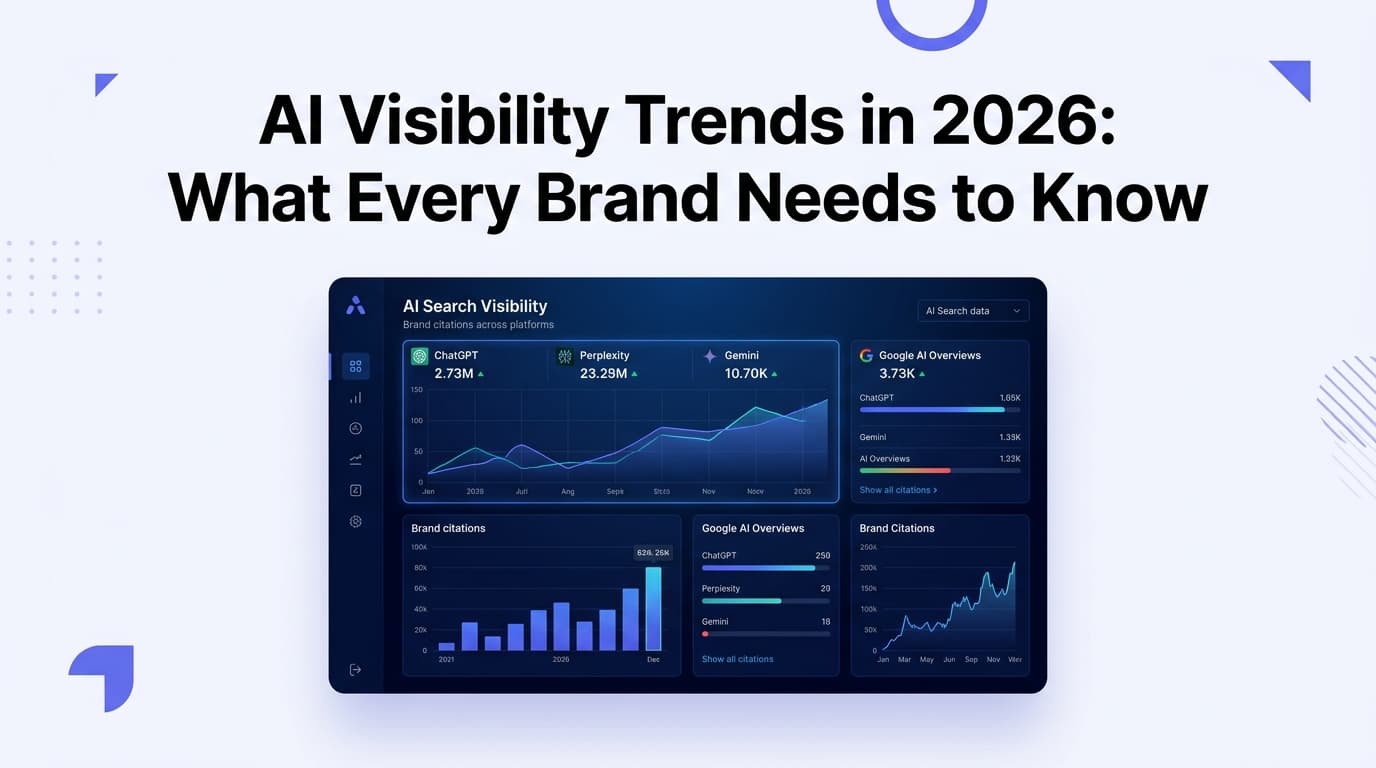
The search landscape has irrevocably changed. In 2026, ranking on Google page one is no longer enough — in fact, for many brands, it tells only half the story. A new competitive frontier has emerged where the winners aren't just ranked; they're cited by AI. Brands that master this shift are capturing traffic, leads, and revenue that their page-one rivals never even see.
This is the world of AI visibility — and the trends reshaping it are moving fast. Whether you're a growth marketer, an SEO strategist, or a founder building organic traffic from scratch, understanding these trends is no longer optional.
The Shift from Rankings to Citations
Search used to have one goal: rank in the top 10. In 2026, that's no longer enough. Google's AI Overviews now appear in roughly a quarter of all searches, ChatGPT and Perplexity are answering questions directly without sending a single click to your site, and a growing share of Google searches end without a click at all. The new goal isn't just ranking — it's being cited. If an AI engine doesn't mention your brand while answering a user's question, you're invisible, even if you'd have ranked.
The numbers paint a stark picture:
AI search trends in 2026 confirm that zero-click search is becoming the dominant consumer behavior model. Semrush reports that over 65% of informational queries now resolve without a user visiting a website.
Google AI Overviews now appear in over 25% of all Google searches, up from 13% in March 2025.
Over 73% of brands have zero mentions in AI-generated responses despite ranking on Google page one, according to Wellows' 2025 GEO Visibility Research.
That last statistic is worth sitting with. Three-quarters of page-one brands are completely invisible in AI. The opportunity for those who act now is enormous.
Trend #1: AI Traffic Is Surging — and Converting Better Than Organic
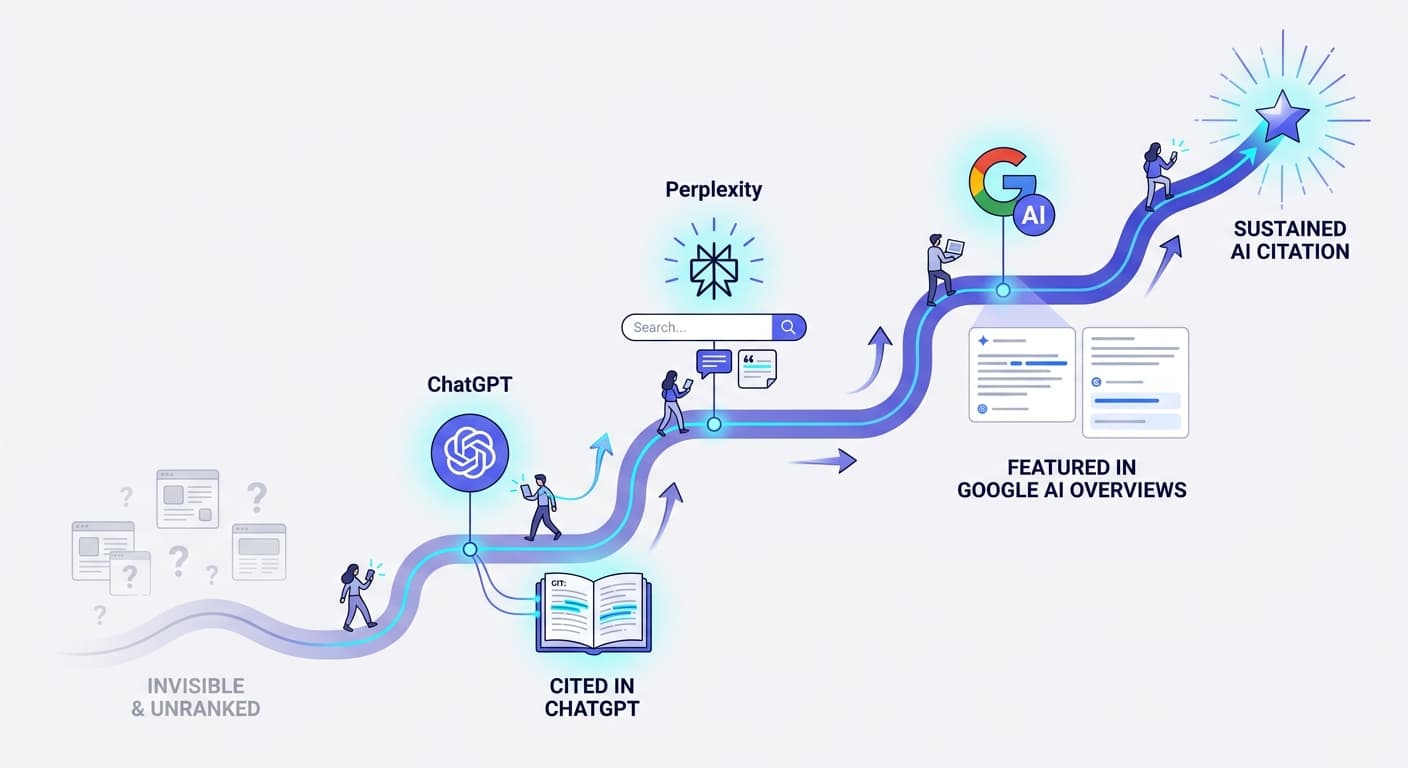
The raw growth numbers for AI-powered search are staggering. New data from Adobe highlights the substantial growth in this channel, where AI traffic to US retail sites has surged 1,324% between October 2024 and May 2026. In the travel sector, AI traffic is up 2,215% in the same period.
But it's not just volume — the quality of AI-driven traffic is exceptional. LLM visitors convert at 15.9% from ChatGPT, 10.5% from Perplexity, and 5% from Claude, compared to a 1.76% organic search conversion rate. In other words, a visitor arriving from an AI citation is up to 9x more valuable than a standard organic visitor.
ChatGPT crossed 800 million weekly active users in October 2025, with the trajectory at +60% year-over-year. Perplexity alone reported a 300% increase in query volume over the past year.
For brands, this means that being cited in AI answers isn't just a vanity metric — it's becoming one of the highest-ROI acquisition channels available. You can explore the data on AI traffic conversion benchmarks to understand just how much is at stake.
Trend #2: Brand Visibility Is Wildly Unstable — and Platform-Specific
One of the most important — and alarming — findings from 2026 research is just how volatile and fragmented AI visibility actually is.
Brand visibility in AI is in a constant state of fluctuation. Only 30% of brands stay visible from one answer to the next, and just 20% remain present across five consecutive runs.
And the differences between platforms are dramatic. A 2026 study of 34,234 AI responses found a 46-times difference in brand citation rates between platforms — ChatGPT cited brands just 0.59% of the time while Perplexity sat at 13.05%. Grok came in even higher at 27%.
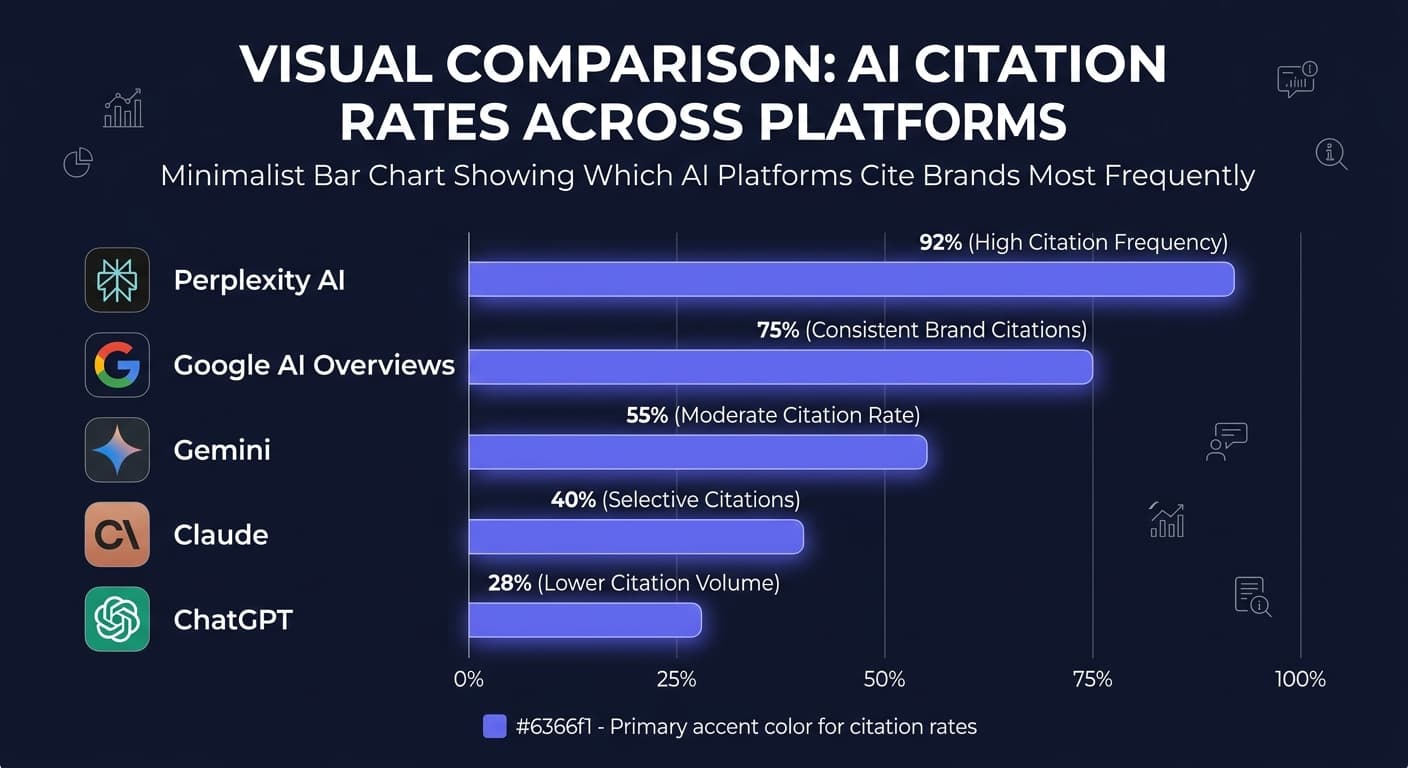
The platform-specific divergence goes even deeper. Across 680 million AI citations analyzed by Averi in early 2026, only 11% of domains were cited by both ChatGPT and Perplexity. Whitehat SEO's independent study of 118,000 responses found the same number. Ahrefs' query-level analysis put cross-platform overlap with Google's top 10 at around 12%. Three different methodologies, one conclusion: the brand graph these two engines see is almost completely disjoint.
The practical implication: the platform you are not tracking is almost certainly the one where your biggest citation gap lives. The 11% overlap means treating AI visibility as a single number is like measuring your Google ranking and assuming it applies to Bing.
This is why tracking AI visibility across ChatGPT, Gemini, Claude, and Perplexity separately — as QuickSEO's AI visibility tracking does — is essential for any brand serious about the AI era.
Trend #3: Content Freshness Is Now a Make-or-Break Factor
If you're still relying on content published 12–18 months ago to carry your AI visibility, 2026's data should be a wake-up call.
Fresh, structured content wins. Pages not updated quarterly are 3× more likely to lose citations. Sequential headings and rich schema correlate with 2.8× higher citation rates.
Content freshness decays rapidly in AI search. Monitoring data shows that newly published content can begin generating AI citations within three to five days. However, citation performance typically begins declining after four to five days without content updates, a pattern consistent across all six major AI platforms.
The best practice: GEO best practices for 2026 include building listicle-format ranking pages, deploying JSON-LD triple schema stacking, placing quick answer blocks above the fold, creating prompt-aligned FAQ sections, maintaining 7–14 day content freshness cycles, and publishing 1–2 new listicles weekly.
Trend #4: Off-Site Signals and Community Platforms Dominate Citations
Where your brand is mentioned matters as much as what you publish on your own site. About 48% of citations come from community platforms like Reddit and YouTube, and 85% of brand mentions originate from third-party pages rather than owned domains.
Community platforms (Reddit, Quora) capture 52.5% of citations vs. 47.5% for brand domains. This means that even the most well-optimized website is fighting an uphill battle if it's not earning mentions across the broader web.
Brand visibility is crucial because AI search engines consult multiple trusted sources and look for consistent brand mentions across third-party websites, social media, and publications — similar to how consumers research products by checking various objective sources before making decisions.
Practical steps include:
Earn mentions on industry publications and review sites — not just backlinks
Participate in relevant Reddit communities and create genuinely useful content
Pursue podcast appearances, data studies, and original research that naturally attract citations
Build presence on Wikipedia where appropriate, as for brand citation across AI search, the highest-leverage moves include establishing a Wikipedia presence, distributing fresh content quickly (Perplexity indexes in real-time), and using IndexNow to accelerate Bing indexing — which in turn feeds Copilot and ChatGPT Search.
Trend #5: Topical Authority Beats Isolated Rankings
Industry experts advise: "Don't fixate on singular prompts; think topical authority. AI visibility should be measured as sustained topical authority, not isolated wins." And: "Do not sacrifice long-term organic performance for short-term AI experimentation. AI brand visibility should be built on durable authority."
AI search is shifting focus from short keyword phrases to understanding the why behind queries, as users now ask complete questions like "What type of TV is best if I watch a lot of sports?" rather than simply searching "best types of TVs," requiring content creators to address specific user goals and intentions.
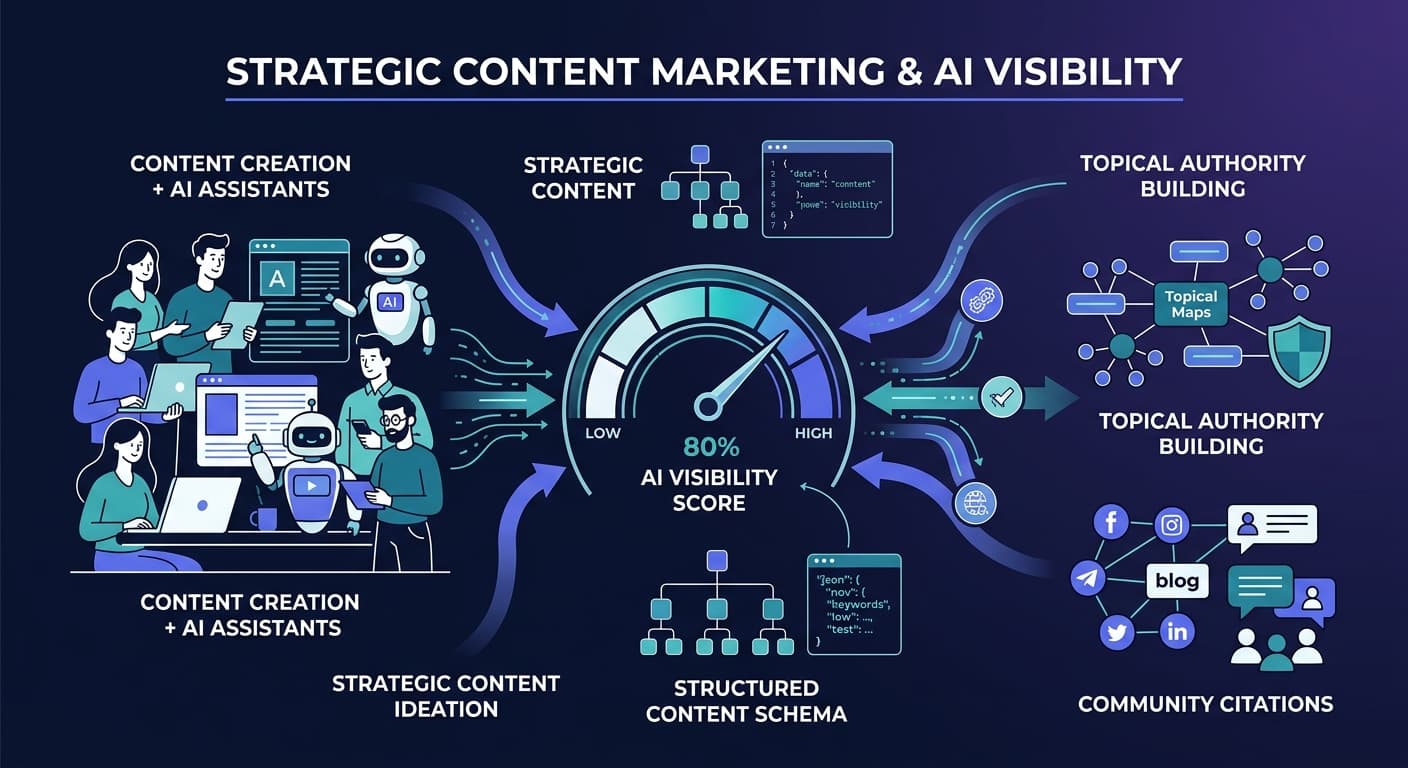
This trend reinforces the importance of building comprehensive content ecosystems rather than chasing individual rankings. A single viral article won't sustain AI visibility — but a well-structured cluster of authoritative, interlinked content on a topic will.
Trend #6: Listicle and Structured Content Formats Win in AI Search
Listicle content dominates AI citations. Analysis of over 2,500 unique domains cited by AI search engines reveals that listicle-format content — structured "Top N" comparisons and rankings — accounts for 59.5% of all cited URLs. Product pages represent 8.5%, articles 7.9%, and how-to guides 6.3%.
This finding has significant implications for content strategy. Brands investing primarily in product pages, blog posts, or corporate messaging are structurally disadvantaged in AI search visibility compared to brands that maintain active listicle publication programs.
The content formats that earn the most AI citations share common traits:
Clear H2/H3 heading hierarchy that signals structure
Quick-answer blocks positioned above the fold
Data, statistics, and original research that give AI systems something quotable
FAQ sections aligned to the natural-language questions users ask AI chatbots
Schema markup (especially FAQ, Article, and How-To schemas) to help AI parsers extract content
One report — AthenaHQ's "State of AI Search 2026" — found that 41% of AI-generated responses cited informational content, while 27% was comparative. This validates investing in comparison pieces, roundups, and in-depth educational content alongside traditional blog posts.
Trend #7: The GEO Market Is Growing — But Most Brands Are Behind
GEO (Generative Engine Optimization) is the practice of structuring your content and digital presence so that AI-powered search platforms — including ChatGPT, Google AI Overviews, Perplexity, Claude, and Copilot — can retrieve, cite, and recommend your brand when answering user questions. If traditional SEO was about earning a spot among 10 blue links, GEO is about earning a place among the two to seven domains large language models typically cite in a single response.
Despite the urgency, execution lags far behind awareness. Most brands still pour 100% of their optimization budget into traditional Google rankings while ignoring the AI engines that now influence over 40% of purchase-stage research decisions. Gartner projects that organic search traffic to commercial websites will decline 25% by 2026 as consumers shift discovery to ChatGPT, Perplexity, Gemini, and Copilot. Yet fewer than 12% of marketing teams have a documented strategy for appearing in AI-generated answers.
Brandi AI's 2026 trends report projects that by late 2026, a significant gap will emerge between brands that proactively manage AI visibility and those that don't. Leading brands will consistently appear in AI-generated recommendations, while others will be mentioned less often — losing market share and revenue to competitors they may not even view as threats.
The window to gain an early-mover advantage is still open — but it's closing. Brands that start building their GEO and AI visibility strategy now will compound their advantage over the next 12–18 months.
What the Data Tells Us About Platform Strategy
Not all AI platforms work the same way, and smart brands are tailoring their strategies accordingly.
Platform | Citation Behavior | Best Optimization Focus |
|---|---|---|
ChatGPT | Favors Wikipedia, established news; mentions brands but rarely links | Information density, E-E-A-T, training data footprint |
Perplexity | Real-time web search; highest citation quality and link-through rates | Fresh content, high-authority backlinks, real-time indexing |
Google AI Overviews | Strongest brand preference (59.8% of citations); most clickable links | Google organic rankings, structured data, brand authority |
Claude | Highest owned citation share (9.1%) among B2B brands | Authoritative long-form content, clear sourcing |
Gemini | Draws heavily from Google's index | Strong Google organic rankings as a prerequisite |
Brands cited in AI Overviews earned 35% more organic clicks and 91% more paid clicks compared to those not cited — a powerful reminder that AI visibility and traditional SEO aren't competing priorities; they're compounding ones.
If you want to see how your brand currently performs across these platforms, start with the QuickSEO AI Visibility Audit — it shows exactly where you're showing up and where your biggest gaps are.
How to Take Action on These Trends
Here's a condensed playbook for improving your AI visibility in 2026:
Audit your current AI visibility — manually check your brand across ChatGPT, Perplexity, Gemini, and Google AI Overviews for your key topics. Use the QuickSEO E-E-A-T checker to evaluate how well your content signals expertise and authority.
Build topical authority through content clusters — don't chase single keywords. Map out a comprehensive topic cluster and publish content that addresses every angle, including comparisons, FAQs, and how-to guides.
Refresh content regularly — set a 30–90 day review cycle for your most important pages. Update statistics, add new examples, and resubmit via sitemap to trigger re-crawling.
Earn off-site citations — invest in PR, community participation, and digital PR campaigns that get your brand mentioned on third-party platforms, review sites, and community forums.
Implement structured data — add FAQ, Article, and How-To schema to key pages. This dramatically improves AI parsability.
Track visibility across all platforms separately — AI visibility is not a monolithic metric. Monitor your citation share on each major platform independently.
Publish listicle and comparison content — these formats earn the most AI citations by a significant margin. Build a regular cadence of "Top N" and "Best X vs Y" content.
Ready to Grow Organic Traffic from Google AND AI — Automatically?
QuickSEO finds where you're invisible in Google and AI chatbots, writes on-brand articles built to rank and get cited, and publishes them to your site — every day. No copy-paste. No manual work. Just compounding organic growth. From keyword gap to published article to page-one ranking and ChatGPT citation — QuickSEO handles the entire workflow on autopilot. Sites running QuickSEO are already climbing Google rankings and earning citations in ChatGPT, Claude, Gemini, and Perplexity. Start growing your AI visibility today →
The Bottom Line
The AI visibility shift of 2026 is not a future trend — it's the current reality. The takeaway from AI search trends 2026 is stark: visibility now precedes traffic. And in many cases, visibility replaces traffic.
Brands that understand this will stop treating AI search as a separate experiment and start integrating GEO into their core content and SEO strategy. SEO remains the foundation of GEO because both search engines and LLMs rely on structured, trustworthy, and authoritative content to understand a brand's expertise. Traditional SEO signals — like clarity, organization, and depth — still matter, but GEO pushes beyond rankings by prioritizing how completely and accurately you answer a topic. It also incorporates broader cross-channel reputation signals, allowing generative engines to evaluate not just what you publish, but how the entire ecosystem recognizes and reinforces your authority.
The brands winning in AI search today aren't necessarily the biggest or most well-funded. They're the ones who started building structured, authoritative, frequently refreshed content and earning off-site citations before their competitors figured out what was happening. The question is: will your brand be one of them?
Enter your website to track its AI visibility across ChatGPT, Gemini, Claude, and Perplexity — and turn chatbot mentions into traffic.
- Set up in minutes
- Cancel anytime
Try it yourself
Related free tools
Free SEO tools related to the topics covered in this article.
Keep reading
Related posts
More articles on the same topics, prioritized by shared tags and keyword overlap.