Brand Mention Tracking in the Age of AI Search: The Complete 2026 Guide

 Summarize in ChatGPT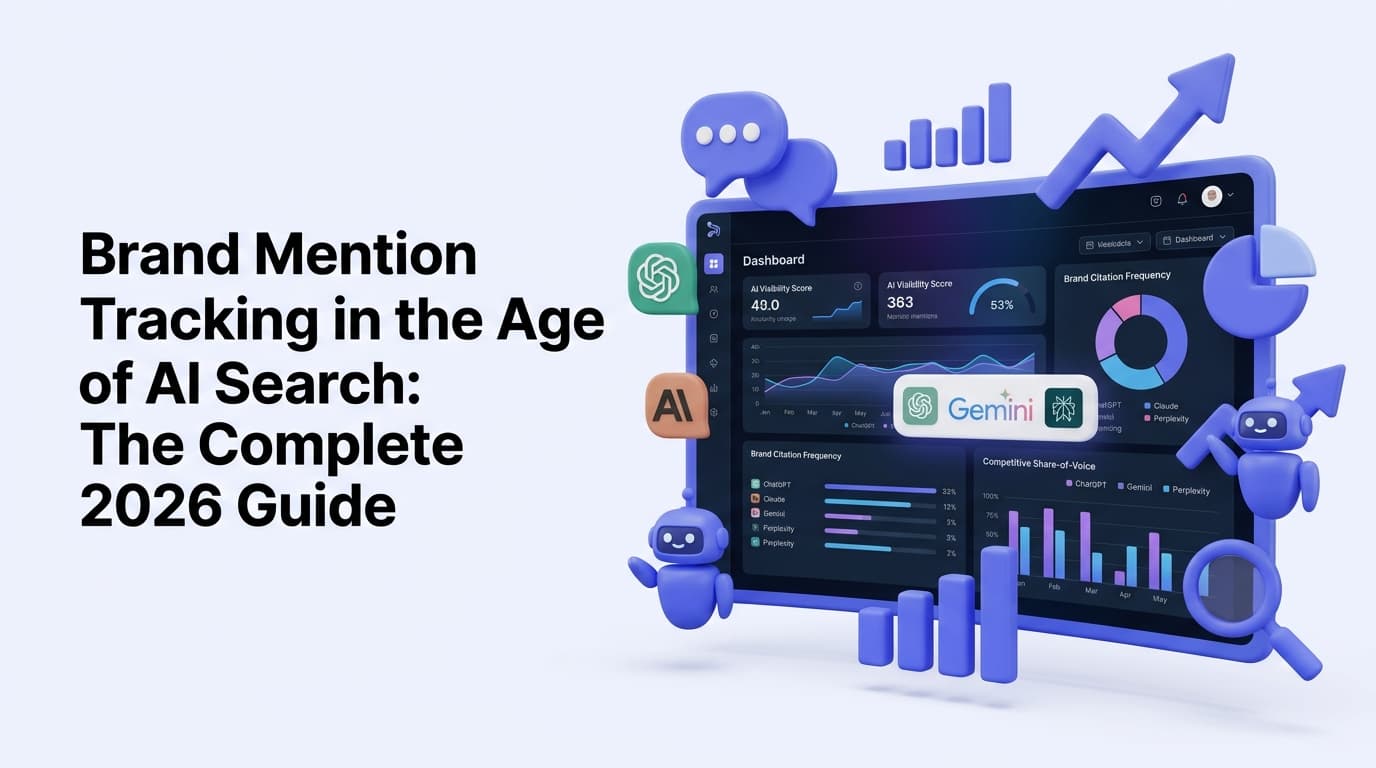
Every day, millions of people open ChatGPT, Gemini, Claude, or Perplexity and ask questions your potential customers are asking right now. "What's the best project management tool for a remote team?" "Which CRM is easiest to set up?" "What are the top online stores for running shoes?"
The AI answers those questions directly — and it either mentions your brand or it doesn't. There's no page two. No "close enough." As Adobe's marketing team recently put it, "In AI-generated responses, there is no list of blue links or page two. Brands are either present in the answer or not."
That's the new reality of brand visibility in 2026 — and it's why brand mention tracking has become one of the most urgent priorities in modern marketing.
What Is Brand Mention Tracking in AI Search?
Tracking brand mentions in AI search means monitoring whether and how your brand appears in answers generated by ChatGPT, Perplexity, Gemini, Google AI Overviews, and other LLM-powered answer engines.
This is fundamentally different from traditional SEO monitoring. Traditional monitoring focuses on traffic, rankings, backlinks, and mentions across indexed web pages. In contrast, AI search monitoring examines how brands appear within generated responses, where they are positioned, and how they are represented within conversational experiences.
AI visibility — also called brand discoverability in AI search — refers to how often and how prominently your brand appears in answers generated by AI-powered search engines like ChatGPT, Google Gemini, Perplexity, and Claude.
The stakes are high. With AI search approaching 1 billion users and an estimated 27% of consumers using AI for roughly half of their internet searches, tracking AI visibility has become a core element of modern SEO strategy rather than an experimental add-on.
Even more striking: an analysis of 177 brands across healthcare, SaaS, and financial services found that 90% of brands have zero AI search mentions. That gap represents a massive opportunity — if you're willing to act now.
Why Traditional SEO Dashboards Won't Cut It
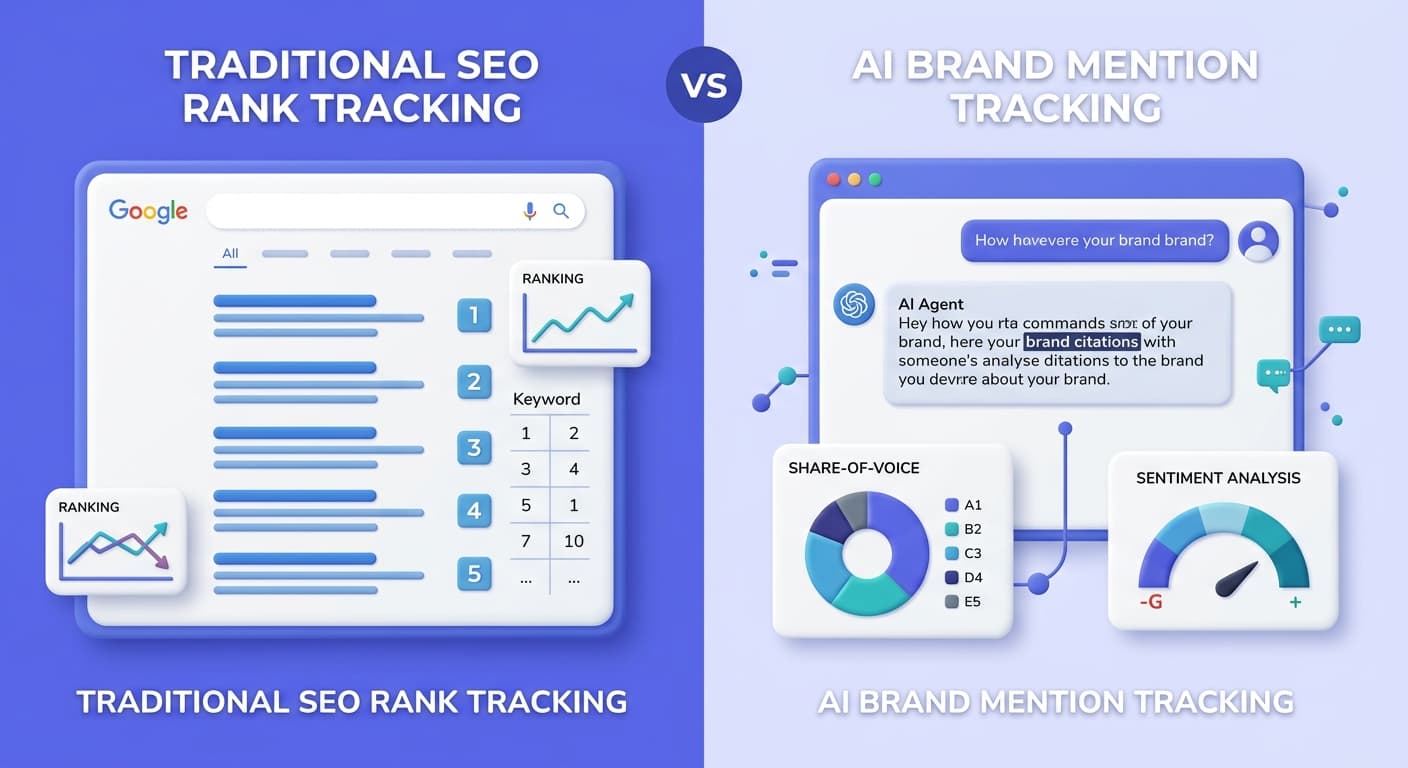
The core problem with relying on traditional SEO tools for brand monitoring in 2026 is simple: traditional SEO dashboards won't flag the problem because they track keyword positions, not AI answer citations.
Consider this scenario: when someone asks ChatGPT "What is the best project management tool for remote teams?" — and your product doesn't appear — there is no click, no impression, no bounce rate to analyze. The opportunity just evaporates silently.
Traditional SEO rank tracking measures fixed positions. AI search monitoring deals with probabilistic answers that shift based on phrasing, personalization, and source selection.
This unpredictability adds another layer of urgency. Unlike traditional search, AI citations do not always come with clear notifications. A brand could appear prominently one day and be absent the next.
AI answers can shift within days or weeks as models update and new content gets indexed. This frequency is why continuous monitoring catches changes that periodic manual checks miss.
There's also the compounding visibility problem: when ChatGPT recommends your brand, users write about that experience. They mention you in blog posts, Reddit threads, and social media. That new content becomes part of the data that future AI models learn from, which makes AI even more likely to recommend you again. The inverse is also true — brands that aren't mentioned today will fall further behind tomorrow.
How Each AI Chatbot Decides Which Brands to Mention
Not all AI platforms use the same signals to surface brands. ChatGPT, Gemini, and Claude each use different search indexes, shopping infrastructure, and ranking signals — which means optimizing for one engine does not automatically guarantee visibility in the others. But beneath those differences lies a shared logic: all three engines are consensus builders that reconstruct which brands are credible across multiple sources, not just a single great landing page.
Here's a quick breakdown of how each major platform works:
ChatGPT: Data source: Bing search index + training data + plugins. Optimization lever: Rank well on Bing, submit sitemap to Bing Webmaster Tools. Key insight: ChatGPT's browsing mode pulls from Bing in real-time. Additionally, sites with over 32K referring domains are 3.5x more likely to be cited by ChatGPT than those with up to 200 referring domains.
Gemini: Gemini draws on the deepest ecosystem via Google Search and the Google Shopping Graph. Strong Google presence, rich structured data, and Google Business Profile completeness all matter here.
Claude: Claude uses Brave Search as its primary web index rather than Bing or Google. That means visibility in Brave's index, and in the broader public web that Brave crawls, determines which brands Claude can even retrieve and mention. It relies heavily on independent review sites, editorial content, and forums when constructing product recommendations. That shifts the weight toward earned media and organic authority rather than feed-driven optimization.
Perplexity: Operates via live web crawling and heavily favors content that's current, well-sourced, and directly answer-oriented.
One critical data point across all platforms: domains with millions of brand mentions on Quora and Reddit have roughly 4x higher chances of being cited than those with minimal activity.
Key Metrics to Track for AI Brand Visibility
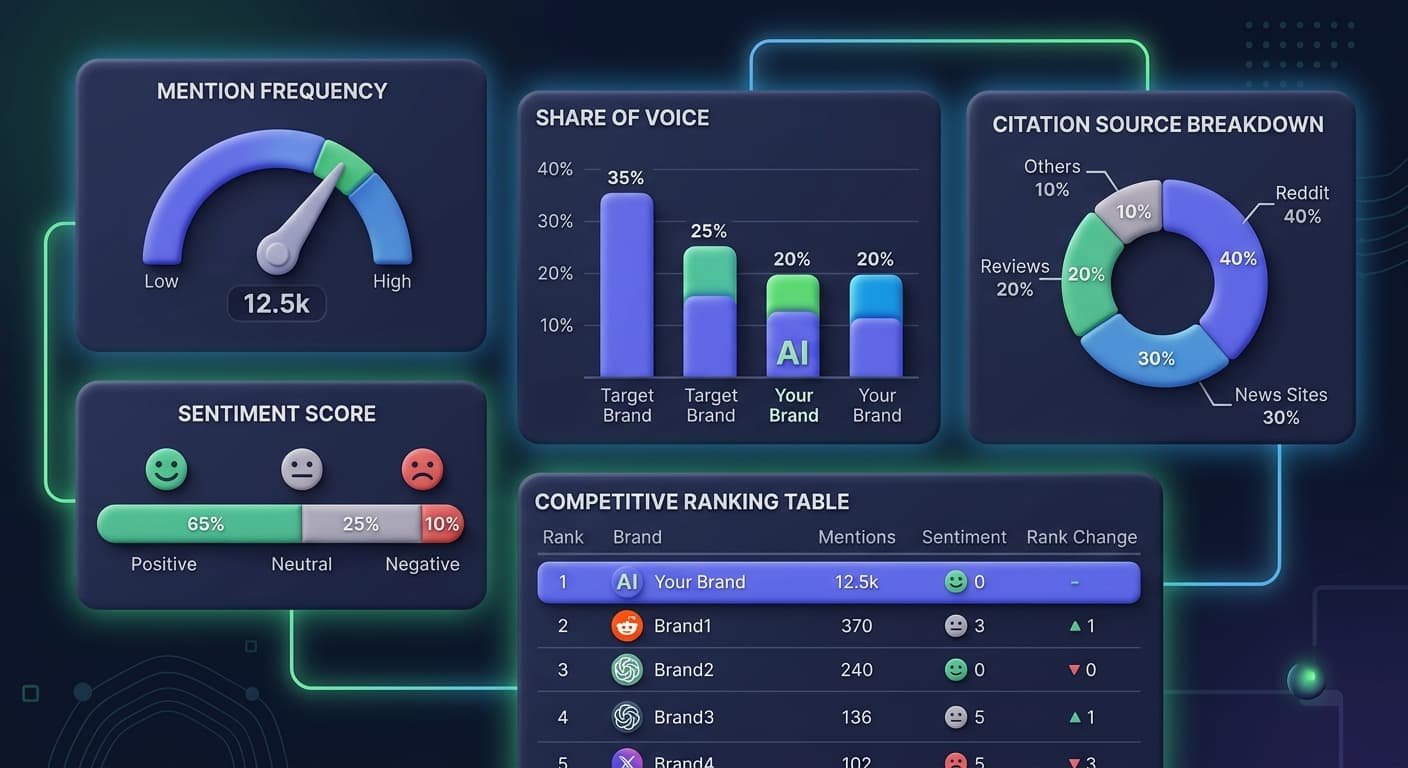
Effective brand mention tracking goes far beyond a simple "yes/no" of whether your brand appears. The best AI brand visibility trackers in 2026 combine multi-engine coverage, sentiment analysis, entity accuracy checking, and competitive benchmarking in a single platform.
Here are the core metrics every brand should be tracking:
1. Mention Frequency
Measuring how often a brand appears in AI-generated answers reveals its perceived authority. Track this per platform and per prompt category to identify where you're winning and where you're invisible.
2. Rank Position Within Answers
Just like Google rankings, position matters. Being the first brand mentioned in a ChatGPT response carries significantly more weight than being the fourth.
3. Citation vs. Mention Ratio
There's an important distinction here: mentions = your brand appears in AI search results. Citations = AI uses your brand as a source. Citations are stronger authority signals. Track both to understand the full picture.
4. Sentiment and Context
Being mentioned is not enough. If ChatGPT says "Brand X is known for reliability but has faced criticism for customer support" — that's a mixed signal that could hurt conversions. AI brand sentiment analysis is not a vanity metric — it's a brand risk management tool. The brands that track sentiment alongside frequency will catch negative AI characterizations before they compound.
5. Share of Voice (SoV)
Share of model (SoM) measures how often your brand appears as the recommended answer across AI-generated responses. Where share of voice tracked mentions across traditional media, SoM tracks citations across LLMs like ChatGPT, Gemini, and Perplexity. In 2026, it's the metric that actually reflects where discovery happens.
6. Citation Source Attribution
This reveals where AI models are pulling their information from. If your competitors are getting cited because of strong Reddit presence or industry review sites, you know exactly where to focus your efforts.
7. AI Referral Traffic
Measuring referral traffic from AI-generated answers provides insight into how mentions translate into real engagement. Platforms such as ChatGPT, Perplexity, Claude, and Gemini can all drive visits to your site. Tracking metrics like sessions, landing pages, and conversion rate helps identify which AI mentions bring high-value traffic.
How to Build a Brand Mention Tracking System
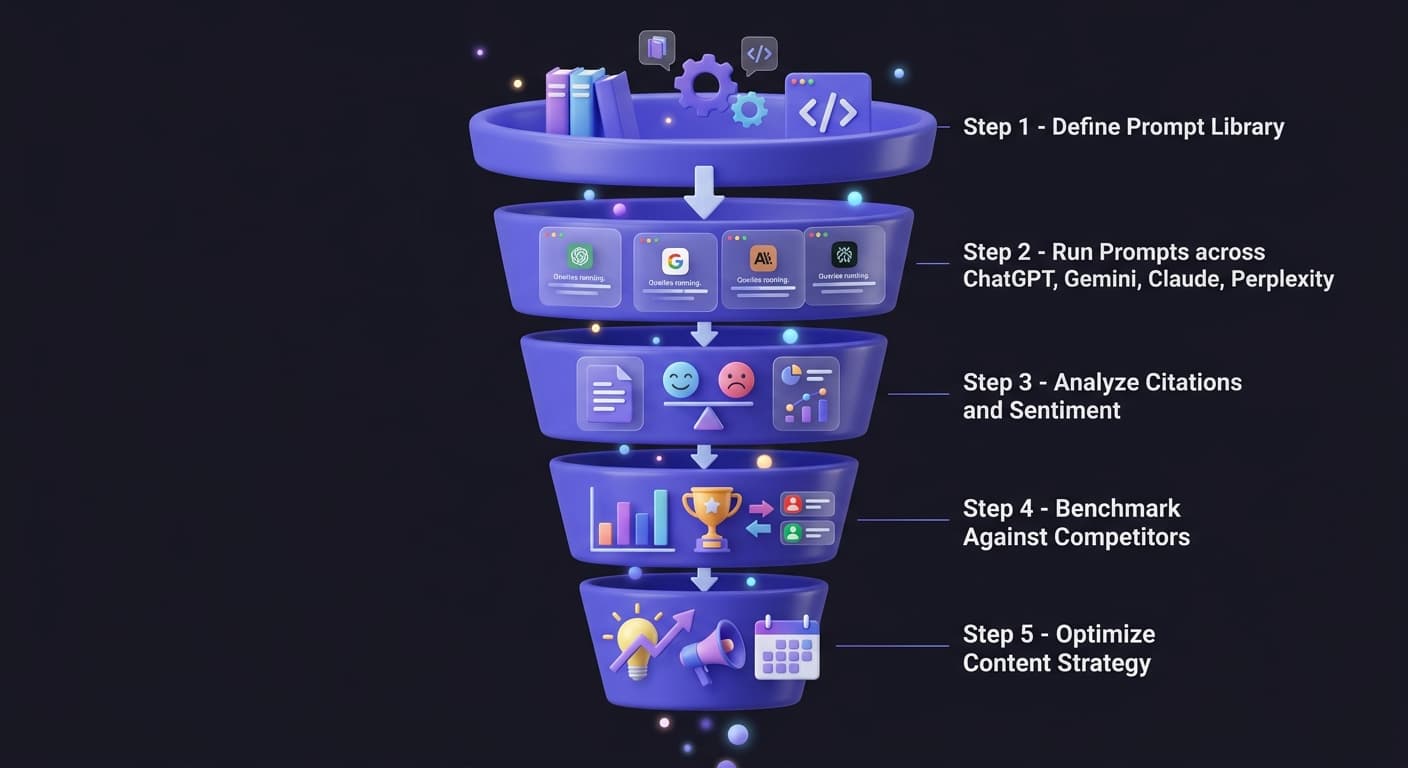
A complete AI brand monitoring system has four layers: Layer 1 — Query definition: Build a query set covering brand-name, category, and competitor-comparison queries across your buyer's research journey. Aim for 100–300 queries; start with 50 if you're new to AI brand monitoring. Layer 2 — Multi-platform tracking: Run your query set against ChatGPT, Gemini, Perplexity, and Claude (at minimum) on a weekly cadence. Store results for trend analysis.
Here's how to get started:
Step 1: Define Your Prompt Library Creating a library of prompts that reflect what potential clients ask helps identify where a brand is appearing in AI-generated answers. Examples include questions like "Best SaaS platforms for editing" or "Top AI editing platforms." Organizing these prompts into categories and maintaining a prompt database makes monitoring more efficient. Checking responses regularly allows companies to see which queries produce brand mentions and understand patterns that can improve visibility.
Step 2: Run Prompts Across All Major AI Engines Define your prompt set — map the 20–50 queries your ideal customers ask AI assistants. Run prompts across ChatGPT, Gemini, Perplexity, and Claude simultaneously. Record structured data per prompt — for each query, capture: brand mentioned (yes/no), rank position, sentiment, competing brands, and citation sources. Track changes over time — the same prompts, tested weekly, reveal exactly which content updates move your visibility.
Step 3: Analyze Competitor Visibility Observing which competitors appear in AI-generated answers reveals market positioning. If competitors appear in answers where you don't, that's a clear signal of where you need to invest in content, authority building, or PR.
Step 4: Conduct Regular AI Audits Conducting monthly AI audits ensures brands remain visible and competitive. Audits include reviewing prompt responses, citations, competitor mentions, and missing opportunities. These checks reveal trends, content gaps, and new queries that influence AI results.
6 Strategies to Improve Your Brand's AI Mention Rate
Once you're tracking mentions, the next step is improving them. Here are the most effective levers:
1. Build Multi-Source Authority
A recent study by Ahrefs found that brand web mentions show the strongest correlation (0.664) with AI Overview brand visibility. In other words, the more your brand is discussed and referenced across the internet, the more likely you are to show up in AI-generated search results.
Backlinks, citations, PR features, guest posts, partnerships, expert roundups, industry publications, podcast interviews, and media mentions all strengthen your credibility. The more your brand shows up in respected conversations, the more confidently AI systems associate you with the topics you want to own.
2. Implement Structured Data
It requires a complete shift towards creating unambiguous, authoritative, and machine-readable content about your brand. By structuring your data with schema markup and optimizing your content for clarity and authority, you can move from being a passive subject of AI search to an active participant in the conversation. Use QuickSEO's free AI Schema Markup Generator to get started quickly.
3. Earn and Display Fresh Reviews
Customer reviews are the single most underutilized lever for AI visibility. According to a study by Feefo, ChatGPT references reviews in 58% of its responses, while Perplexity uses reviews 100% of the time. Critically, AI algorithms in 2026 heavily favor recency. Fifty reviews from the last three months outweigh a hundred from 2022.
4. Publish Content at Velocity
AI algorithms in 2026 increasingly favor recency and content velocity. Research from Brandi AI shows that brands producing 12 or more optimized pieces of content per month achieve up to 200x faster visibility gains compared to those producing just four.
5. Be Consistent Across Every Channel
Match your legal name, product name, and shortened name across your site, social profiles, directories, and press mentions. AI models build a picture of your brand from everything they can find — inconsistency creates gaps that competitors will fill.
6. Target Community Platforms
Earn reviews on platforms ChatGPT can pull from: Amazon, Trustpilot, G2, Capterra, and niche review sites relevant to your category. And don't underestimate the power of Reddit and Quora — active participation in relevant threads is one of the strongest citation signals across all AI platforms. Our guide on how Reddit affects AI visibility explores this in depth.
What to Look for in a Brand Mention Tracking Tool
When evaluating brand mention monitoring tools, ask: Multi-platform coverage: Does it track ChatGPT, Gemini, Perplexity, and Claude simultaneously, or only one? Query customization: Can you define the specific queries your buyers use, not just generic brand-name searches? Sentiment granularity: Does it score sentiment at the response level, or only flag positive/negative at a binary level? Competitive tracking: Can you run the same queries for competitor brands and compare? Alert configuration: Can you set up alerts when citation frequency or sentiment drops below a threshold?
The best platforms go further. AI visibility tools track how often AI search engines like ChatGPT, Perplexity, Claude, and Gemini mention or cite your brand in their answers. They show which prompts surface you, which competitors appear beside you, and which pages earn your citations, so you can see where you stand inside AI-generated results rather than just on a traditional results page.
Critically, teams managing visibility at scale benefit from tools that connect AI data with search and content performance instead of isolating it. This unified view — traditional SEO alongside AI visibility — is where the real competitive advantage lies in 2026. You can explore how tracking AI visibility alongside Google Search Console data in one dashboard gives marketers a decisive edge.
The Business Case: Why Brand Mentions Drive Real Revenue
The value of AI brand mentions isn't just about awareness — it directly converts to revenue. ChatGPT referral traffic to monitored brand websites nearly doubled overnight (~60-65%) on May 7, 2026. What happened: ChatGPT started embedding brand homepage URLs inline in its answers ~5x more often.
AI-driven traffic to top retailers surged nearly 8 times in a single year, according to the Wall Street Journal.
And the compounding nature of AI recommendations means that brands that ignore their presence in ChatGPT, Google AI Overviews, and Bing Copilot are effectively invisible to over 30% of their potential audience.
The window to establish early AI visibility is still open — but it's closing fast. Brands that start monitoring AI search performance now can secure AI visibility before the market becomes oversaturated.
🚀 Track Your Brand Across Google Search AND AI Chatbots — In One Dashboard
QuickSEO is built for exactly this moment. Monitor your brand mentions across ChatGPT, Claude, Gemini, and Perplexity while simultaneously tracking your Google Search performance — clicks, impressions, and rankings — all in a single, intuitive dashboard. No more guesswork. No more blind spots. See your AI Score, track specific prompts, benchmark against competitors, and know exactly where your brand stands in the AI-driven discovery landscape. Start tracking for free at quickseo.ai → Join thousands of marketers already tracking their AI & SEO performance with QuickSEO.
The Future of Brand Mention Tracking
In 2026, the integration of AI search visibility tracking tools into standard SEO practice marks the conclusion of the transition from a search-and-click economy to a synthesis-and-trust economy. As users increasingly rely on conversational assistants for research and evaluation, the gatekeeper role has shifted from algorithms that list pages to models that interpret them.
As AI-driven search experiences continue to reduce reliance on traditional clicks, brands that are missing, misrepresented, or inconsistently surfaced in AI responses risk losing visibility during high-intent discovery moments. For enterprise SEO and growth teams, that makes structured AI brand monitoring a priority.
The tools, strategies, and frameworks exist. The question is whether your brand is tracking what matters — or flying blind in a world where AI decides who gets recommended and who gets ignored.
If you want to go deeper on AI visibility strategy, explore our complete guide to AI visibility scores and what they mean for your brand — or dive straight into tracking with a free account at quickseo.ai.
Key Takeaways
Brand mention tracking in AI search is fundamentally different from traditional SEO monitoring — it tracks citations inside AI-generated answers, not keyword rankings.
90% of brands have zero AI search mentions, creating a massive opportunity for early movers.
Each AI platform (ChatGPT, Gemini, Claude, Perplexity) uses different signals — you need to track all of them, not just one.
The metrics that matter include: mention frequency, rank position, sentiment, share of voice, citation sources, and AI referral traffic.
To improve mentions, focus on multi-source authority, structured data, fresh reviews, content velocity, and community platform presence.
The best tracking tools combine multi-engine coverage, sentiment analysis, competitor benchmarking, and integration with traditional SEO data in one dashboard.
Enter your website to track its AI visibility across ChatGPT, Gemini, Claude, and Perplexity — and turn chatbot mentions into traffic.
- Set up in minutes
- Cancel anytime
Try it yourself
Related free tools
Free SEO tools related to the topics covered in this article.
Keep reading
Related posts
More articles on the same topics, prioritized by shared tags and keyword overlap.